 June 21 2026
Why Quality Binding Wire Matters in Construction
Binding wire is small. But its role is serious.
It holds reinforcement bars in place before and during concreting. It supports bar spacing. It keeps laps and intersections in position. It helps workers maintain the reinforcement cage as per drawing.
Many buyers focus on cement, steel and aggregates. They ignore construction accessories. This is a mistake.
Poor binding wire can break during tying. It can slow labour. It can shift reinforcement. It can also create avoidable site problems.
This blog explains why quality binding wire for construction matters and where Kamdhenu Wirebond fits.
What Is Binding Wire?
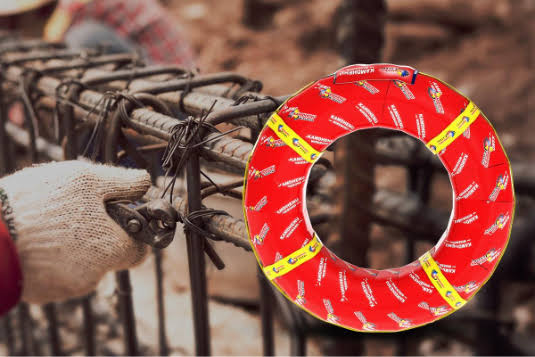
Binding wire is a soft wire used to tie TMT bars together.
It is commonly made from mild steel wire. It is annealed to make it flexible. Workers use it to tie bars at intersections, laps and supports.
A good wire should be flexible, strong and uniform. It should not snap easily. It should not have rough surfaces that injure workers or slow tying.
In India, binding wire India demand is closely linked with RCC work. Every slab, footing, beam and column needs bar tying before concrete is poured.
Why Binding Wire Matters
Before concreting, reinforcement must stay in place.
The drawing may specify bar diameter, spacing, lap length and cover. But all of this depends on correct tying and placement.
Binding wire helps maintain:
- Bar spacing
- Reinforcement alignment
- Lap position
- Cage stability
- Chair and spacer positioning
- Ties at intersections
- Site handling before concrete pour
If the wire breaks or loosens, bars may move. That can affect cover, spacing and structural quality.
Common Problems with Poor Binding Wire
Poor-quality binding wire creates daily site issues.
It may break while twisting. It may be too hard. It may have uneven diameter. It may rust heavily. It may come in poor coil condition.
Common problems include:
- Slow tying speed
- Higher labour fatigue
- More wire wastage
- Loose bar cages
- Bar displacement during concreting
- More complaints from site workers
- Poor finish in reinforcement work
These problems may look small. But they add up on large sites.
What Makes Good Binding Wire?
A good binding wire must balance strength and flexibility.
It should be strong enough to hold bars. It should also be soft enough to twist easily.
Good binding wire should have:
- Uniform diameter
- Smooth surface finish
- Good annealing
- Adequate tensile strength
- Easy tying performance
- Reliable coil packing
- Low breakage during use
- Consistent weight and length
These details improve productivity and reduce wastage.
Kamdhenu Wirebond: Built for Site Reliability
Kamdhenu Wirebond is positioned as a premium binding wire manufactured with ultra-modern technology. Kamdhenu states that it adheres to ISO 9001:2015 standards.
The product is made from quality raw materials. Kamdhenu highlights uniform diameter, excellent surface finish and superior strength. It is preferred for tying masonry walls to steel, concrete and masonry.
This makes Kamdhenu Wirebond a practical choice for contractors, builders and dealers.
Why Uniform Diameter Matters
Uniform diameter is important for tying performance.
If the wire is uneven, some portions may break more easily. Some portions may be too stiff. This affects site speed and quality.
A uniform binding wire gives predictable performance. Workers can tie faster. The site can plan material consumption better.
Kamdhenu Wirebond highlights uniform diameter as a key feature. This is a useful quality marker.
Binding Wire and RCC Quality
Binding wire is not a substitute for proper detailing.
It does not carry the main structural load. But it helps keep load-carrying reinforcement in the correct position.
During concreting, vibration and movement can disturb bars. Good tying helps reduce this risk.
That is why binding wire should be treated as part of the RCC quality system.
Quick Buying Checklist
Before buying binding wire for construction, check:
- Wire diameter
- Coil weight
- Surface finish
- Flexibility
- Breakage during sample tying
- Rust condition
- Brand name
- Certification claims
- Packing condition
- Supplier reliability
Do not buy only by lowest rate. High breakage can increase total consumption and labour time.
Binding Wire vs Other Construction Accessories
Construction accessories may seem small. But they support quality.
Important accessories include:
- Binding wire
- Cover blocks
- Spacers
- Tie tools
- Formwork accessories
- Fasteners
If these items are poor, the main material cannot perform as intended.
Binding wire is one of the most used accessories in RCC work. It deserves proper attention.
Where Kamdhenu Wirebond Is Useful
Kamdhenu Wirebond can be used in:
- Residential construction
- Commercial buildings
- Industrial RCC work
- Infrastructure projects
- Slab reinforcement
- Beam and column cages
- Masonry tying applications
- General bar fixing work
It is useful where workers need consistent tying and contractors need dependable site performance.
Final Takeaway
Binding wire may be small, but it supports the discipline of RCC work.
It keeps reinforcement in position. It supports faster tying. It reduces breakage and wastage when the quality is good.
For buyers looking at binding wire India, Kamdhenu Wirebond offers a branded option with uniform diameter, good surface finish, superior strength and ISO 9001:2015 adherence.
Do not overlook construction accessories. Good construction depends on both major and minor materials.
How Binding Wire Affects Labour Productivity
Labour productivity matters on every site.
A soft and uniform wire helps workers tie faster. A wire that breaks repeatedly slows the team. It also increases wastage. In slab work, where thousands of ties may be needed, this difference becomes visible.
Good binding wire also reduces hand strain. Workers can twist it neatly and move ahead. This improves site discipline.
So, the real cost of wire is not only coil price. It is also tying speed, wastage and rework.
Quick FAQs
Does binding wire carry structural load?
No. It mainly holds reinforcement in the correct position before and during concreting.
Why buy branded binding wire?
Branded wire gives better consistency in diameter, finish and tying performance. This reduces site complaints.
Procurement Note
Binding wire should be stocked before reinforcement work starts. Shortage during slab tying can delay inspection and concreting. Keep coils dry and issue them in controlled quantities.
A small accessory can hold up a large pour if planning is weak.