 November 04 2026
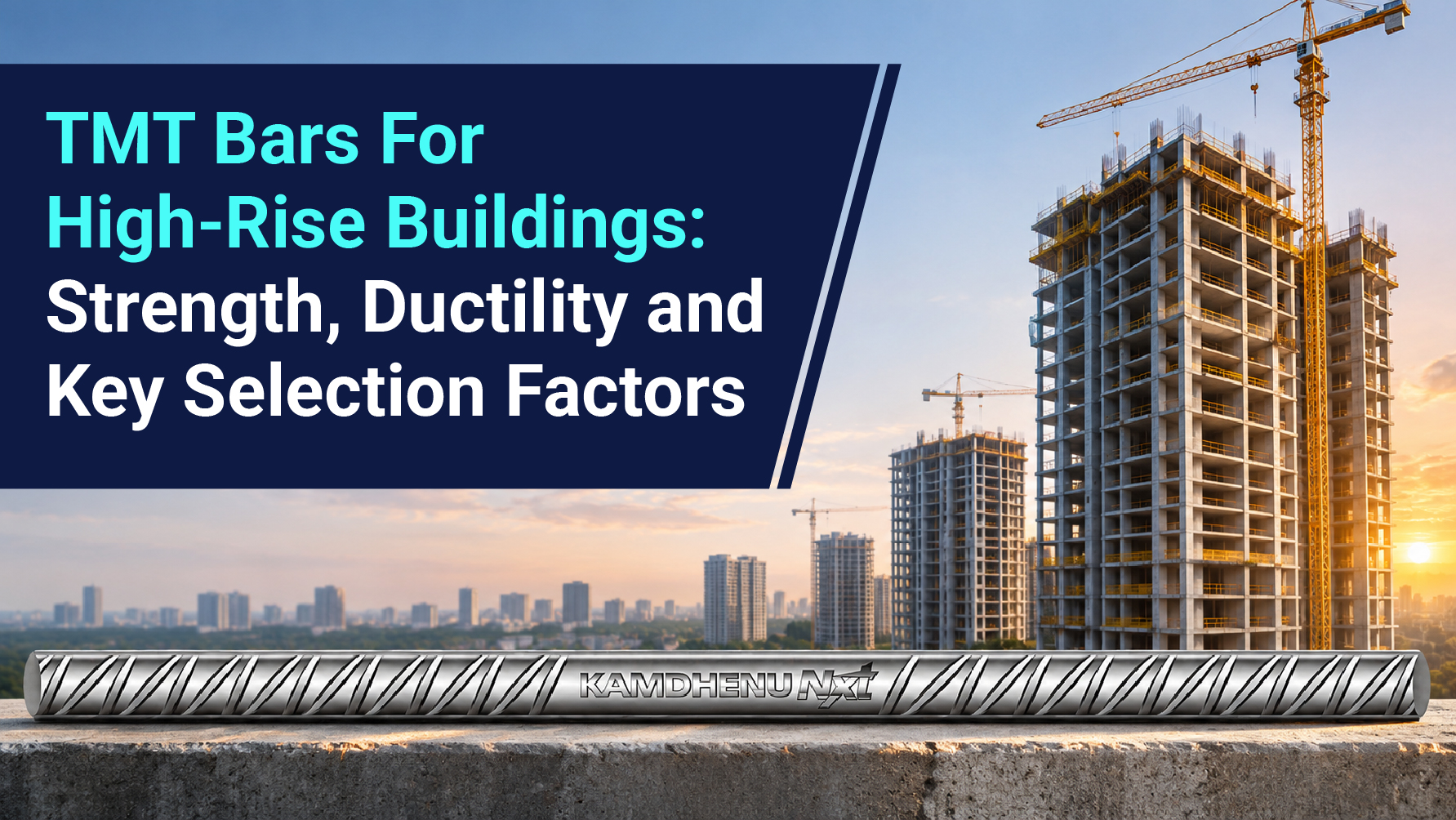
TMT Bars For High-Rise Buildings: Strength, Ductility and Key Selection Factors
Stand at the foot of a 40-storey tower going up and look at the sky. Every beam, every column, every slab over your head leans on steel you’ll never see again once the concrete sets. Strange kind of trust, that. And it’s exactly why choosing TMT bars for construction at this height is nothing like choosing them for a two-floor house.
High-rise buildings commonly rely on high-strength, ductile TMT grades like Fe 500D or Fe 550D, though the final grade is always decided by the structural engineer’s design. We at Kamdhenu Limited make reinforcement for projects like these, so here’s a plain-spoken guide to strength, ductility, and what to check before a single bundle leaves the truck.
Why Tall Buildings Ask More from Their Reinforcement
Same concrete, same steel, bigger stakes. Columns on the lower floors carry everything above them. Wind pushes sideways all day, every day. In seismic zones, the ground itself can move. Concrete copes well with compression but poorly with tension, so the steel reinforcement bars buried inside do the pulling, bending, and holding together. In a small house, a flaw might stay local. In a tower, it has far less room to hide.
Strength and Ductility, Minus the Jargon
What Strength Really Means
The number after “Fe” is the minimum yield stress in N/mm², so Fe 500 means 500 and Fe 550 means 550. Yield is the point where a bar starts stretching permanently. Tensile strength is the most pull it can take before breaking.
Why Ductility Matters Just as Much
Strength alone can mislead you. A strong but brittle bar may snap without warning. Ductility is the ability to stretch and bend before failing, which gives a structure time to show distress and share the load. The “D” in Fe 500D and Fe 550D marks ductility requirements, meaning higher elongation and a better TS/YS ratio. That ratio compares tensile strength with yield strength. A higher figure means more reserve once the bar starts yielding.
Here are the Fe 550 figures we publish for Kamdhenu Nxt:
|
Property |
Kamdhenu Nxt (Fe 550) |
|
Yield stress |
Minimum 565 N/mm² |
|
Tensile strength |
Minimum 610 N/mm² |
|
Elongation |
Minimum 14% |
|
TS/YS ratio |
≥ 1.08 |
|
Carbon |
≤ 0.25% |
|
Sulphur / Phosphorus |
≤ 0.050% each (S+P ≤ 0.095%) |
|
Nitrogen |
≤ 0.010% |
|
Bend test |
4ø up to and including 20 mm, 5ø over 20 mm |
How the Bar Gets Its Character
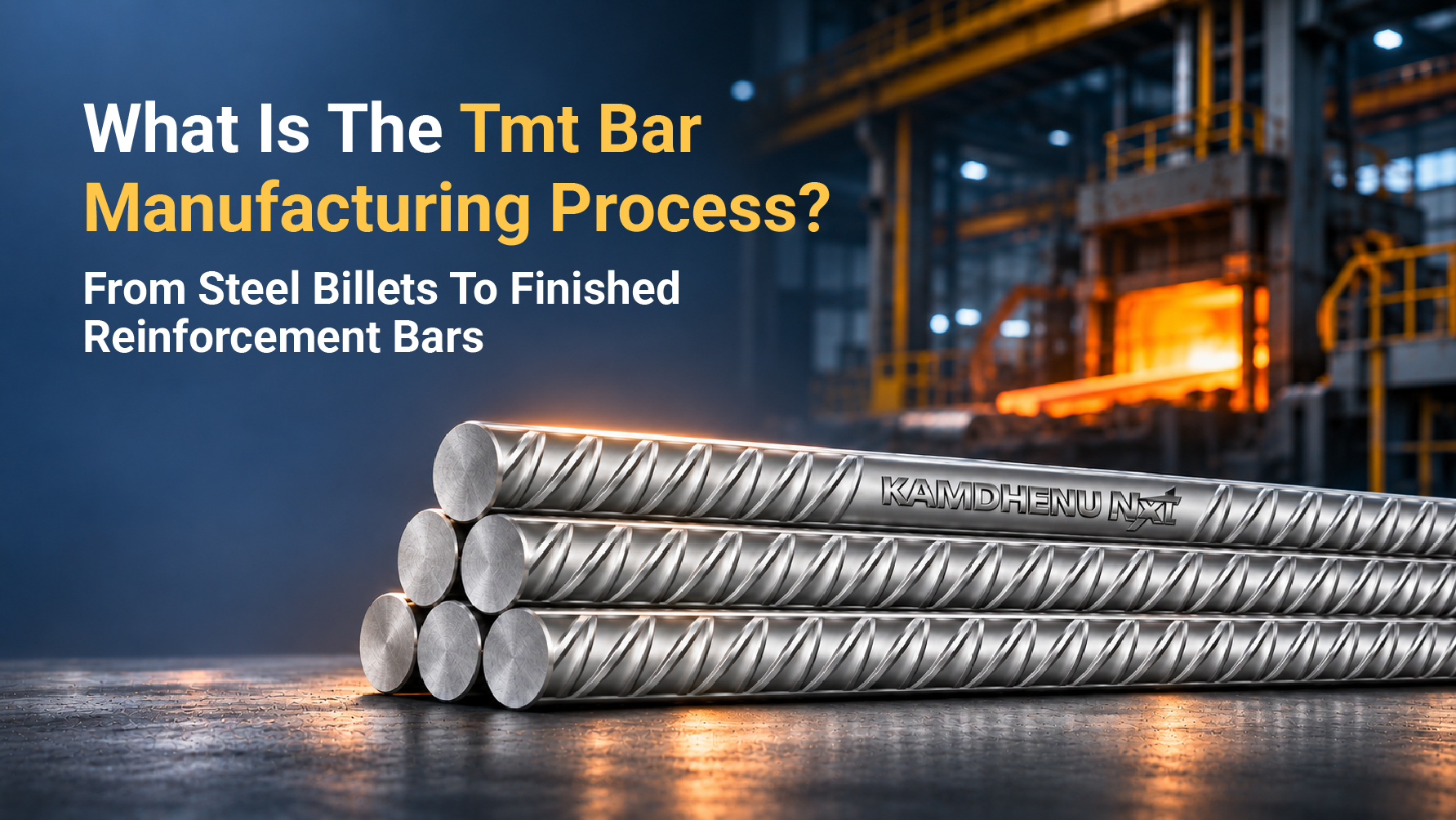
Thermo-mechanical treatment gives a bar a tough outer surface and a softer core. Hard shell for strength, soft heart for flexibility. Our Kamdhenu Nxt bars go through six steps:
- Raw material: billet samples from different lots are collected and analysed.
- Billet making: done through a Continuous Casting Machine (CCM).
- Thermo-mechanical treatment: an analyst ensures proper water cooling and temperature equalising on the cooling bed.
- Rolling: a quality control supervisor keeps sampling so rolling stays within laid-down tolerances.
- Testing: samples are collected as per IS:1786-2008 and checked in our chemical and physical laboratory.
- Dispatch: only tested, OK material leaves, with the test certificate checked.
Key Selection Factors for High-Rise Projects
People ask us for the best TMT bars for construction in India all the time. Fair question. But the honest answer is a checklist, not a brand name.
Match the Grade to the Drawing
Start with the structural drawings. Kamdhenu Nxt comes in Fe-500, Fe-550, Fe-500D, and Fe-550D, and a higher grade isn’t automatically better. It can reduce the steel area needed, but ductility, lap lengths, and detailing still need the engineer’s eye.
Never swap grades on site without written approval. It’s the same thinking behind choosing the right TMT bar for any project, only with higher stakes here.
Look Closely at the Ribs
Our double-rib design is built for superior interlock with concrete, which supports load-bearing strength. In a tower, where heavy bars are packed into columns and beams, that grip matters more than it sounds.
Check Chemistry and Size Range
Carbon, sulphur, and phosphorus limits shape strength and brittleness. Our Nxt page lists them clearly, and sizes run from 8 mm to 32 mm, which gives designers room to work.
Verify It’s Genuine and Traceable
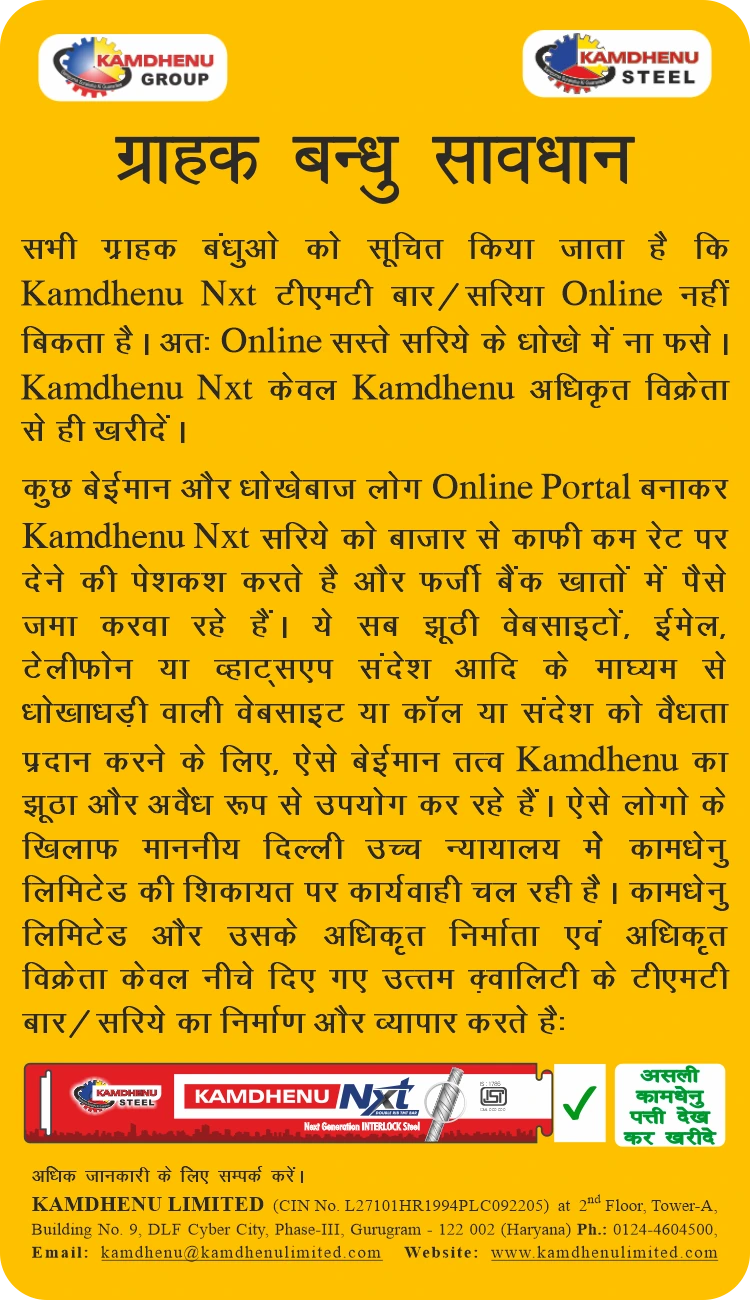
Ask for batch-linked test certificates before anyone tells you they sell the best quality TMT bars in India. Counterfeit bars can circulate in the market, so we’d suggest checking for:
- The Kamdhenu Nxt stamp on every metre of the bar
- A red Kamdhenu strip tag on every bundle
- The QR code on the bundle strip or tag
- An authorised dealer behind the invoice
Where Kamdhenu Nxt Fits In
Our Nxt page lists high-rise buildings among suitable uses, alongside earthquake-prone zones and infrastructure like highways, bridges and dams. Other features we highlight:
- Earthquake resistance through strength and flexibility
- Corrosion resistance for longer life
- Higher thermal resistance
- Bars designed to be free from surface defects
Conclusion
Tall buildings leave no space for guesswork. Whether it’s a tower or a bridge, the lesson with TMT bars for construction stays the same: strength gets the headlines, but ductility, bond, and traceability decide how a structure behaves when things get tough. Choose TMT steel bars that match your drawings, carry proof of testing, and are easy to verify.
Planning a high-rise? Talk to us at Kamdhenu Limited, and we’ll gladly help you pick the right Nxt grade for your project.
FAQs
Q. What is the difference between Fe 500D and Fe 500 for tall buildings?
Both share a 500 N/mm² minimum yield stress, but the D grade carries tighter ductility requirements, including higher elongation and TS/YS ratio. That extra stretch before failure is why D grades are often considered for high-rise and seismic designs.
Q. What does ductility mean in a reinforcement bar?
Ductility is a bar’s ability to stretch and bend before it fractures. In a tall building, this lets the structure deform and share load under wind or seismic forces, instead of failing suddenly without any visible warning.
Q. Which grades and sizes does Kamdhenu Nxt come in?
Kamdhenu Nxt is available in Fe-500, Fe-550, Fe-500D, and Fe-550D grades. Sizes range from 8 mm to 32 mm, so the structural engineer can pick the grade and diameter that the drawings call for.
Q. How can I identify genuine Kamdhenu Nxt bars at the site?
Look for the Kamdhenu Nxt stamp on every metre of the bar, a red Kamdhenu strip tag on each bundle, and the QR code on the strip or tag. Buy only from authorised dealers.
Q. Is a higher grade like Fe 550 always better for a high-rise?
Not automatically. A higher grade can reduce the steel area needed, but the engineer must also weigh ductility, development and lap lengths, and detailing. The grade on site should always match the approved drawings.
Also Read:-
Steel Door Frames: Types, Benefits, Applications & Installation Considerations
Grassland Mesh: Uses, Benefits & Choosing the Right Fencing Solution for Farms
More Useful Links:-
MS Binding Wire Manufacturer | Steel Structure Manufacturers | Roofing Sheet Manufacturers