 November 06 2026
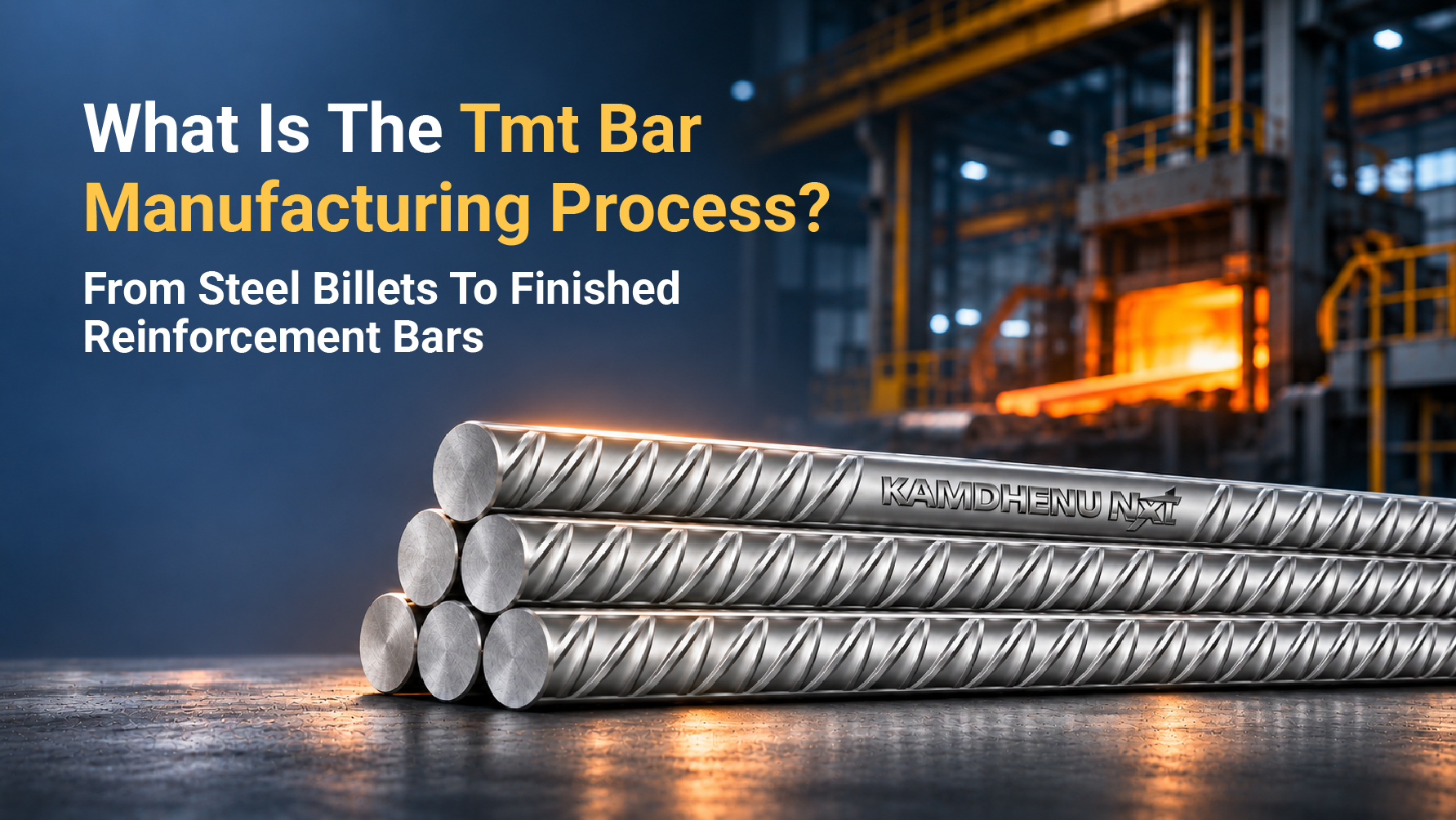
What Is The TMT Bar Manufacturing Process? From Steel Billets To Finished Reinforcement Bars
Picture a rolling mill floor. Glowing steel bars slide forward, then pass through a rush of water. A little later, they’re resting on a cooling bed, looking calm, almost ordinary. What just happened to them is the whole story of a TMT bar.
TMT bars are made by hot-rolling steel billets into ribbed bars, then rapidly cooling them with water so the surface hardens while the core stays soft and ductile. Easy to say, harder to do well. As a TMT bar manufacturer, we at Kamdhenu Limited think buyers deserve to know what happens between billet and bundle, so here’s the full walk-through, stage by stage.
Why How It’s Made Matters
A rebar isn’t strong just because it’s steel. It’s strong because of how that steel is treated on its way out of the mill. Thermo-mechanical treatment gives the bar a tough outer surface and a softer core, and that mix is what brings strength, flexibility, and durability together. Our own product page puts it plainly: TMT bars can offer up to 20% more strength than conventional steel.
The Six Stages of the Kamdhenu Nxt Process
Here’s how our Kamdhenu Nxt bars travel through the process, in the order the steel actually moves.
1. Raw Material Checks
Everything starts with billets. We collect samples from different lots and analyse them carefully before they go anywhere near the mill. Catching a problem here is far easier than finding it later in a finished bar.
2. Billet Making
Billets are made through a Continuous Casting Machine, or CCM. It’s the step that gives the mill a solid, uniform starting shape to work with.
3. Rolling of Bars
Now the billets are rolled into bars, and this is where the ribs take shape. Our rolling mill quality control supervisor keeps collecting samples so the rolling stays within laid-down tolerances. For Kamdhenu Nxt, those ribs follow a double-rib design, built for superior bonding with concrete.
4. Thermo-Mechanical Treatment
This is the heart of it. Straight after rolling, the hot bars go through water cooling. The outer surface hardens quickly while the core stays hot, and that leftover heat then works its way outward as the bar settles on the cooling bed. An analyst checks that the water cooling is proper and that temperature equalises on the cooling bed. Hard shell, ductile core. That’s the idea.
5. Testing
Samples are collected as laid down in IS:1786-2008, and our chemical and physical laboratory checks them. This is where TMT rebars either earn their grade or they don’t.
6. Dispatch
Only tested, OK material goes out, and the test certificate is checked first. No pass, no dispatch.
What the Process Delivers
That hard-outside, soft-inside structure is also why a TMT bar differs from regular steel in how it handles load and bending. Here’s what comes out of our process in the Kamdhenu Nxt range:
|
Feature |
Kamdhenu Nxt |
|
Grades |
Fe-500, Fe-550, Fe-500D, Fe-550D |
|
Sizes |
8 mm to 32 mm |
|
Rib design |
Double rib for superior interlock with concrete |
|
Testing standard |
Samples collected as per IS:1786-2008 |
|
Traceability |
Heat-wise, end-to-end, under documented quality systems |
Our Kamdhenu Nxt page also highlights earthquake resistance, corrosion resistance, higher thermal resistance, and bars designed to be free from surface defects.
How to Judge a Manufacturer by Its Process
When people compare TMT bars manufacturers in India, price usually comes first. We’d flip that order. Ask about the process before the rate, and listen to how confidently the answers come:
- Are billet samples analysed before rolling?
- Is rolling monitored with regular sampling?
- Is the cooling stage supervised?
- Is testing done to IS:1786-2008?
- Is the test certificate checked before dispatch?
Among TMT manufacturers in India, the ones who can answer all five without hesitation deserve a place on your shortlist.
Spotting Genuine Kamdhenu Nxt Bars
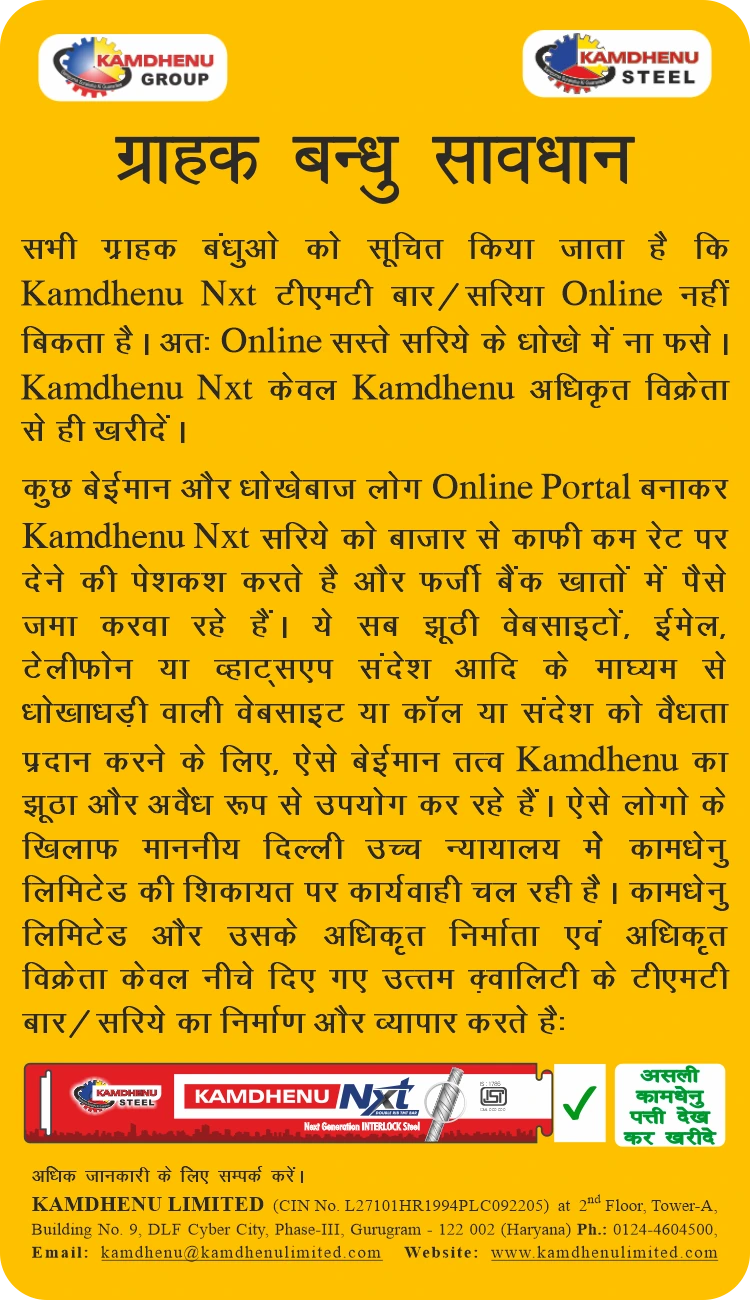
Duplicate bars can be sold in the market, sometimes passed off as branded steel. A few quick checks help:
- The Kamdhenu Nxt stamp on every metre of the bar
- A red Kamdhenu strip tag on every bundle
- The QR code on the bundle strip or tag
- Purchase only through authorised dealers
Conclusion
From billet to bundle, a bar’s quality is built one stage at a time: checked raw material, controlled casting, supervised rolling, careful cooling, proper testing and approved dispatch. Skip one, and it shows. As a TMT bar manufacturer, we put every stage under watch, so each reinforcing bar leaving us has earned its place in your structure.
Planning a project? Talk to us at Kamdhenu Limited, and we’ll help you pick the right Kamdhenu Nxt grade.
FAQs
Q. What are the main stages of the TMT bar manufacturing process?
In our process, raw material is checked, billets are made through a continuous casting machine, then rolled into bars, thermo-mechanically treated with water cooling, tested as per IS:1786-2008, and dispatched only when approved.
Q. Why do TMT bars have a hard outer surface and a soft core?
Rapid water cooling hardens the surface right after rolling, while the hot core stays softer. Heat then moves outward as the bar cools on the cooling bed, giving strength from the shell and flexibility from the core.
Q. What role does testing play in making TMT bars?
Samples are collected as laid down in IS:1786-2008 and checked in a chemical and physical laboratory. Only tested, approved material is dispatched, and the test certificate is checked before the bars leave.
Q. What grades and sizes does Kamdhenu Nxt come in?
Kamdhenu Nxt is available in Fe-500, Fe-550, Fe-500D, and Fe-550D grades. Sizes range from 8 mm to 32 mm, and the bars use a double-rib design for better bonding with concrete.
Q. How can I tell genuine Kamdhenu Nxt bars from duplicates?
Check for the Kamdhenu Nxt stamp on every metre of the bar, a red Kamdhenu strip tag on every bundle, and the QR code on the strip or tag. Buy from authorised dealers.
Also Read:-
TMT Bars For High-Rise Buildings: Strength, Ductility and Key Selection Factors
Steel Door Frames: Types, Benefits, Applications & Installation Considerations
More Useful Links:-
Colour Coated Metal Sheet | MS Pipe Manufacturers in India | PEB Company in India