July 15 2026
TMT Sariya vs Regular Steel: Why Quality Matters in Construction
Reinforcement remains hidden inside concrete, but its quality affects a structure throughout its service life. Concrete is strong under compression but comparatively weak under tension. Steel reinforcement carries tensile forces and helps concrete and steel behave as one structural system.
Once concrete has been cast, reinforcement bars are difficult to inspect, repair or replace. Selecting the right construction sariya is therefore a critical decision that must be made before work begins.
TMT sariya refers to thermo-mechanically treated reinforcement bars. Their controlled manufacturing process creates a hard outer region and a comparatively ductile core. Regular steel may refer to plain mild steel bars, unverified local bars or products that do not provide the same rib pattern, mechanical properties and traceability.
The comparison should not be based on appearance or price alone. Strength, elongation, chemistry, concrete bond, weight tolerance and certification all influence structural performance. This guide explains how TMT bars are produced, how they differ from regular steel and why the correct reinforcement sariya grade matters in construction.
What Is TMT Sariya?
TMT sariya is a high-strength deformed steel reinforcement bar manufactured through a thermo-mechanical treatment process. The treatment creates a combination of strength and ductility that supports its use in reinforced cement concrete construction.
The bars have ribs on their surface. These ribs improve mechanical interlock with concrete and help transfer forces between the two materials.
Quality TMT sariya is generally supplied with:
- A declared strength grade
- Controlled chemical composition
- Standard nominal diameter and mass
- Ribbed surface geometry
- Test certificates
- Manufacturer identification
- Batch or heat traceability
- BIS certification, where applicable
These characteristics give engineers a measurable basis for design, inspection and acceptance.
What Is Regular Steel?
The term regular steel may refer to plain mild steel bars, locally produced reinforcement or unverified bars without clearly declared mechanical properties.
Plain bars have a smooth surface. Their bond with concrete depends more heavily on adhesion, friction and end anchorage because they do not provide the same mechanical interlock as ribbed TMT bars.
Unbranded or poorly controlled construction sariya may also have:
- Inconsistent diameter
- Weak or irregular ribs
- Excessive variation in weight
- Uncertain chemical composition
- Poor bendability
- Limited test documentation
- Inadequate batch identification
- Unpredictable weldability
This does not mean every non-TMT bar will immediately fail. The main concern is predictability. Structural design requires steel with known and verified properties.
How TMT Bars Are Manufactured
The performance of TMT sariya begins with a controlled production process. Rolling temperature, cooling rate, water pressure and steel chemistry influence the final properties.
Step 1: Hot Rolling
Steel billets are heated and passed through rolling stands. The rolling process progressively reduces the section and forms the required bar diameter and surface ribs.
The bars leave the final rolling stand at a high temperature.
Step 2: Rapid Quenching
Immediately after rolling, the hot bars pass through a water-cooling system. Rapid cooling hardens the outer surface first.
The cooling parameters must be controlled carefully. Inconsistent water pressure or temperature can affect the uniformity of the hardened layer.
Step 3: Self-Tempering
Although the outer layer cools rapidly, the core remains hotter. Heat from the core moves towards the surface and tempers the hardened outer region as the temperatures begin to equalise.
This stage helps balance surface hardness with the required level of ductility.
Step 4: Atmospheric Cooling
The bar then cools naturally in the atmosphere. The core cools more slowly and remains comparatively ductile.
The complete sequence is commonly described as quenching, self-tempering and atmospheric cooling. It creates the characteristic combination of a strong outer layer and ductile inner core associated with quality TMT sariya.
Kamdhenu Nxt is described by Kamdhenu as next-generation interlock steel manufactured through a controlled TMT process. It uses a double-rib design intended to improve grip with concrete and is offered in Fe 500, Fe 550, Fe 500D and Fe 550D grades across commonly used diameters.
Understanding TMT Sariya Grades
IS 1786:2008 covers high-strength deformed steel bars and wires used for concrete reinforcement. The number following “Fe” indicates the specified minimum yield or proof stress in N/mm².
Fe 500
Fe 500 has a specified minimum yield strength of 500 N/mm². It is widely used in residential buildings and general RCC construction.
Fe 500D
Fe 500D combines the strength level of Fe 500 with enhanced ductility. The “D” designation indicates that the bar must satisfy higher elongation and ductility requirements under the applicable standard.
This reinforcement sariya grade may be selected for demanding structures and seismic applications, subject to the structural design.
Fe 550
Fe 550 provides a higher strength level than Fe 500. It may support higher-strength designs or reduce the required steel area in certain structural elements when approved by the designer.
Fe 550D
Fe 550D combines the higher strength of Fe 550 with enhanced ductility requirements.
A higher reinforcement sariya grade is not automatically better for every project. Strength must be considered together with bendability, ductility, detailing, crack control, anchorage and structural behaviour.
Only the approved structural drawings and specifications should determine the final grade.
TMT Sariya vs Regular Steel
| Performance factor | Quality TMT sariya | Plain or unverified regular steel |
|---|---|---|
| Surface | Ribbed for mechanical interlock | Often smooth or inconsistent |
| Strength | Declared grade with tested properties | May be lower or uncertain |
| Ductility | Controlled; D-grades provide enhanced elongation | Depends on chemistry and production |
| Weight | Standard nominal mass within permitted tolerances | May vary significantly |
| Bond | Ribs improve grip with concrete | Depends more heavily on adhesion and anchorage |
| Weldability | Supported by controlled chemistry | May be uncertain |
| Bendability | Evaluated according to applicable standards | May crack or behave inconsistently |
| Traceability | Brand marks, bundle tags and test certificates | Often limited |
| Certification | Commonly supplied according to IS 1786 | May not meet a recognised reinforcement standard |
These differences explain why verified TMT saria India products have become the established choice for RCC construction.
Factors to Consider Before Buying TMT Sariya
Declared Strength Grade
Check that the bar grade matches the structural drawings. Fe 500, Fe 500D, Fe 550 and Fe 550D have different properties and should not be substituted without written engineering approval.
Ductility
Ductility is the ability of steel to undergo deformation before fracture. It is especially important where structural members may experience repeated loading or load reversal.
A D-grade TMT sariya provides enhanced ductility compared with the corresponding standard grade, subject to the requirements of IS 1786.
Chemical Composition
The percentages of carbon, sulphur, phosphorus and other elements influence strength, ductility and weldability.
Controlled chemistry helps the bar deliver predictable performance. Uncertain composition can create problems during welding, bending and structural use.
Rib Pattern
Rib geometry, height, spacing and consistency affect the mechanical bond between steel and concrete.
Weak, flattened or irregular ribs may reduce grip. Buyers should inspect the rib pattern and confirm that it remains consistent along the bar.
Weight and Diameter
A bar should comply with the applicable nominal mass and dimensional tolerances. Large variations may indicate inconsistent rolling or short supply.
A heavier bar is not automatically stronger. Diameter determines the steel area, while the reinforcement sariya grade determines the specified yield strength.
Bendability
Reinforcement bars are cut and bent into stirrups, links and other shapes. Good construction sariya should tolerate bending according to the applicable test requirements without cracking.
Weldability
Where welding is permitted by the structural specification, controlled chemistry becomes important. Welding unverified steel can create unpredictable heat-affected zones and weak joints.
Certification and Traceability
Bars should carry manufacturer and brand identification. Bundle tags should provide the grade, diameter and heat or batch details.
Test certificates and BIS licence information provide a measurable basis for acceptance and complaint resolution.
Benefits of High-Quality TMT Sariya
Predictable Structural Strength
Verified TMT sariya provides declared mechanical properties that engineers can use in structural calculations.
Better Bond With Concrete
Surface ribs improve mechanical interlock between steel and concrete. This supports force transfer, controls slip and helps distribute cracking.
Controlled Ductility
Ductile steel can deform and absorb energy before fracture. This behaviour is valuable in structures subjected to dynamic and seismic forces.
Consistent Weight and Diameter
Controlled manufacturing supports compliance with nominal mass and dimensional tolerances. This improves quantity planning and reduces site disputes.
Better Bendability
Quality reinforcement can be fabricated into approved shapes without unnecessary cracking or breakage when correct bending procedures are followed.
Improved Traceability
Brand markings, bundle tags and test certificates allow project teams to identify the source, grade and batch of the supplied steel.
Greater Construction Confidence
Quality TMT saria India gives contractors, engineers and owners greater confidence that the supplied material matches the approved structural specification.
Bond Between TMT Sariya and Concrete
Reinforced concrete depends on effective force transfer between steel and concrete. The ribs on TMT sariya create mechanical interlock and help resist movement between the two materials.
Bond performance is influenced by:
- Rib geometry
- Rib spacing
- Concrete quality
- Surface condition
- Concrete cover
- Bar diameter
- Development length
- Anchorage
- Lap length
- Workmanship
Kamdhenu positions the double-rib pattern of Kamdhenu Nxt as an interlock design intended to improve bonding with concrete.
However, product rib design does not replace structural detailing. The engineer remains responsible for development length, anchorage, lap design and bar placement.
Rust and contamination can also affect bond. Light, tightly adhered surface rust may not always be harmful, but loose scale, deep pitting, oil, mud and chemical contamination are unacceptable.
Ductility and Seismic Performance
During an earthquake, structural members may experience repeated deformation and changes in loading direction. Ductile reinforcement can yield, deform and absorb energy before fracture.
This is why ductile detailing and an appropriate reinforcement sariya grade are important in many seismic applications.
However, no steel bar can make a poorly designed building earthquake-proof. Seismic performance depends on the complete system, including:
- Structural configuration
- Reinforcement detailing
- Concrete strength
- Confinement
- Bar anchorage
- Lap locations
- Workmanship
- Code compliance
High-quality TMT sariya supports the design but cannot compensate for poor engineering or construction.
Best TMT Sariya Grades for Different Applications
Residential RCC Construction
Fe 500 is widely used for residential buildings and general reinforced concrete work, subject to the structural design.
Seismic and Ductility-Critical Structures
Fe 500D may be selected where enhanced ductility is required. The final decision must follow the engineer’s specification and applicable seismic detailing requirements.
Higher-Strength Structural Designs
Fe 550 may support designs that require a higher strength level. Its use should be coordinated with detailing, serviceability and bendability requirements.
High-Strength, Ductility-Demanding Projects
Fe 550D combines higher strength with enhanced ductility requirements. It should be used only where shown in the approved design.
Stirrups and Special Reinforcement
The required reinforcement sariya grade, bar diameter and spacing must follow the bar bending schedule and structural drawings.
Grades should never be changed at the site based only on availability or price.
How to Check TMT Sariya on Delivery
A practical delivery inspection should include the following checks.
Manufacturer and Brand Marking
Look for the manufacturer’s name or identifying mark embossed on the bar.
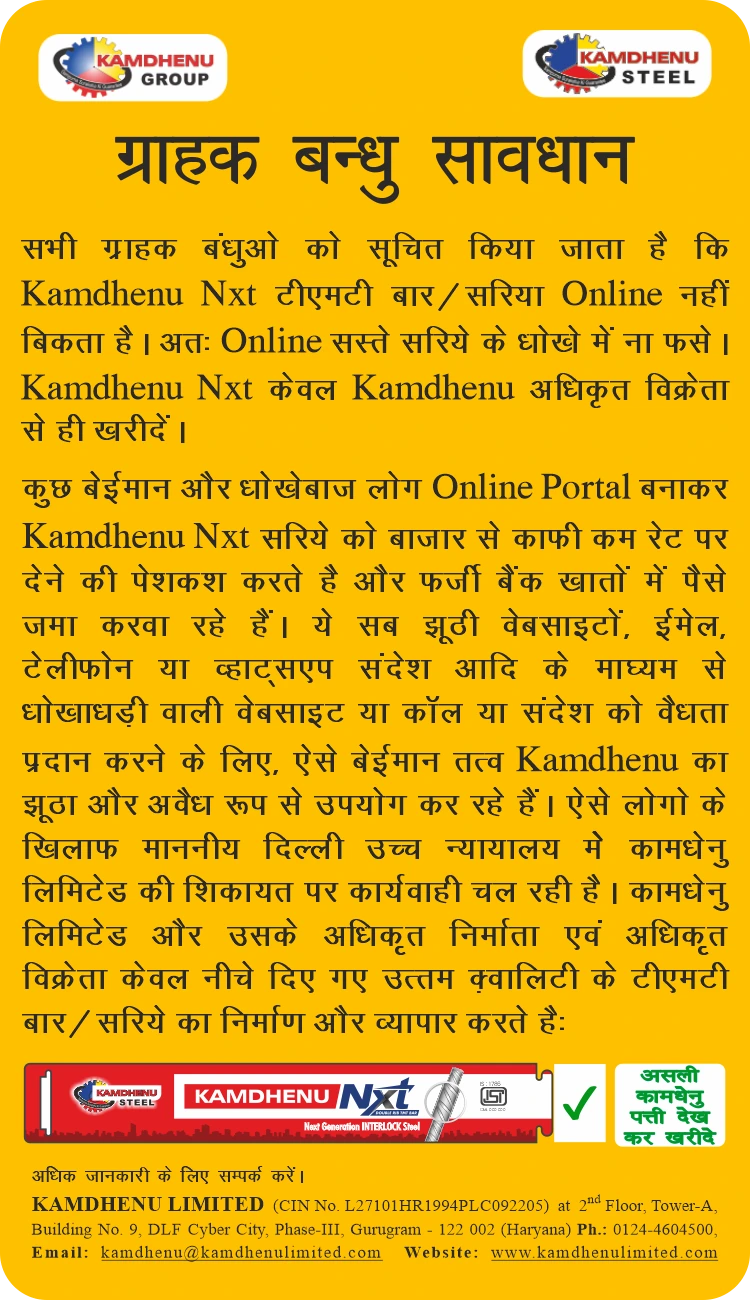
Kamdhenu advises buyers to check for the Kamdhenu Nxt stamp on the bar and the branded strip on supplied bundles.
Bundle Tags
Tags should clearly state:
- Bar diameter
- Steel grade
- Bundle weight
- Heat or batch number
- Manufacturer information
BIS Standard Mark
Check the BIS Standard Mark and licence details where applicable. The marking should correspond with the manufacturer and supplied product.
Test Certificate
Request the mill test certificate or relevant test document covering chemical and mechanical properties.
Nominal Mass and Length
Conduct random checks for bar length, diameter and weight, especially on large projects.
Surface and Rib Condition
Inspect the construction sariya for:
- Consistent ribs
- Straightness
- Deep rust
- Loose scale
- Oil contamination
- Cracks
- Visible surface defects
Bend or Laboratory Testing
Major projects may require random bend, rebend, tensile or chemical tests through an approved laboratory.
Purchase material through authorised dealers and retain invoices, test certificates and delivery records.
The Cost of Poor-Quality Reinforcement
Cheap or unverified steel may create costs that are not visible in the initial quotation.
Quantity Disputes
Variation in weight and diameter can affect the actual quantity received and create disagreements between the buyer, supplier and contractor.
Fabrication Delays
Poor bendability may cause bars to crack or break while preparing stirrups and other shapes.
Welding Problems
Uncertain chemistry can make welding difficult and increase the risk of weak or brittle joints.
Rework and Rejection
Bars that fail inspection or testing may need to be removed, replaced or segregated, delaying construction.
Weak Complaint Resolution
Without brand marks, batch details or test records, tracing the source of defective construction sariya becomes difficult.
The Ministry of Steel reported finished steel consumption of 163.7 million tonnes in India between April 2025 and March 2026, representing year-on-year growth of 7.6%. Large demand makes disciplined sourcing and specification-based comparisons increasingly important.
Buyers should compare verified material properties rather than only the current price per tonne.
TMT Sariya vs Plain Mild Steel Bars
Plain mild steel bars have smooth surfaces and generally lower strength than high-strength deformed TMT bars. Their bond with concrete depends more heavily on surface adhesion and end anchorage.
TMT sariya provides a ribbed surface, declared strength grades and controlled mechanical properties. It is therefore more suitable for modern RCC construction designed according to high-strength reinforcement standards.
Plain bars may still be used in limited applications where expressly permitted by the design. They should not replace specified TMT reinforcement without approval.
Handling and Storage Tips
Store Bars Above the Ground
Use raised supports so that steel does not remain in contact with soil, standing water or mud.
Separate Grades and Diameters
Fe 500, Fe 500D, Fe 550 and Fe 550D should be stored separately. Different diameters should also be arranged and labelled clearly.
Protect Steel From Contamination
Keep bars away from salt, oil, fertilisers, chemicals and other substances that may affect the surface or accelerate corrosion.
Follow the Bar Bending Schedule
Check the approved bar bending schedule before cutting. This helps reduce wastage and prevents incorrect fabrication.
Use Correct Mandrel Diameters
Bars should be bent using the mandrel diameter specified by the applicable standard and project requirements.
Avoid Unapproved Heating
Repeatedly heating bars to force a bend can damage their properties. Heating should not be used unless an approved technical procedure permits it.
Preserve Traceability
Bundle tags and identification should remain attached until the material has been recorded and segregated.
Common Mistakes to Avoid
Common errors when selecting and using TMT sariya include:
- Buying only on the lowest price per tonne
- Using unverified local bars
- Ignoring BIS certification
- Failing to obtain test certificates
- Substituting one grade for another
- Mixing grades at the site
- Assuming a heavier bar is always stronger
- Ignoring weight and diameter tolerances
- Accepting inconsistent rib patterns
- Storing bars directly on wet soil
- Allowing oil, mud or chemicals on the bars
- Repeatedly heating bars for bending
- Welding without checking chemistry and approval
- Using bars with loose scale or deep pitting
- Losing bundle tags and batch traceability
Avoiding these mistakes protects structural quality and reduces rework.
Why Choose a Reliable TMT Sariya Manufacturer?
A reliable manufacturer provides more than a branded bar. It should maintain control over steel chemistry, rolling, quenching, tempering, rib formation, dimensions and testing.
Buyers should look for:
- BIS compliance
- Clearly declared grades
- Consistent bar markings
- Batch traceability
- Chemical and mechanical test records
- Standard nominal mass
- Uniform rib geometry
- Authorised dealer support
- Complaint-handling procedures
- Reliable availability across required diameters
Kamdhenu Nxt is offered in Fe 500, Fe 550, Fe 500D and Fe 550D grades. Its published product information highlights a controlled TMT process and double-rib interlock design.
Project teams should confirm the current technical specifications, diameter availability and certification through an authorised Kamdhenu dealer.
Frequently Asked Questions
Is TMT sariya corrosion-proof?
No. TMT sariya can still rust when exposed to moisture, salts or aggressive chemicals. Proper concrete cover, dense concrete, drainage, handling and storage are essential.
Which TMT grade is best for residential construction?
Fe 500 is widely used in residential and general RCC work. However, the structural engineer must select the correct reinforcement sariya grade for the project.
What does the “D” in Fe 500D mean?
The “D” indicates enhanced ductility. Fe 500D must satisfy higher elongation and ductility requirements than standard Fe 500, subject to IS 1786.
Is Fe 550 better than Fe 500?
Fe 550 has a higher specified strength, but that does not make it suitable for every structure. Detailing, ductility, bendability and crack control must also be considered.
Can Fe 550 replace Fe 500D?
No. One reinforcement sariya grade should not be substituted for another without written approval from the structural engineer.
Can different TMT grades be mixed?
Mixing grades creates identification, fabrication and detailing risks. Only the grades shown in the approved drawings should be used, and they should remain clearly separated at the site.
Is a heavier bar always stronger?
A larger diameter provides more steel area, but strength also depends on the grade. Structural drawings specify both diameter and reinforcement sariya grade.
Why are ribs important on TMT bars?
Ribs improve mechanical interlock with concrete. They help transfer forces, reduce slip and support crack distribution.
How can buyers identify genuine TMT sariya?
Check the bar marking, bundle tags, BIS licence details, test certificate, invoice, rib pattern and authorised dealer information.
Can rusty TMT bars be used?
Light, tightly adhered surface rust may not always make a bar unacceptable. Loose scale, deep pitting, mud, oil and chemical contamination require technical review and may lead to rejection.
Is TMT steel suitable for earthquake-resistant construction?
Ductile TMT sariya, correct structural design and proper detailing support seismic performance. Steel alone cannot make a poorly designed building earthquake-resistant.
Why is TMT saria India commonly used for RCC work?
Verified TMT saria India products offer declared strength, controlled ductility, ribbed bonding, standard tolerances and better traceability than plain or unverified steel.
Conclusion
Quality TMT sariya gives engineers known strength, ductility, bond performance and traceability. Plain or unverified regular steel may not provide the same level of consistency or confidence.
The correct steel must follow IS 1786, approved structural drawings and project-specific testing requirements. Buyers should verify the grade, diameter, weight, surface condition, bar markings and documentation before accepting a delivery.
Kamdhenu Nxt offers multiple TMT grades and a double-rib design for RCC applications. However, even the best construction sariya must be combined with correct detailing, concrete quality, fabrication and workmanship.
Selecting the right reinforcement sariya grade at the beginning helps create a safer, more durable and more predictable reinforced concrete structure.