 September 21 2026
How to Select Reliable Pre-Engineered Building Suppliers: A Complete Guide
Why the supplier decision is critical
A pre-engineered building is not simply a steel shed bought by the tonne. It is an engineered system. The primary frame, purlins, bracing, cladding, connections, and foundation reactions must work together.
That is why selecting Pre Engineered Building Suppliers is a technical and commercial decision. A supplier may offer an attractive rate, but weak design capability, poor detailing or inconsistent fabrication can create delays that cost far more than the initial saving.
Kamdhenu PEB is positioned as a factory-fabricated building system with primary frames, secondary members and roof and wall cladding. The company highlights 3D design, factory fabrication, corrosion-resistant materials, and faster site assembly.
Start with design capability
Reliable Pre Engineered Building Suppliers should have an engineering team that can design to the required Indian or international codes. The supplier should ask for building dimensions, clear span, eave height, bay spacing, roof slope, location, and loading data.
Loads may include dead loads, live load, wind, seismic effects, crane loads, mezzanine loads, and suspended services. PEB suppliers should not start fabrication until design inputs are frozen and approved.
Ask who signs off the design, which software is used, and how calculation reports are reviewed.
Check the complete scope
Different PEB manufacturers include different items in their quotations. One offer may include only the primary frame. Others may include purlins, bracing, cladding, fasteners, accessories, and erection.
Pre Engineered Building Suppliers should provide a clear scope matrix. It should state what is included, excluded, and supplied by others.
Typical components include tapered columns and rafters, C or Z purlins, girts, bracing, base plates, anchor bolts, roof sheets, wall cladding, ridge pieces, flashings, skylights, ventilators and mezzanine deck where required.
Without a scope matrix, price comparison is unreliable.
Review steel grade and fabrication standards
The frame is only as dependable as the steel and fabrication quality behind it. Pre Engineered Building Suppliers should identify the steel grade and relevant material standards used for built-up and hot-rolled members.
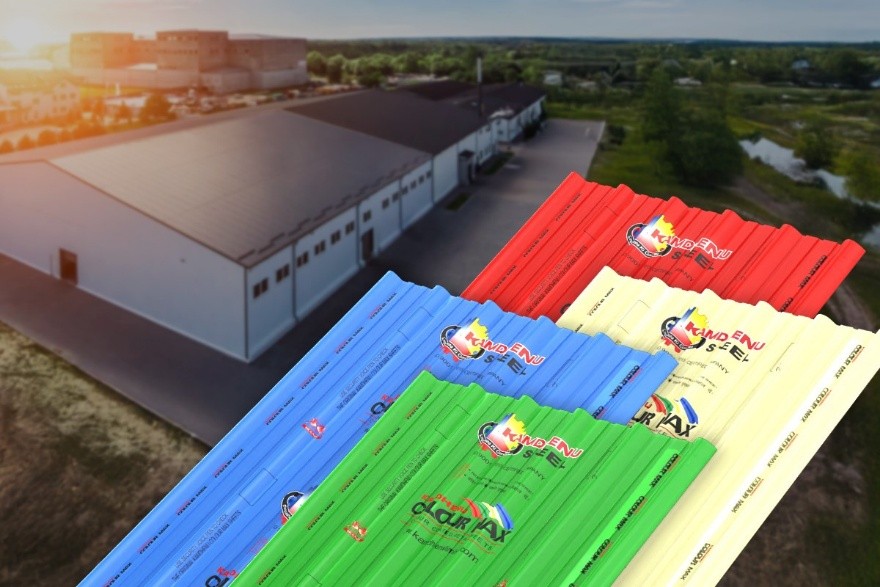
Kamdhenu PEB states that hot-rolled and built sections use high-grade steel conforming to IS and ASTM standards. Its C and Z purlins are cold formed, while roof and wall cladding is available in Galvalume and colour-coated sheets.
Buyers should also ask how welding procedures, bolt holes, plate cutting, and dimensional checks are controlled in the factory.
Evaluate manufacturing capacity
A design office without dependable production capacity can still delay a project. Pre-engineered building manufacturers should show that their fabrication line can handle the project tonnage and delivery schedule.
Ask about plate cutting, automatic welding, drilling, blasting or surface preparation, painting, quality inspection and dispatch capacity.
For large buildings, PEB manufacturers should also explain how members are marked and packed, so erection crews can identify them quickly on site.
Check quality assurance records
Pre Engineered Building Suppliers should have documented inspection stages. Typical checks include raw material identification, weld inspection, dimensional checks, coating thickness, and bolt-hole accuracy.
Ask whether the supplier can provide material certificates, welding records, and inspection reports relevant to the project. Traceability should connect major fabricated members to their material source where required.
Quality assurance is not paperwork for its own sake. It reduces the chance of discovering a dimensional problem when the crane is already waiting at the site.
Compare timelines realistically
Speed is one of the main benefits of PEB construction. But aggressive promises should still be tested.
A realistic programme includes design approval, material procurement, fabrication, coating, dispatch, and erection. Pre Engineered Building Suppliers should identify which activities can run in parallel with civil foundation work.
Ask what information they need from the client to protect the schedule. Delayed approval of general arrangement drawings can affect fabrication just as much as a factory issue.
Examine cladding and weather protection
The building envelope deserves the same attention as the frame. PEB suppliers should specify roof and wall sheet substrate, thickness, coating and profile.
Check fasteners, washers, sealants, ridge details, gutters, downpipes and translucent panels. Poor accessories can cause leaks even when the main frame is excellent.
Pre Engineered Building Suppliers should also explain insulation options where thermal performance or condensation control is important.
Site erection capability
Some steel building suppliers deliver material only. Others provide or manage erections. Clarify this before the contract award.
If erection is included, review the method statement, lifting plan, safety system, crane requirement, and crew experience. Frames need temporary stability during erection. Bracing should be installed in the correct sequence.
Pre Engineered Building Suppliers should coordinate anchor-bolt templates and foundation interface details early. A small anchor-bolt error can create major site delays.
Commercial comparison beyond rate per kilogram
PEB quotations can look similar while covering different scopes. Compare total project value.
Check:
- Design and engineering fees;
- Steel tonnage basis;
- Cladding quantity and specification;
- Accessories;
- Bolts and fasteners;
- Transport;
- Unloading;
- Erection;
- Taxes;
- Warranty;
- Exclusions and variation rules.
Professional Pre Engineered Building Suppliers make these commercial boundaries clear.
Future expansion should be discussed now
Industrial buildings often grow. A warehouse may need another bay. A factory may add a crane or mezzanine.
Tell pre-engineered building manufacturers about realistic future plans. The original design can sometimes accommodate expansion more efficiently when this is considered from the start.
However, do not assume any PEB can be extended later without engineering review. New loads and changed stability systems must be checked.
Questions to ask during supplier evaluation
Before appointing Pre Engineered Building Suppliers, ask:
- Which code will govern the design?
- Who is responsible for structural calculations?
- What material grades are used?
- What is the fabrication capacity?
- Which quality records are provided?
- What cladding specifications are included?
- Is erection included?
- How are anchor bolts coordinated?
- What is the realistic delivery programme?
- How are design changes priced and controlled?
The answers should be written into the contract, not left as verbal assurances.
Kamdhenu PEB as a reference
Kamdhenu PEB includes primary framing systems, C and Z purlins, roof and wall cladding, mezzanine deck sheets and accessories such as ridge ventilators, skylights, louvres and insulation.
The system is positioned for industrial sheds, warehouses, corporate offices, stadiums, metro stations, airport hangars, and toll plazas. For buyers evaluating Pre Engineered Building Suppliers, that illustrates the breadth a complete PEB offer may need to be covered.
Final takeaway
The best Pre Engineered Building Suppliers combine engineering discipline, fabrication quality and dependable execution. Price matters, but it should come after the technical scope is aligned.
Check codes, loads, steel grades, fabrication, quality records, cladding, erection and delivery. Compare PEB suppliers in the same scope. Freeze responsibilities before production starts.
A well-selected supplier can turn PEB construction into what it is meant to be: a fast, controlled and efficient way to deliver an industrial building.
Practical specification notes
- Pre Engineered Building Suppliers should provide a clear design basis before commercial comparison is finalised.
- Pre Engineered Building Suppliers need fabrication capacity that matches the promised delivery programme.
- Good Pre Engineered Building Suppliers coordinate anchor bolts, frames and cladding as one system.
- Pre Engineered Building Suppliers should state whether erection and unloading are included in the price.