 February 27 2026
How Steel Binding Wire Prevents Cage Shift, Honeycombing, and Rework
How Steel Binding Wire Prevents Cage Shift, Honeycombing, and Rework
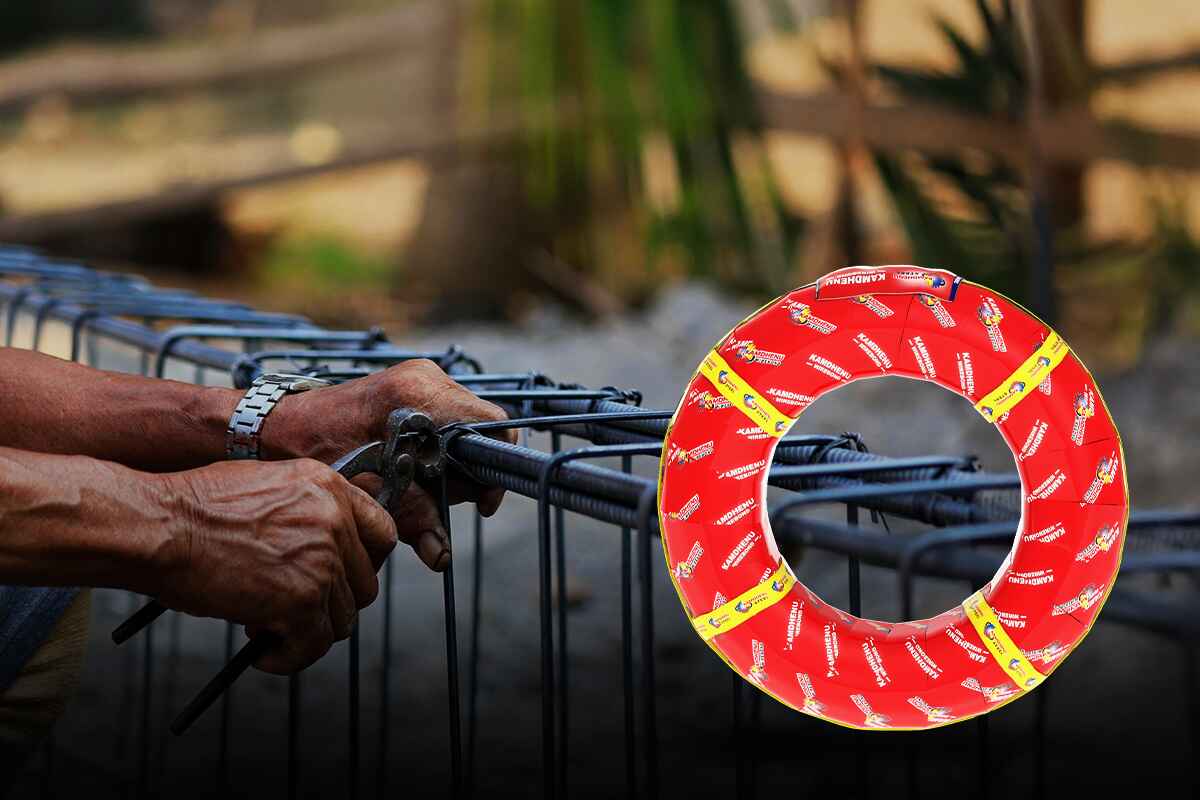
On-site, a concrete day is the real test. That is when mistakes show up. That is also when rebar cages try to move.
This is why Steel Binding Wire is not a “small item.” It controls rebar position. It protects the detailing intent. And it reduces avoidable rework.
Most contractors know this from experience. Loose cages shift during pouring or vibration. Then the shuttering needs adjustment. Then repair mortar enters the story.
Kamdhenu’s own site guidance is direct. Good ties help prevent bar shift. They help prevent honeycombing from displaced cages. That is practical language. And it is accurate.
This blog focuses on Kamdhenu WIREBOND. It is Kamdhenu’s premium binding wire offering.
Steel Binding Wire vs MS Binding Wire
On Indian sites, both terms often mean the same thing. A low-carbon mild steel wire used for tying. It is made in coils or bundles. It is typically soft enough to twist cleanly.
Kamdhenu WIREBOND is described as a premium binding wire made using ultra-modern technology and aligned to ISO 9001:2015 practices. It is positioned for reinforcement binding, masonry wall ties, and general construction.
So if your purchase order says MS Binding Wire, and your site team says Steel Binding Wire, you are still solving the same problem. Secure the steel. Hold the geometry. Pour with confidence.
Why binding quality decide RCC outcomes
A rebar cage is a geometry system. Spacing matters. Cover matters. Laps matter. Anchorage matters.
Binding wire does not carry design loads like rebar. But it protects rebar placement. That makes it a design enabler.
Kamdhenu’s site note explains the chain reaction clearly. Loose tying can lead to rebar displacement during vibration. Then the concrete flow becomes irregular. Then honeycombing risk rises.
This is why buyers should treat binding wire as a productivity input. Not a bargain line item.
What standards should your MS Binding Wire follow
A serious buyer asks one standard question first. “Which standard is this made to?”
Kamdhenu states WIREBOND is manufactured as per IS 280. IS 280 covers mild steel wire for general engineering purposes. BIS also publishes a product manual for IS 280 that outlines conformity expectations for certification and grouping guidelines.
In procurement language, this matters because it supports: Traceability, Repeatability and QA documentation.
Kamdhenu WIREBOND specs that matter on site
Most site disputes happen because the wire behaves badly. It snaps too easily. It is too stiff. It has surface defects. Or it comes in messy packing. Kamdhenu publishes the practical specs.
Types and tensile limits
WIREBOND is offered in two types:
- Annealed: maximum 500 N/mm² tensile strength.
- Soft drawn: maximum 550 N/mm² tensile strength.
These numbers are useful for comparison. They also signal controlled production.
Diameters for different tying strengths
Kamdhenu states WIREBOND is offered in 0.71 mm, 0.90 mm, and 1.12 mm diameters. These sizes cover most RCC tying needs. From slabs to heavier cages.
Chemical range
Kamdhenu also publishes chemical ranges for the wire:
- Carbon: 0.10–0.20%
- Manganese: 0.30–0.60%
- Sulphur: max 0.050%
- Phosphorus: max 0.050%
That supports a “controlled low-carbon” story. Which is what you want in Steel Binding Wire.
Packing and site handling
WIREBOND is supplied in 5 kg and 25 kg bundles. This is a practical detail. It helps store the steel. It helps small sites. It also helps big sites plan consumption.
Application-led selection guide for Steel Binding Wire
Do not overcomplicate this. Keep it tied to reinforcement congestion. Use the wire diameter that matches the tying effort and stability need. Kamdhenu notes that the offered diameters are meant for different tying strengths and rebar sizes.
Here is a practical site mapping you can use as a starting point. (Always follow your engineer and do trial ties.)
- 0.71 mm: faster tying on lighter cages and slab mesh.
- 0.90 mm: general-purpose choice for beams and columns.
- 1.12 mm: heavier cages and dense reinforcement where slip risk is higher.
Also, think about worker fatigue. A stiffer wire slows work. Poor wiring breaks and wastes time. Kamdhenu’s site advisory makes the economics clear. Reliable tying reduces rework and delays.
Lists that procurement teams actually use
1) Buying checklist for MS Binding Wire
- Ask for IS 280 compliances on the supply.
- Choose diameter based on cage type (0.71 / 0.90 / 1.12 mm).
- Prefer wire with uniform diameter and clean surface finish.
- Confirm packing in 5 kg or 25 kg bundles for handling.
- Ask for labelled identification on coils for tracking.
2) Pour-day tying checklist for site engineers
- Check that ties are snug at intersections.
- Check corners in beams and columns for firm knots.
- Fold cut ends inward for safety.
- Do a light shake test. There should be no visible cage shift.
- Confirm cover blocks before pour.
This is how you keep reinforcement “pour-day ready.” This is also how you reduce defect repairs.
Corrosion is not a small number
Many people ignore corrosion until it shows up. That is a mistake. A CSIR-NML statement reported India loses 2–3% of GDP every year due to corrosion. That is not only about binding wire. It is about the entire steel system in buildings.
Kamdhenu WIREBOND is positioned as resistant to corrosion and degradation for long-term durability. So if your project is coastal, humid, or industrial, do not cut corners on wire quality. The cost difference is small. The defect cost is not.
Conclusion
If you want smoother pours and fewer corrections, tighten your tying system. Choose the right diameter. Use clean coils. And enforce the pour-day checklist. For specifications, packing options, and ordering support, use the Kamdhenu WIREBOND product page and the Request a Quote option.
Quick FAQs
Is Steel Binding Wire only for RCC rebar tying?
It is mainly used for reinforcement binding. It is also used for masonry wall ties and general construction binding.
Why not buy some cheap MS Binding Wire?
Because poor wire breaks, wastes time, and increases rework risk. Kamdhenu’s site note links good tying to fewer delays and fewer complaints.
How do I order Kamdhenu WIREBOND?
The product page supports brochure download and a “Request a Quote” route.