July 18 2026
Best Roofing Sheets for Warehouse Construction in India 2026
Warehouse Roofing Sheets – Complete Selection, Specification & Installation Guide
A warehouse roof is not merely a protective covering. It safeguards inventory, supports uninterrupted operations and influences internal temperature, lighting and maintenance costs. Leakage can damage finished goods, excessive heat can affect workers and products, and condensation may stain cartons or corrode equipment. Selecting the right roofing sheets for warehouse construction therefore becomes an important business decision.
In 2026, buyers have more options than conventional galvanised iron sheets. Pre-painted galvanised steel, pre-painted aluminium-zinc steel, insulated panels, translucent daylight sheets and advanced roofing accessories are widely available. The best option is the one that matches the warehouse use, structural span, climate, operating conditions and expected service life.
India's logistics and industrial market continues to create demand for large spaces that can be constructed quickly. CBRE reported a record 27.1 million square feet of industrial and logistics leasing during the first half of 2025. This scale makes consistent roof quality, repeatable specifications and professional installation increasingly important for developers and occupiers.
What Are Warehouse Roofing Sheets?
Warehouse roofing sheets are profiled metal or composite panels used to cover logistics facilities, distribution centres, industrial sheds and storage buildings. They protect the structure and its contents from rain, heat, dust, wind and other environmental conditions.
Modern warehouse roofing India projects may use galvanised steel, colour-coated steel, aluminium-zinc-coated steel, insulated sandwich panels or translucent sheets. The roofing system also includes purlins, fasteners, washers, ridges, flashings, gutters, sealants and ventilation components.
The sheets should not be evaluated as standalone products. Their performance depends on how the complete roof system is designed, specified and installed.
Types of Roofing Sheets Available for Warehouse Construction
Colour-Coated Trapezoidal Sheets
Pre-painted galvanised or aluminium-zinc-coated sheets are a mainstream choice for dry warehouses and logistics sheds. They are lightweight, quick to install and available in several colours and finishes.
The trapezoidal ribs increase sheet stiffness and help discharge rainwater. A properly specified colour coated warehouse roof can also create a consistent appearance across the roof and wall cladding.
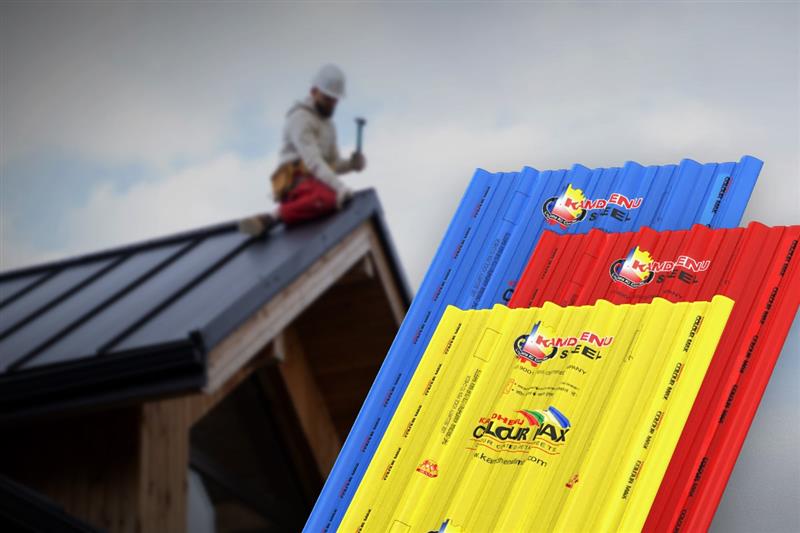
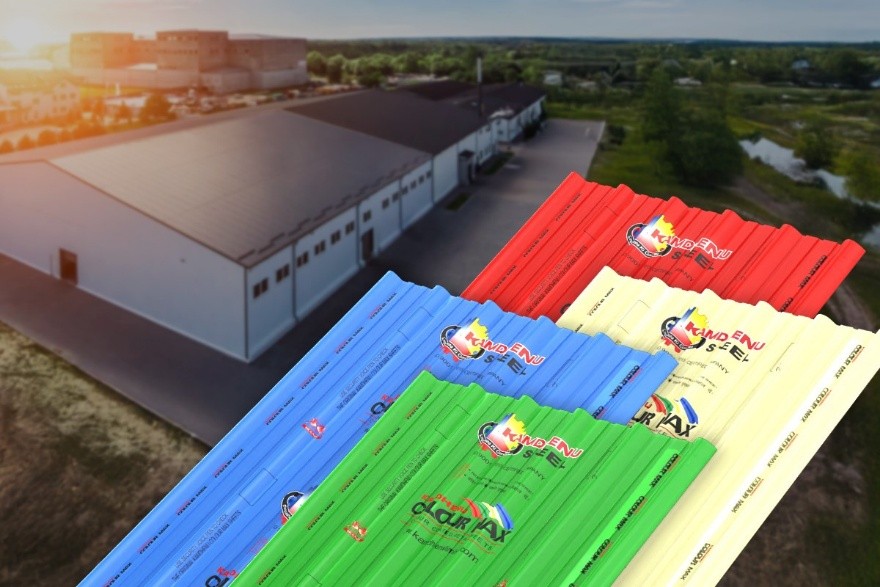
Kamdhenu Colour Max Hi Rib is the company's trapezoidal roofing and cladding range. Kamdhenu highlights strength, durability, thermal efficiency, wider valleys and weather resistance. These features are relevant to a colour coated warehouse roof, subject to project-specific engineering and installation.
Galvalume or Aluminium-Zinc Sheets
Galvalume sheets use an aluminium-zinc alloy coating that can provide strong corrosion performance across many exposure conditions. They may be supplied in bare or pre-painted forms.
These sheets can suit warehouses that require extended outdoor performance. However, coastal and chemically aggressive environments still require a specialist assessment of the coating, fasteners and accessories.
PUF or PIR Insulated Panels
PUF and PIR sandwich panels consist of metal facings with an insulating core. They are suitable for temperature-sensitive storage, cold-chain facilities and air-conditioned warehouses.
The insulation core and thickness should be selected according to the required thermal performance. Fire classification, joint design, vapour control and panel compatibility must also be verified.
Galvanised Iron Roofing Sheets
GI sheets remain an economical option for basic storage facilities and utility buildings. The zinc coating protects the steel surface and delays corrosion.
GI may not offer the finished appearance or additional paint layer provided by colour-coated sheets. Maintenance planning is therefore important, particularly around cut edges, fasteners and damaged areas.
Translucent Daylight Panels
Polycarbonate or FRP panels can be integrated into the roof to introduce natural light and reduce daytime lighting demand.
The percentage of translucent coverage should be controlled because excessive daylight panels can increase glare and heat gain. Their profile should match the main roof sheets, and laps must remain weather-tight.
Why Hi-Rib Profiles Suit Warehouse Roofs
Warehouses usually have large roof areas and long slopes. Hi-rib roofing sheets use raised ribs to increase stiffness and help the sheets span between purlins. The valleys between the ribs carry rainwater towards the gutters.
Proper rib geometry can also improve overlap performance and reduce the risk of water entering through the side laps. However, a deeper rib is not automatically the best option. The profile must be assessed with the selected sheet thickness, purlin spacing, wind pressure and fixing arrangement.
Important profile checks include:
- Effective cover width rather than only the overall sheet width
- Rib depth and pitch
- Minimum recommended roof slope
- Maximum span for the selected thickness
- Side-lap groove or anti-capillary feature
- Compatibility with ridges, flashings and other accessories
Warehouse edge and corner zones normally experience higher wind suction. Fastener density may need to increase in these areas. The structural designer, roofing supplier and installation contractor should coordinate the fixing plan.
Factors to Consider Before Buying Roofing Sheets for a Warehouse
Warehouse Use
The correct roof depends on what the building will store and how it will operate. A dry-goods warehouse, cold store, agricultural storage shed and e-commerce fulfilment centre can have different thermal, ventilation and condensation requirements.
Base Metal
Buyers should confirm whether the sheets use galvanised steel, pre-painted galvanised steel, aluminium-zinc-coated steel or another approved material.
The base metal affects corrosion resistance, appearance, maintenance requirements and overall cost.
Sheet Thickness
A lower quotation may hide a thinner sheet. Buyers should ask whether the stated thickness refers to base metal thickness or total coated thickness.
Thickness should not be considered alone. Profile design, steel strength, purlin spacing and fastener arrangement also influence roof performance.
Protective Coating
The specification should clearly state the zinc or aluminium-zinc coating mass. For pre-painted sheets, it should also define the top and back paint system.
A colour coated warehouse roof should be selected according to the actual environment rather than colour alone. Coastal locations, high-humidity interiors and aggressive industrial areas may require enhanced coating protection.
Yield Strength
Minimum yield strength should be stated where relevant. A sheet must be capable of spanning between supports and resisting the applicable wind and service loads.
Manufacturer span tables and structural calculations should support the selection.
Effective Cover Width
Effective cover width is the usable width after the sheets have been overlapped. It is more useful than overall width when calculating the required quantity and comparing quotations.
A sheet with a smaller effective cover may require more material and fasteners for the same roof area.
Roof Slope and Drainage
The roof profile and slope must support efficient drainage during heavy rainfall. Valleys, gutters, outlets and downpipes should be sized for the local rainfall intensity.
High-rainfall areas require particular attention to lap detailing, gutter capacity and water discharge.
Insulation and Condensation Control
Not every warehouse requires insulation, but internal temperature targets, occupancy and stored goods should guide the decision.
Condensation should not be treated only as an external weather problem. Moisture can form on the underside of cold sheets, especially in humid buildings, warehouses storing wet goods or facilities operating at night.
Fasteners and Accessories
Fasteners, washers, ridges, flashings, gutters and closures should be compatible with the sheet material and coating.
Poor-quality accessories can create leak points or corrode earlier than the main roofing sheets.
Climate Selection for Warehouse Roofing in India
Warehouse roofing India must perform under heat, dust, monsoon rainfall, humidity and regional wind conditions. The same roofing specification may perform differently in Jaipur, Kochi and Guwahati.
For hot inland regions, buyers should consider light external colours, suitable insulation and ridge ventilation. High-rainfall zones require adequate roof slope, larger drainage capacity and properly detailed gutters.
Coastal sites need exposure-appropriate coatings and compatible fasteners. Humid warehouse interiors may require insulation, vapour control and improved air movement to reduce condensation.
A roof specification from one location should not be copied directly to another without reviewing the local environment and warehouse operations.
Benefits of High-Quality Warehouse Roofing Sheets
Faster Construction
Long sheet lengths cover large areas efficiently. Factory-formed profiles reduce the amount of fabrication required at the site and help enclose the building more quickly.
Lower Structural Weight
Metal roofing sheets for warehouse construction are lighter than many traditional roof systems. Subject to structural design, this can reduce the load placed on purlins and primary frames.
Efficient Rainwater Drainage
Correctly selected hi-rib roofing sheets provide defined valleys that direct water towards gutters. Wider valleys can support faster drainage during intense monsoon events.
Consistent Appearance
Colour-coated sheets provide a uniform finish across large roof and wall areas. This can help create a cleaner, more organised appearance for logistics parks and industrial facilities.
Better Thermal Control
Insulation, light external colours, ventilation and controlled daylighting can reduce heat gain. The final result depends on the complete roofing assembly rather than one product feature.
Easier Maintenance and Replacement
Individual sheets, fasteners, flashings and accessories can be inspected and replaced when required. Permanent safe access should be provided for future maintenance.
Long-Term Cost Efficiency
A properly specified roof may require a higher initial investment but can reduce leakage, product damage, heat-related discomfort and repeated repairs.
Warehouse Roofing Sheet Prices in India in 2026
Roofing prices change according to steel rates, coating, thickness, colour, quantity, and freight. Online B2B listings reviewed in 2026 showed PPGI products across a broad range, commonly around ₹85 to ₹130 per kg for standard offerings.
Some suppliers quote per square foot, running meter, or running feet instead of per kilogram. These figures should be treated only as broad market indications, not final project rates.
| Cost component | Why the cost varies |
|---|---|
| Sheet | Base metal, thickness, strength and coating |
| Profile | Effective cover width, forming complexity and length |
| Insulation | Material type, density and thickness |
| Fasteners | Material, washer quality and required quantity |
| Accessories | Ridges, flashings, gutters and closures |
| Installation | Building height, access, safety and roof geometry |
| Freight | Delivery distance, bundle length and unloading requirements |
Suppliers should state whether GST, transport and unloading are included. Buyers should compare the complete installed cost rather than only the sheet rate.
How to Compare Warehouse Roofing Sheets Correctly
A lower price may indicate a thinner sheet, lighter protective coating or smaller effective cover width. All bidders should therefore respond to a common comparison format.
Request the following information:
- Base metal and coating type
- Nominal thickness and permitted tolerance
- Zinc or aluminium-zinc coating mass
- Top and back paint system
- Minimum yield strength
- Effective cover width
- Maximum available sheet length
- Warranty scope and exclusions
- Test certificates and traceability
- Recommended fastener and overlap details
For large projects, a physical sample and approved colour should be confirmed before production begins.
Best Roofing Sheets for Different Warehouse Applications
| Warehouse application | Preferred starting option |
|---|---|
| General dry storage | Colour-coated hi-rib profile |
| E-commerce fulfilment | Colour-coated roof with planned insulation and daylighting |
| Cold storage | PUF or PIR insulated panels |
| Coastal warehouse | Exposure-rated pre-painted aluminium-zinc system |
| Agricultural storage | Ventilated metal roof with condensation control |
| Basic temporary storage | GI profile, subject to the required service life |
This matrix is only a starting point. Fire safety, wind design, warehouse operations and insurance requirements must also be considered.
General Dry Storage
A colour coated warehouse roof with a trapezoidal or hi-rib profile suits many dry-storage buildings. Insulation may be added based on occupancy, internal temperature and the sensitivity of stored products.
E-Commerce Fulfilment Centres
E-commerce facilities often have higher occupancy and extended operating hours. Their roofing system may require insulation, planned daylighting, ventilation and permanent maintenance access.
Cold-Chain Warehouses
PUF or PIR insulated panels are generally more appropriate for temperature-controlled storage. Joint sealing, vapour control and fire performance are critical.
Coastal Warehouses
Coastal facilities should use coatings, fasteners and accessories selected for salt-laden air and high humidity. A standard inland specification may not provide adequate protection.
Agricultural Storage
Agricultural warehouses may need ventilation and condensation control to protect stored produce. Internal moisture conditions should be assessed before finalising the roof system.
Colour-Coated Hi-Rib Sheets vs GI Roofing Sheets
Colour-coated hi-rib roofing sheets use a pre-painted galvanised or aluminium-zinc-coated steel base. They combine a profiled shape with a finished protective coating and are commonly used in modern logistics and industrial buildings.
GI roofing sheets use a zinc-coated steel base but do not include the same colour paint system. They can be suitable for basic storage and utility structures where appearance and enhanced coating performance are not primary requirements.
The final choice should consider:
- Required service life
- Exposure conditions
- Appearance
- Thermal requirements
- Maintenance expectations
- Project budget
- Compatibility with accessories
The sheets should be compared using the same thickness definition, coating specification, effective cover width and structural requirements.
Installation Tips for a Long-Lasting Warehouse Roof
Even the best roofing sheets for warehouse projects can leak or deteriorate when installation is poorly controlled. Contractors should prepare method statements for unloading, lifting, cutting, fixing and sealing.
Handle Sheets Carefully
Sheets should never be dragged across one another. Long sheets require lifting arrangements that prevent bending, twisting or coating damage.
Use Compatible Fasteners
Use the fasteners and washers recommended for the selected system. Fasteners should be positioned according to the profile and structural fixing plan.
Avoid Over-Tightening Screws
Over-tightened screws can crush washers and damage the sheet surface. Under-tightened screws may fail to create a weather-tight seal.
Remove Metal Filings
Drill filings and cutting swarf should be removed every day. These particles can rust and stain the roof surface.
Complete Flashing Details
Flashings around vents, ducts and roof penetrations must be completed carefully. Poorly sealed penetrations are a common source of leakage.
Check Gutters and Outlets
Gutters and rainwater outlets should be tested before handover. They must be free from construction debris and capable of handling the expected rainfall.
Provide Safe Maintenance Access
Permanent access arrangements should be included so that the roof, gutters and accessories can be inspected without creating unnecessary safety risks.
Common Warehouse Roofing Mistakes to Avoid
Common mistakes include:
- Selecting sheets only by the lowest rate
- Comparing products with different thickness definitions
- Ignoring effective cover width
- Choosing a profile without checking purlin spacing
- Using inadequate coating for the local climate
- Overlooking internal condensation
- Installing incompatible fasteners
- Dragging sheets during unloading or installation
- Leaving drill swarf on the roof
- Over-tightening screws
- Poorly completing flashings and penetrations
- Failing to test gutters before handover
- Copying another warehouse's specification without reviewing actual conditions
Avoiding these mistakes can reduce leakage, corrosion, material wastage and premature maintenance.
Why Consider Kamdhenu Colour Max?
Kamdhenu Colour Max is offered for roofing and wall cladding in trapezoidal and tile profiles. The company states that the range is designed for weather resistance, corrosion resistance, durability and low maintenance. Accessories are also available for roof integration.
For warehouse projects, the hi-rib option is the more typical starting point. Buyers should confirm the thickness, coating, profile, colour, delivery length and accessories with an authorised source.
The complete system should be compared rather than only the sheet price. Fasteners, flashings, gutters, closures, insulation and installation quality also affect the final performance.
Maintenance Tips for Warehouse Roofing
Warehouse roofs should be inspected at planned intervals and after severe storms or monsoon periods.
Maintenance should include:
- Checking fasteners and washers
- Inspecting laps, ridges and flashings
- Removing leaves, dirt and industrial debris
- Clearing gutters and rainwater outlets
- Checking for scratches and coating damage
- Repairing local corrosion promptly
- Inspecting translucent sheets and sealants
- Looking for signs of internal condensation
- Confirming that access systems remain safe
Early attention to small defects can prevent larger leaks and expensive damage to stored goods.
Frequently Asked Questions
Which roofing sheet is best for a warehouse?
Colour-coated hi-rib roofing sheets suit many general warehouses and logistics sheds. Cold stores may require insulated panels, while coastal facilities may need exposure-rated aluminium-zinc-coated systems.
Which roof lasts the longest?
Service life depends on the base metal, coating, environment, detailing, installation and maintenance. A correctly specified pre-painted aluminium-zinc or galvanised system can provide strong long-term value.
Should every warehouse use insulation?
No. Insulation depends on the internal temperature target, occupancy, climate and stored goods. A thermal assessment can help determine whether the investment is justified.
Are colour-coated sheets suitable for warehouses?
Yes. A properly specified colour coated warehouse roof can provide strength, weather protection and a consistent finished appearance.
Why are hi-rib profiles commonly used for warehouses?
Hi-rib roofing sheets offer increased stiffness and defined valleys for rainwater drainage. Their suitability must still be checked against thickness, span, wind loads and purlin spacing.
How should warehouse roofing prices be compared?
Compare identical base metal, thickness, coating, yield strength, effective cover width and accessories. Include freight, installation, fasteners, gutters and insulation when calculating the total installed cost.
Can translucent sheets reduce electricity use?
Translucent sheets can reduce daytime lighting demand. However, the coverage must be controlled to prevent excessive glare and heat gain.
What causes condensation below warehouse roofing sheets?
Condensation may occur when warm, humid air meets the colder underside of the roof. Insulation, vapour control, ventilation and internal moisture management can help reduce the risk.
Conclusion
The best roofing sheets for warehouse construction in 2026 combine the right base metal, protective coating, thickness, profile and installation system. The roof must be selected according to the warehouse use, local climate, structural span and expected service life.
Price comparisons should use equal specifications and include the complete installed cost. A lower sheet rate may be offset by reduced cover width, lighter coating or higher maintenance requirements.
Kamdhenu Colour Max Hi Rib provides a relevant colour-coated option for modern warehouses. However, a disciplined specification, compatible accessories and a trained installation team will matter as much as the name on the sheet.