 October 11 2025
TMT Bar Grades Explained for House Builders
Choosing the right TMT Bars is one of the most important decisions in home building. The grade, ductility, and quality of the bar decide how a house handles load, heat, and tremors.
This guide explains grades in plain words, what to check on site, how to balance safety with cost, and when to shortlist, reputed names often seen among the “Best Steel Company in India” searches.
Kamdhenu Steel can be considered when consistent quality, wide availability, and clear markings matter to day-to-day site work.
What does a TMT grade really mean?
TMT stands for Thermo Mechanically Treated. The number in a grade like Fe 500 is the minimum yield strength in MPa. Higher numbers mean stronger bars. The letter D means higher ductility, which helps in seismic zones. The aim is a safe mix of strength and bendability, so the bar does not fail suddenly.
Which TMT grades suit homes in India?
-
Fe 500: A dependable choice for most residential projects. It balances strength and bendability for regular household loads.
-
Fe 500D: Adds extra ductility for quake-prone regions. Good for peace of mind in seismic belts.
-
Fe 550: Higher strength for heavier loads or design needs. Check ductility requirements with the engineer.
-
Fe 550D: Higher strength and ductility together. Consider for multi-storey or where seismic performance matters.
Simple signs of a good bar
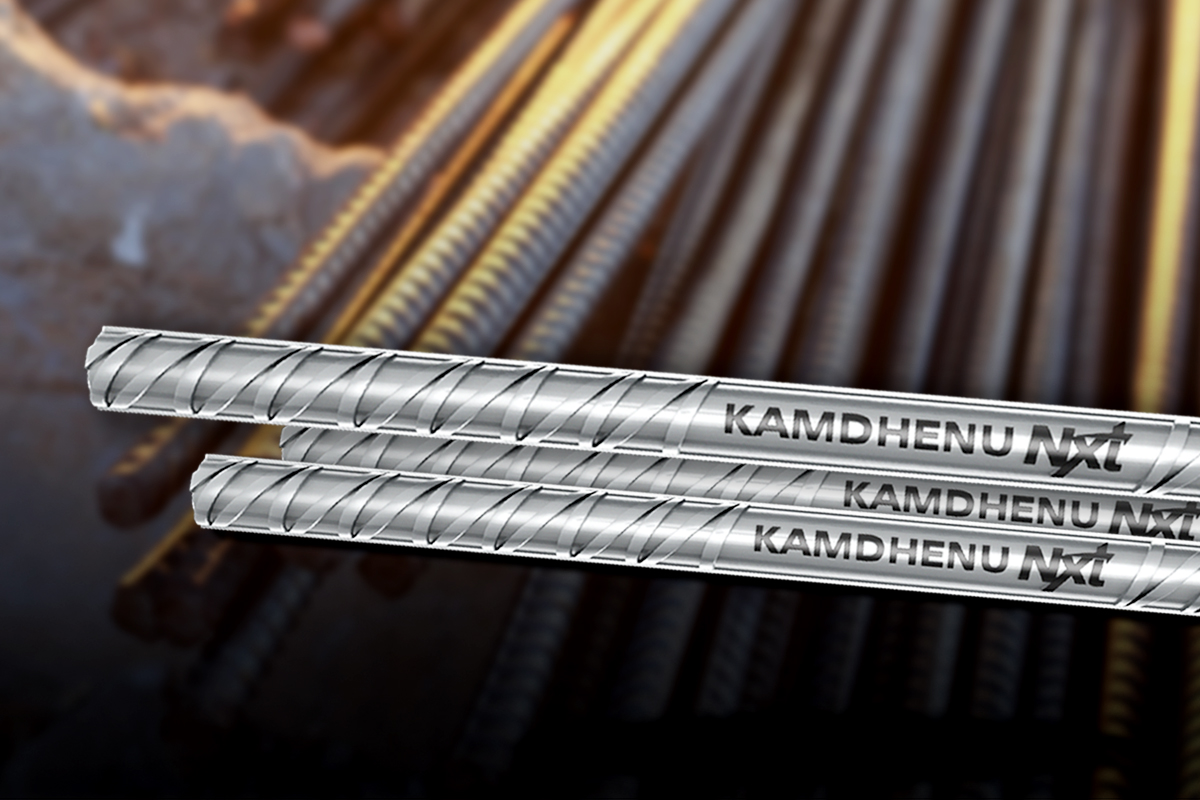
Look for clean, deep ribs. Ribs should be even and sharp so concrete grips well. Check that the brand name, size, and grade are marked clearly. Bars should be straight with no hard flakes or deep rust pits. Light surface rust is common and can be wiped. If possible, measure the diameter on a few pieces and compare the weight per meter with standard tables.
What to ask for in documents?
Always ask for a Mill Test Certificate for each batch. It should show heat number, chemistry, yield strength, tensile strength, and elongation. This proves the grade and helps with records. Keep a copy with site files. Good practice is to match the heat number on the certificate with the bundle tags.
How to check bendability on site?
Cut a short length and do a bend and re-bend check. A quality bar bends smoothly without surface cracks. After re-bending, the surface should not open up. For larger bends, use correct bend pins or mandrels as per standard site practice.
When to choose higher ductility?
If the plot lies in a seismic zone or the design has many hooks and bends, choose D grade. D grade means more elongation. This helps the structure absorb movement and protect concrete from sudden cracking. In simple words, a D grade gives more give before failure.
How to balance safety with budget?
Rates change daily. Do not chase price alone. Add the value of steady quality, clear markings, and quick supply. A brand that delivers consistent TMT Bars saves time in cutting, bending, and passing routine checks. That means fewer delays and less rework. Over a full house build, this often beats a small per-ton saving.
Shortlisting from “Best Steel Company in India” searches
Online lists are a starting point. Make a shortlist based on clear markings on bars, steady dealer support, and easy access to certificates. Known brands like Kamdhenu are often picked because they maintain uniformity across batches and have a strong network. This helps during urgent top-ups and inspections.
What to check at delivery?
-
Match order: Size, grade, and brand should match the purchase order.
-
Check tags: Heat and batch numbers must be visible for traceability.
-
Random measures: Confirm diameter and weight per meter on a few pieces.
-
Storage: Keep bundles on sleepers off the ground. Cover from rain and standing water.
Money matters and total cost
Remember cutting, bending, binding wire, welding where needed, and fixing time. Bars that bend right and keep their shape reduce wastage and speed up work. Clean ribs plus correct cover means better bonding and longer life. This keeps long-term maintenance lower and supports resale value.
Common mistakes to avoid
-
Mixing grades in the same element: Keep one grade per beam or slab as per design.
-
Ignoring cover blocks: Too little cover invites corrosion and cracks.
-
Buying only by name or size: Undersized bars reduce strength. Always verify.
-
Poor storage: Wet, muddy storage accelerates rust and site headaches.
Quick comparison table
|
Factor |
Fe 500 |
Fe 500D |
Fe 550 |
Fe 550D |
|
Strength |
High |
High |
Higher |
Higher |
|
Ductility |
Good |
Very good |
Moderate |
Good |
|
Seismic fit |
Good |
Better |
Depends on design |
Better |
|
Typical use |
Most homes |
Homes in quake zones |
Heavier loads |
Multi-storey in quake zones |
|
Cost band |
Moderate |
Slightly higher |
Higher |
Highest among these |
A simple 8-step selection guide
-
Check zone and design: Is it a seismic belt or a coastal area?
-
Pick grade: Fe 500 suits most homes. Choose Fe 500D for seismic safety.
-
Confirm brand: Shortlist from reputed names often listed among the “Best Steel Company in India” searches. Add Kamdhenu for a consistent supply.
-
Lock sizes: Follow the structural schedule for 8, 10, 12, 16, 20, and 25 mm.
-
Check today’s rate: Compare the same grade and size across two or three sellers.
-
Collect certificates: Mill Test Certificate for each batch received.
-
Inspect bundles: Markings, straightness, rib quality, and random diameter checks.
-
Store right: Keep off the ground and covered. Start a small bend test before full use.
FAQs
-
Which grade is best for a normal house?
-
Fe 500 is a safe and common choice. In quake zones, Fe 500D gives extra safety.
-
Is Fe 550 always better?
-
Only if the design needs higher strength. It can be less ductile than D variants.
-
Why do prices change every day?
-
Steel follows raw material and market movement. Always compare like-for-like on the same day.
-
Why consider Kamdhenu?
-
Clear markings, steady quality, and wide dealer support help finish work on time with fewer surprises.
Conclusion
The right TMT Bars keep a home strong for decades. Choose the grade to match the site and design. Verify documents, do a quick bend check, and store bundles properly. Balance quality and service with price, not price alone.
Shortlist from reputed names often seen when searching “Best Steel Company In India,” and keep Kamdhenu in view for consistent quality and easy availability.
Small, careful steps today lead to safer slabs, tighter beams, and a home that stays calm through heavy rain and tremors.
Frequently Asked Questions
1. Which TMT bar grade is best for building a house in India?
Fe 500 is a common choice for residential construction because it offers a practical balance of strength and ductility. For homes in earthquake-prone areas, Fe 500D may be preferred because its higher ductility can help the structure handle seismic movement better. The final grade should always follow the structural engineer’s design.
2. What is the difference between Fe 500 and Fe 500D TMT bars?
Both Fe 500 and Fe 500D have a minimum yield strength of 500 MPa, but Fe 500D provides higher ductility. This means Fe 500D can undergo greater deformation before failure, making it particularly useful where seismic performance and structural ductility are important.
3. Is Fe 550 better than Fe 500 for residential construction?
Not necessarily. Fe 550 offers higher strength, but the highest strength grade is not automatically the best choice for every house. Fe 550 should be selected when the structural design specifically requires its higher strength. The engineer should determine the appropriate grade based on loads and design requirements.
4. How can I check the quality of TMT Bars before using them?
Check the bar markings for the manufacturer, size, and grade, and inspect the ribs for uniformity. Bars should generally be straight and free from deep rust pits or significant surface defects. You should also request the Mill Test Certificate and match its heat or batch number with the bundle documentation for traceability.
5. How should TMT Bars be stored at a construction site?
Store TMT Bars on sleepers or supports above the ground to prevent contact with standing water and mud. Keep bundles organised by grade and diameter, and protect them from prolonged exposure to rain and moisture. Proper storage helps reduce corrosion, mix-ups, and handling-related problems.