 June 20 2026
Structural Steel in Construction: Angles, Channels, Beams and Their Uses Explained
Structural steel is seen in almost every industrial and commercial project.
It is used in sheds, frames, platforms, towers, supports, walkways and fabrication work. It gives strength. It also gives speed.
For many contractors, the main structural steel products India uses are angles, channels, beams and flats. Each section has a specific role. Each one performs differently under load.
This blog explains steel angles channels beams in simple terms. It also explains why IS 2062 steel matters for construction quality.
Why Structural Steel Is Important
Structural steel supports load-bearing and fabrication work.
It is used where strength, shape and ease of fabrication matter. It can be cut, drilled, welded and bolted. This makes it useful in site and workshop fabrication.
India's finished steel consumption reached 164 million tonnes in FY 2025-26, supported by infrastructure, construction, railways and manufacturing. This shows the important role of steel in national construction activity.
For buyers, this means the market is large. But quality checks are still essential.
What Is Structural Steel?
Structural steel is steel produced in standard shapes and grades for construction and engineering use.
Common sections include:
- Angles
- Channels
- Beams
- Flats
- Hollow sections
These sections are selected based on load, span, connection type and fabrication need.
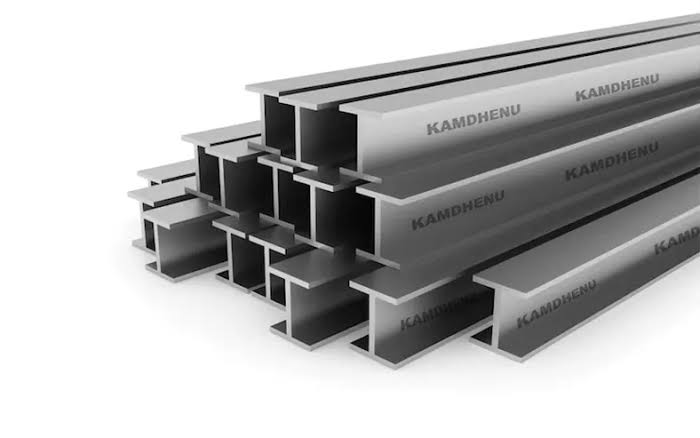
Kamdhenu Structural Steel includes angles, channels, beams and flats. Kamdhenu states that its structural steel conforms to IS 2062 standards and is known for high strength, high ductility, reliability and durability.
What Are Steel Angles?
Steel angles are L-shaped sections.
They may have equal legs or unequal legs. Equal leg angles have both sides of the same length. Unequal leg angles have different side lengths.
Angles are easy to fabricate. They are used in bracing, frames and supports.
Common uses include:
- Trusses
- Towers
- Bracing members
- Shelving and racks
- Frames and supports
- Edge protection
- Small platforms
Angles are practical where loads are moderate and connection simplicity is important.
What Are Steel Channels?
Steel channels are C-shaped sections.
They have a web and two flanges. This shape gives them good strength in one direction. Channels are common in framing and support work.
Common uses include:
- Purlins
- Framing members
- Floor supports
- Equipment bases
- Stair stringers
- Vehicle bodies
- Industrial racks
Channels are useful where a flat face is needed for connection or mounting.
What Are Steel Beams?
Steel beams are used for heavier load-bearing work.
They are often I-shaped or H-shaped sections. Their shape helps resist bending. Beams are commonly used in floors, roofs, gantry supports and industrial structures.
Common uses include:
- Roof support
- Mezzanine floors
- Industrial frames
- Bridges and platforms
- Crane support structures
- Heavy equipment areas
Beams should always be selected by design. Span, load and deflection limits matter.
Why IS 2062 Steel Matters
IS 2062 is the Indian standard for hot rolled medium and high tensile structural steel.
The BIS product manual for IS 2062 is used for certification practice and quality consistency. It helps ensure that structural steel meets required mechanical and chemical properties.
Kamdhenu Structural Steel is positioned as conforming to IS 2062. This matters because structural steel must be dependable. It is often used in load-bearing members.
Quick Use Table
| Section | Shape | Best Use |
|---|---|---|
| Angle | L shape | Bracing, towers, frames and light supports |
| Channel | C shape | Purlins, supports, racks and equipment bases |
| Beam | I or H shape | Heavy load-bearing and long-span members |
| Flat | Rectangular strip | Base plates, connectors and fabrication details |
This table is a guide. Final selection should follow design calculations.
Steel for Industrial Construction
Steel for industrial construction must be practical and reliable.
Factories and sheds need clear space, speed and durability. Structural steel supports these needs. It can be prefabricated, transported and erected quickly.
It is useful in:
- Industrial sheds
- Warehouses
- Machinery platforms
- Pipe supports
- Conveyor supports
- Mezzanine floors
- Walkways
- Utility structures
For industrial work, straightness, weldability and dimensional accuracy matter. Poor sections can delay fabrication.
Kamdhenu Structural Steel Benefits
Kamdhenu Structural Steel is positioned around strength, ductility, bendability, weldability and straightness. The company states that these properties make its structural steel easy to fabricate and reliable in use.
Key benefits include:
- High strength
- High ductility
- Conformity to IS 2062
- Better fabrication suitability
- Reliable section range
- Use in construction and industrial projects
These benefits matter for fabricators. They reduce rework and improve fit-up.
Buying Checklist for Structural Steel
Before buying structural sections, confirm:
- Section type and size
- Grade and standard
- Length and quantity
- Weight per metre
- Straightness
- Surface condition
- Test certificate
- Heat number or batch traceability
- Fabrication suitability
- Supplier reliability
Do not approve material only by visual inspection. Use drawings and specifications.
Final Takeaway
Angles, channels and beams are basic but important structural members.
Angles are useful for bracing and light framing. Channels are useful for supports and purlins. Beams carry heavier loads and longer spans.
For structural steel products India, buyers should look for strength, ductility, standard compliance and consistent dimensions.
Kamdhenu Structural Steel offers angles, channels, beams and flats that conform to IS 2062. It is a practical option for construction and industrial fabrication.
Fabrication Quality Matters
Structural steel performance depends on more than the section.
Cutting, drilling, welding and alignment must be done correctly. Poor fabrication can damage even good material. Welds should be inspected. Holes should not be enlarged casually. Members should be protected from corrosion as per exposure conditions.
For industrial structures, drawings should clearly show section size, connection details, plate thickness and bolt grade. This avoids site guesswork.
Good structural steel and good fabrication practice go together.
Quick FAQs
Are angles, channels and beams interchangeable?
No. Each section has a different shape and load behaviour. Substitution needs engineer approval.
Why should IS 2062 be checked?
IS 2062 gives a recognised standard reference for hot rolled structural steel. It helps buyers avoid vague material specifications.
Procurement Note
For fabricated structures, order sections only after final drawings are frozen. Also confirm cutting lengths and wastage allowances. This helps reduce offcuts and prevents wrong-size material from reaching the workshop.
Material should be stacked properly. Channels and angles should not be left in waterlogged areas. Coating or painting should be planned as per site exposure.