 February 24 2026
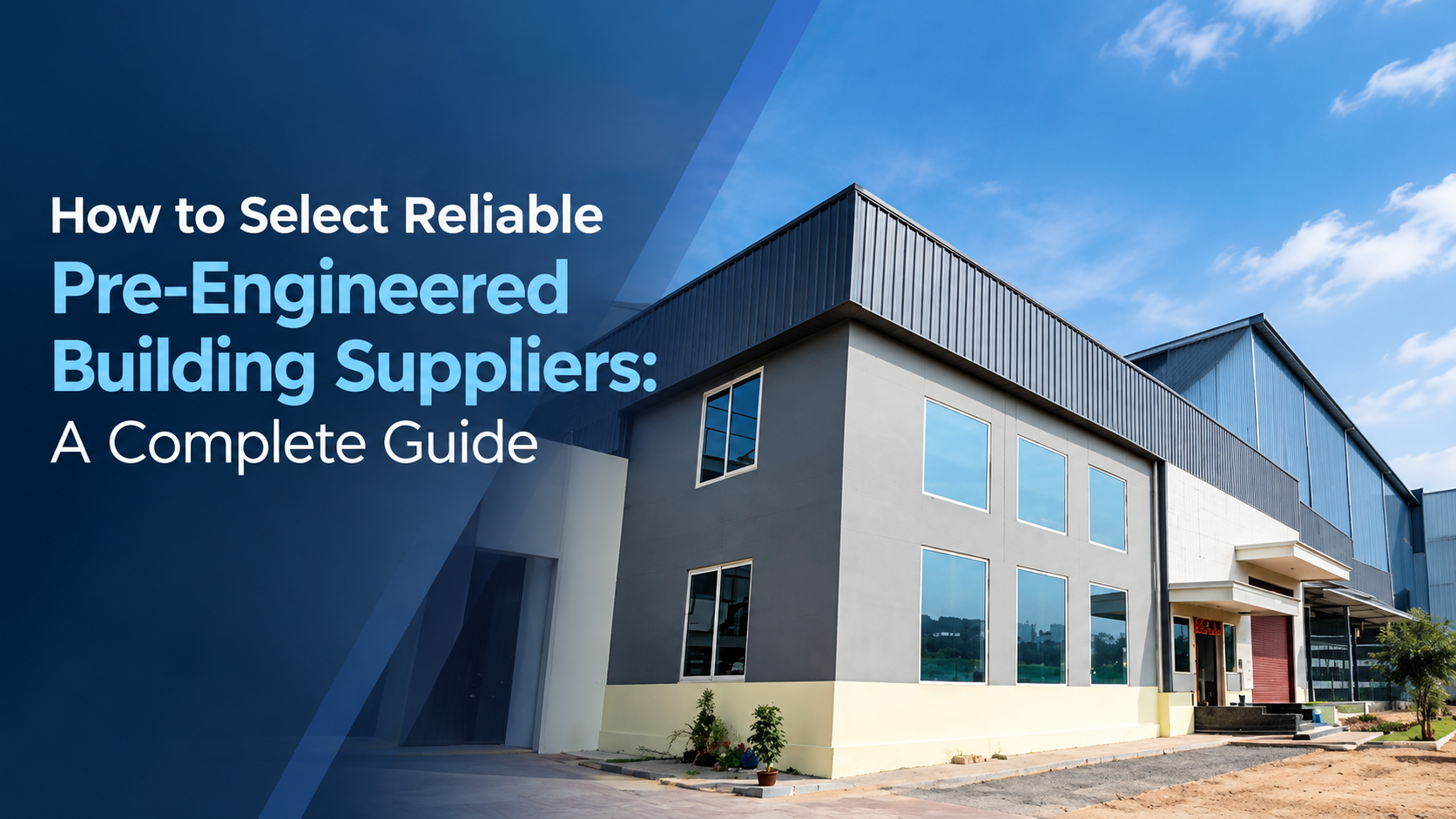
How to Shortlist the Right PEB Partner for Warehouses, Factories, and Logistics Parks?
PEB demand is rising. So is buyer confusion. Many buyers start with one question. “Who are the best PEB Structure Manufacturers?”
That is the wrong first step. Start with your application. Then lock the scope. Then compare vendors on the same basis.
This matters because India’s steel demand is projected to grow strongly. One industry report cites around 9% growth in steel demand in 2025 and 2026 versus much lower global growth. When demand is high, delivery discipline matters more.
This blog gives you a field-ready method. It also shows how Kamdhenu PEB approaches design, fabrication, cladding, and handover.
First, define the building like an operator, not like a buyer
A PEB is not only a “shed.” It is an operating asset.
So start with these inputs.
- Use type. Warehouse, factory, cold storage, showroom, workshop.
- Clear span and eave height.
- Bay spacing and expansion plan.
- Crane loads, if any.
- Ventilation, skylights, ridge vents, and insulation needs.
Kamdhenu PEB highlights the same reality. PEBs are custom-designed for span, height, bay spacing, crane loads, mezzanines, and environmental loads. If you cannot define these items, quotes will be inconsistent. And your “lowest quote” will become the costliest.
What a serious PEB structure manufacturer in India must deliver
A vendor is not only a fabricator. A vendor is also a design-and-documentation partner.
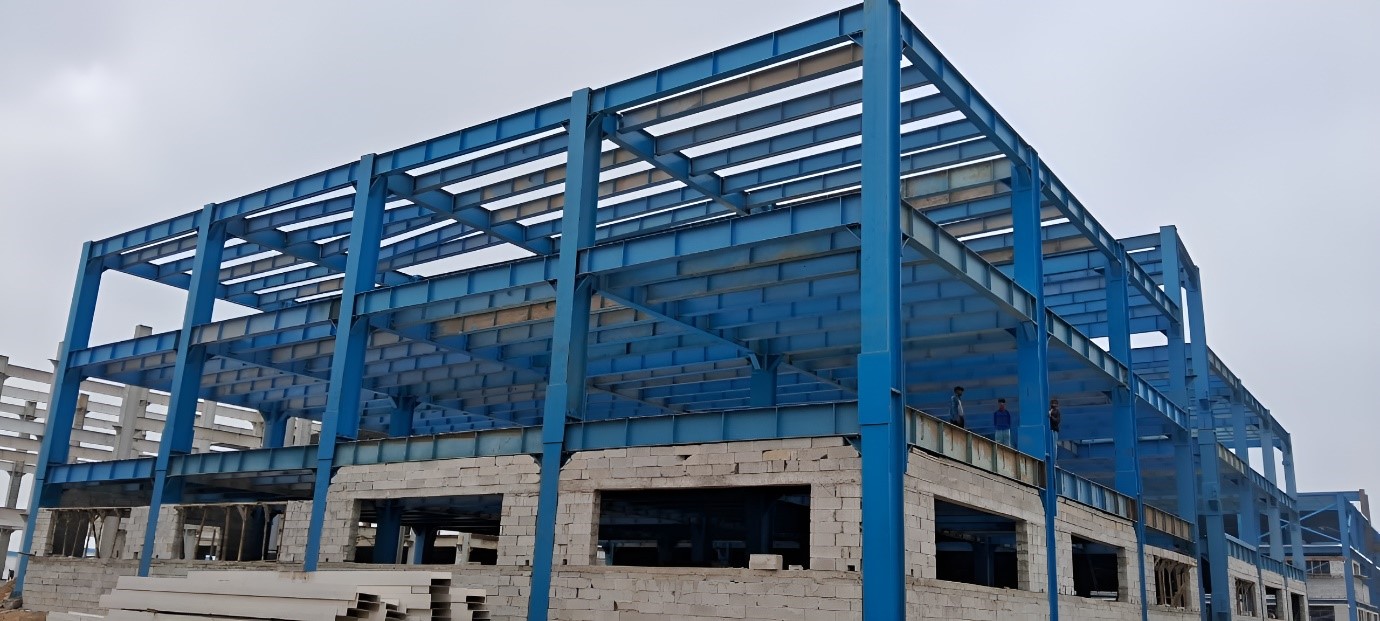
A complete PEB scope typically includes: Primary frames, secondary members, bracing, roof and wall cladding, trims and gutters, design and detailing, packing, transport, and erection scope.
If a quote is missing these, ask why. Do not assume it is “included.”
Kamdhenu PEB positions itself as a complete solution. It covers primary framing systems, roof and wall cladding, mezzanine deck sheets, and accessories like ridge ventilators, skylights, louvres, insulation, and roll-up doors.
The 10-question shortlist for PEB Structure Manufacturers
Use these questions in your first call. Keep the answers documented.
- Which codes do you design for?
Kamdhenu PEB states code-based design and engineering to accepted codes. - Do you provide GA drawings and connection details before fabrication?
This is a control point.
Kamdhenu’s PEB page commits to a handover pack and documentation as applicable. - How do you control fabrication quality?
Factory-controlled fabrication under a QMS is a good sign. - What steel do you use for primary frames?
Kamdhenu notes hot-rolled and built-up sections fabricated using high-grade steel conforming to IS and ASTM standards. - What do you use for purlins?
C and Z purlins are standard in PEBs.
Kamdhenu mentions cold-formed C & Z purlins for stability. - What cladding options are offered?
Kamdhenu lists roof and wall cladding in Galvalume and colour-coated sheets. - Do you include accessories and weather detailing?
If not, leaks will become a “site problem.”
Kamdhenu lists ridge ventilators, skylights, insulation, and other accessories. - Do you optimize steel weight, or just fabricate drawings?
Optimized steel usage is a core PEB advantage. - What is your manufacturing and erection timeline?
Fast erection is the point of PEB. - How will you handle expansion later?
PEBs can be planned for phased expansion with compatible future bays.
A practical RFQ checklist for apples-to-apples comparison
Send the same RFQ to every vendor. Then compare properly.
RFQ scope bullets
- Building use and location.
- Span, length, eave height, and roof slope.
- Wind and seismic requirements (as per the engineer).
- Crane details, mezzanine loads, and floor openings.
- Cladding type, thickness, and coating requirement.
- Insulation requirement (if any).
- Openings schedule. Doors, windows, louvres, skylights.
- Deliverables. GA, fabrication drawings, anchor bolt plan, erection method, and handover docs.
This forces discipline. It also reduces “hidden exclusions.”
Steel quality matters more than you think
PEBs are weight sensitive. So, quality and consistency matter.
For structural steel in India, IS 2062 is a common reference for hot-rolled structural steel. Kamdhenu Structural Steel states it conforms to IS 2062 and includes angles, channels, beams, and flats. It also publishes baseline mechanical values like minimum yield stress 250 N/mm² and tensile strength 420 N/mm² for its structural steel section.
This is relevant in PEB projects. Because secondary structures, platforms, and fabrication often use standard sections.
Cladding is not decoration. It is weather insurance.
Most PEB operational complaints are about leakage and heat. Cladding and detailing decide both.
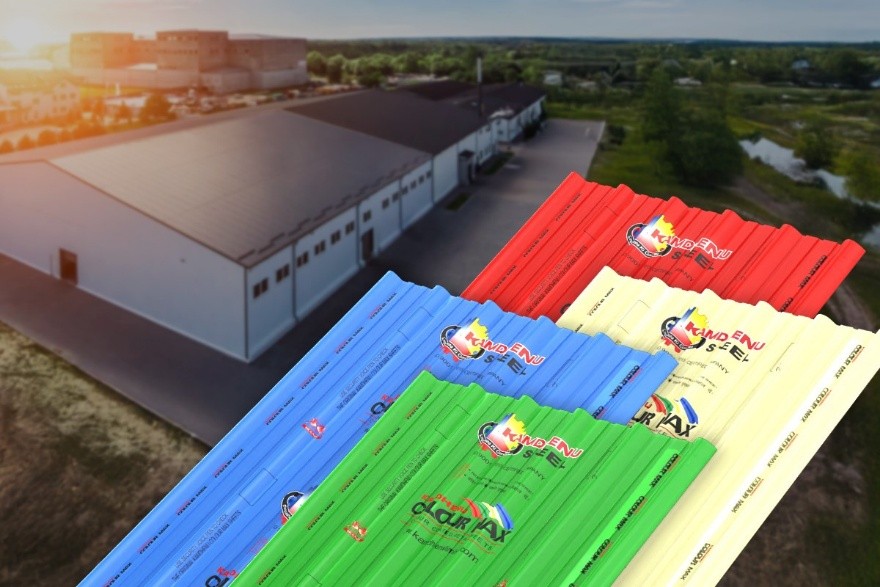
Kamdhenu Colour Max is positioned for roofing and wall cladding. It is offered in profiles like trapezoidal and tile and is designed for harsh weather. It lists base material options like GI and Galvalume, and coating thickness in the 5-20-micron range. For Hi-Rib sheets, it also lists zinc coating references such as Z120 GSM and Galvalume AZ150/AZ70 GSM.
In your vendor comparison, ask one simple question. “What cladding and accessories are included in your rate?”
Cost and timeline: what the data says
PEB decisions are commercial decisions. Time is money.
Kamdhenu’s PEB content cites that PEBs are often associated with 20% to 30% savings versus conventional builds in many use cases. A Kamdhenu blog also references a comparative study. It reports total project cost reductions of “almost 30%” and provides example numbers for an industrial building comparison. It also gives a time comparison of roughly 2 months for a PEB versus about 1.5 years for a traditional build in the example narrative.
Do not treat these as universal guarantees. Treat them as a planning direction. Your savings depend on scope clarity and execution discipline.
Where Kamdhenu PEB fits in the shortlist
If you want a single partner approach, evaluate Kamdhenu PEB early.
- 3D design software for precision engineering.
- Reduced construction time and material wastage.
- High-strength steel and corrosion-resistant materials.
- Customizable designs and faster completion.
- Factory-controlled fabrication and a complete handover pack.
It also lists typical applications like industrial sheds, warehouses, corporate offices, stadiums, metro stations, airport hangars, and toll plazas. That breadth matters. Because experienced vendors understand different load cases and detailing needs.
Close with a clean next step
If you are planning a warehouse, factory, or logistics facility, do this next.
- Freeze your input sheet.
- Send a standard RFQ.
- Compare the total scope, not the headline rate.
- Ask for the design approach and handover documents upfront.
If you want a quote with clear scope and timelines, start with Kamdhenu PEB’s “Request a Quote” flow and share your input sheet.