 November 14 2025
MS Angle in Construction: Benefits and Uses You Should Know
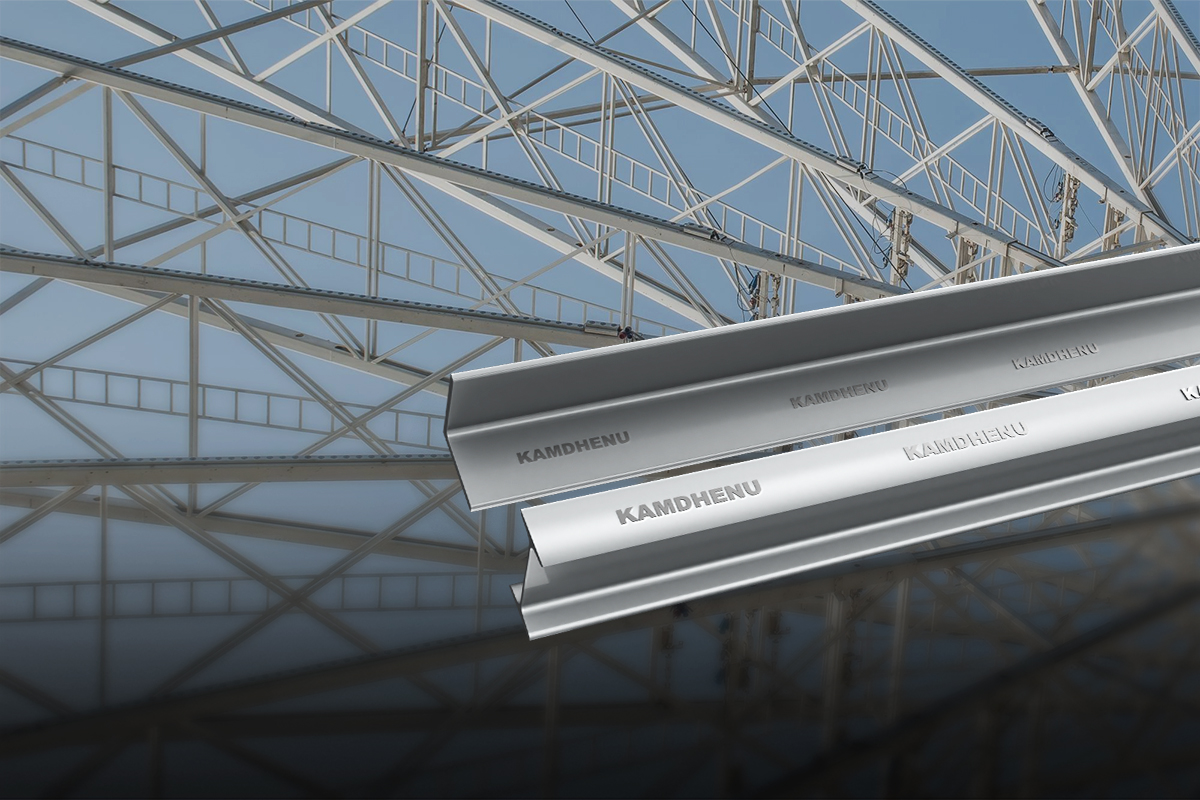
A strong frame starts with simple, reliable parts. One such part is the MS Angle. It is an L‑shaped mild steel section that gives support, bracing, and clean edges in many building jobs.
In this guide, you will learn where MS Angle fits best, how to choose the right size, what to check at delivery, and how to keep costs under control without risking safety.
If you prefer steady quality and easy availability, Kamdhenu’s structural range is a sensible shortlist for site work across India.
What is an MS Angle in plain words?
MS means mild steel. An MS Angle is an L‑section with equal or unequal legs. It cuts, drills, and welds easily. Because it balances strength with workability, it is used for frames, supports, and bracing in homes, shops, sheds, and public works.
Key benefits that matter on-site
-
Strength with simplicity: The L‑shape resists bending and gives clean corners for frames and shelves.
-
Easy fabrication: Cuts, holes, and welds are straightforward. No special tools needed for most jobs.
-
Good value: Priced well for large and small projects. Readily available in tier‑2 and tier‑3 markets.
-
Flexible sizes: Equal and unequal angles allow you to match loads and clearances.
-
Finish options: Prime and paint or galvanise for coastal or wet zones.
Common construction uses people search for
-
Roof trusses and purlin support for small sheds and extensions
-
Door and window frames, lintel support angles, and staircase stringers
-
Racks, mezzanine edges, light platforms, and guard rails
-
Boundary gates, grills, pergolas, and façade frames
-
Tower bracing, sign frames, and solar panel mounts
Selecting the right size and thickness
Think about load, span, and how the angle connects to other parts.
-
Equal angles: Good for symmetrical frames, shelves, stair stringers.
-
Thickness: Thicker sections resist bending but add weight and cost. Choose the lightest section that meets load and deflection needs.
Tip: For outdoor or damp areas, consider galvanising or a rich‑zinc primer plus topcoat. This slows rust and extends repaint cycles.
What to check at delivery?
-
Size and leg length: Confirm as ordered and measure a few pieces.
-
Straightness: Sight down the length; there should be no twist or big bow.
-
Edges and surfaces: No deep rust, heavy scale, or dents. Light transit marks are normal.
-
Mill or test details: If available, keep a copy with batch or heat numbers for records.
Money matters: control total cost, not just rate
Price per kg is only part of the picture. Add cutting, drilling, welding rods, fasteners, primer, topcoat, and labour. Well‑planned sections and standard lengths reduce off‑cuts. A quick primer after fabrication prevents flash rust and saves rework later.
Safety first during fabrication and fixing
-
Lift with slings to avoid bending legs.
-
Deburr cut edges to prevent injuries and poor fits.
-
Use correct weld parameters; avoid overheating thin legs.
-
Prime soon after welding and grinding to seal bare steel.
Quick comparison table for choices
|
Need on site |
Equal MS Angle |
Unequal MS Angle |
|
Symmetric frames and shelves |
Excellent fit |
Acceptable if sized right |
|
Wall or column edge support |
Works, may need plates |
Better, one long leg fixes neatly |
|
Stair stringers and trims |
Common use |
Used when clearance is tight |
|
Bracing and gussets |
Very common |
Very common in edge connections |
|
Material efficiency |
Good for square layouts |
Good for offset layouts |
Typical applications in homes and small projects
-
Staircases: Use angles as stringers or as supports under treads. Finish with paint for a neat look.
-
Car porch and verandah: Angle frames carry light roofing with minimal weight.
-
Kitchen lofts and storage: Angle racks handle daily loads at a sensible cost.
-
Boundary gates: Angle frames hold grill bars and cladding neatly and stay rigid.
Typical applications in commercial and rural projects
-
Shopfront mezzanines: Angle ledgers and brackets support light platforms.
-
Warehouse racking: Angle uprights and braces for small to medium loads.
-
Farm sheds and equipment frames: Easy to repair and extend with basic tools.
-
Telecom and utility: Angle bracing in small towers and sign masts where specified.
How to choose a reliable supplier
-
Dimensional consistency: Angles should match the listed sizes along the full length.
-
Clean rolling and straightness: Fewer corrections on site means faster work.
-
Documentation and markings: Clear tags help trace batches.
-
Service and stock: Local dealers who supply standard sizes quickly keep projects moving.
Kamdhenu’s structural range is known for availability and straightforward site handling. If the project also uses Kamdhenu TMT or coated sheets, keeping brands aligned can simplify documentation and after‑sales support.
What to avoid on site
-
Under‑sizing to save cost: Leads to deflection, rattles, and early repairs.
-
Skipping primer after welding: Flash rust appears quickly and spoils the finish.
-
Poor anchoring: Loose fasteners at the wall or slab edges cause movement and cracks.
-
Inconsistent leg orientation: Plan which leg faces out for a neat, repeatable detail.
Step‑by‑step buying and installation guide
-
Define the job: load, span, location, indoor or outdoor.
-
Select section: equal or unequal, then choose thickness to control deflection.
-
Confirm lengths: Order standard or cut‑to‑length to reduce waste.
-
Plan joints: Decide where to place gussets and how to fix them to walls or beams.
-
Order fasteners and paint: Keep zinc‑rich primer and a suitable topcoat ready.
-
Inspect delivery: Check sizes, straightness, and surface condition.
-
Fabricate cleanly: Cut, drill, weld, deburr, then prime the same day if possible.
-
Fix safely: Use proper anchors and verify level and plumb before final tightening.
-
Is MS Angle good for outdoor use?
-
Yes, if protected. Use galvanising or a zinc‑rich primer plus topcoat in coastal or wet areas.
-
Equal vs. unequal: which should I pick?
-
Use equal for symmetric frames. Choose unequal when one leg must fix to a surface and the other carries the load.
-
Can I mix angles with channels or tubes?
-
Yes. Many frames use angles for edges and channels or tubes for main spans. Match thickness and fixings.
-
What about maintenance?
-
Inspect yearly. Touch up paint on scratches and joints. Tighten loose fasteners.
Conclusion
The MS Angle is a small section that solves big site problems. It is strong, simple to work with, and easy on the budget. Choose equal or unequal legs based on load paths and fixing needs. Check straightness and surface on delivery, and seal bare steel fast. For a steady supply and familiar handling on Indian sites, Kamdhenu’s structural range is a practical option. With these basics in place, your frames, racks, and sheds will stay rigid, neat, and low‑maintenance for years.
Frequently Asked Questions
1. What is an MS Angle?
An MS Angle is an L-shaped mild steel section available in equal or unequal leg configurations. It is commonly used for structural supports, frames, bracing, racks, gates, and fabrication work.
2. What are MS Angles commonly used for?
MS Angles are used in roof trusses, door and window frames, staircases, racks, mezzanines, boundary gates, grills, farm sheds, tower bracing, sign frames, and solar panel mounting structures.
3. How do I choose the right size of MS Angle?
The appropriate MS Angle depends on factors such as the load, span, connection method, required strength, and deflection limits. Equal angles are generally suitable for symmetrical applications, while unequal angles can be useful when different leg lengths are required for fixing or load support.
4. How can MS Angles be protected from rust?
For outdoor, humid, or coastal applications, MS Angles can be protected through galvanising or by applying a suitable zinc-rich primer followed by a protective topcoat. Regular inspection and touch-up of damaged areas can also help maintain corrosion protection.
5. What should I check when buying MS Angles?
Check the leg dimensions, thickness, straightness, surface condition, length, dimensional consistency, and available material documentation. Selecting a reliable supplier can help ensure consistent quality and reduce fabrication and installation issues.