 June 17 2026
Kamdhenu Nxt: How Double-Rib Technology Is Redefining Construction Strength
Strength in RCC does not depend on concrete alone.
Steel and concrete must work together. The bond between them is critical. If the bond is weak, load transfer becomes weak. If the bond is strong, the structure performs better.
This is where Kamdhenu Nxt TMT bars bring a useful difference.
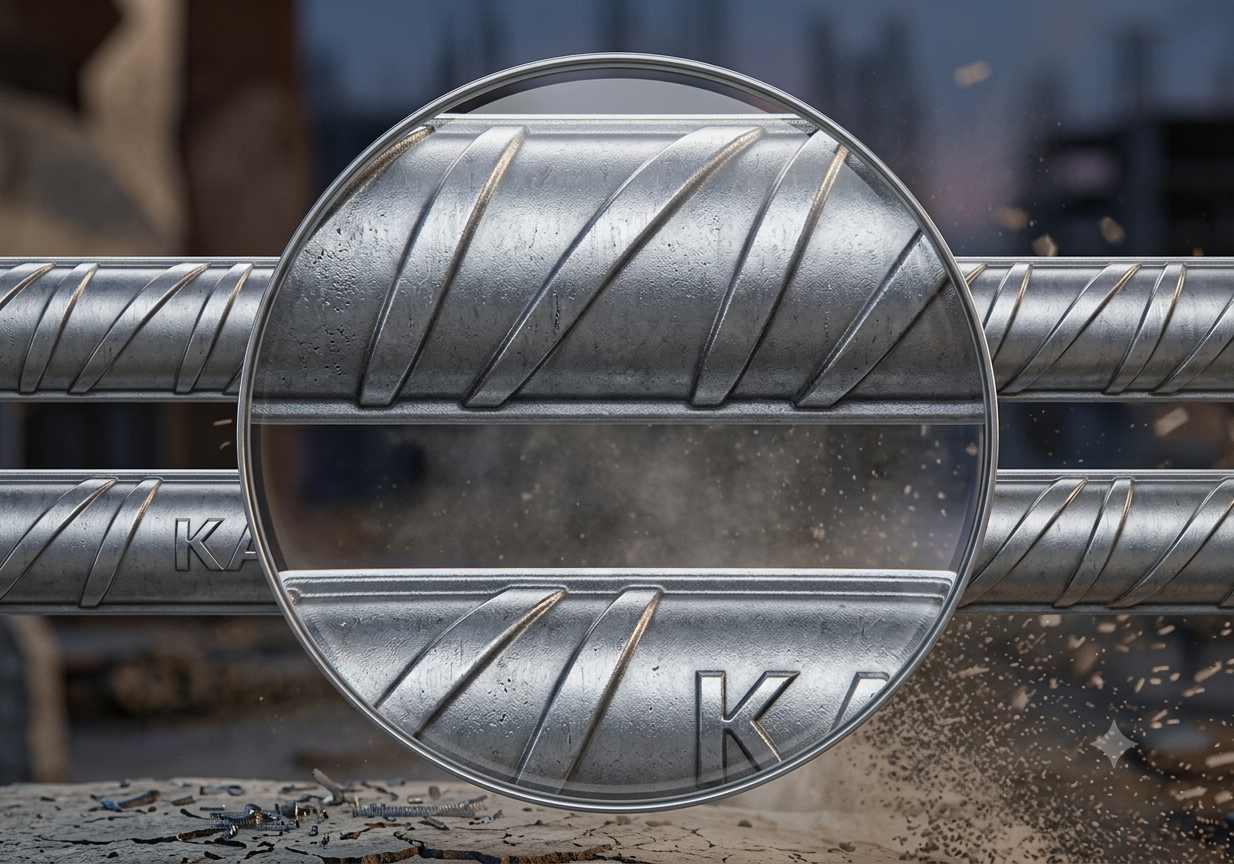
Kamdhenu Nxt is positioned as next generation interlock steel. Its unique double-rib design is created to improve bonding with concrete. This helps the bar grip better inside RCC members.
For builders, contractors and homeowners, this is not only a product feature. It is a practical strength advantage.
Why Bonding Matters in RCC
RCC means reinforced cement concrete.
Concrete handles compression. Steel handles tension. But both materials must act as one unit. The rib pattern on a TMT bar helps achieve this grip.
A plain bar can slip more easily. A ribbed bar improves mechanical anchorage. A double-rib TMT bar aims to create even better interlock with concrete.
This matters in:
- Beam-column joints
- Slabs and beams
- Footings and columns
- Staircases
- Cantilever members
- Seismic design zones
- High-rise construction
When concrete and steel bond well, the structure can transfer stress more effectively.
What Is Double-Rib Technology?
Double-rib technology refers to a rib pattern with additional interlocking design on the bar surface.
Kamdhenu Nxt uses a unique double-rib design. Kamdhenu states that this design ensures superior bonding with concrete and supports earthquake resistance and structural strength.
The purpose is clear. Better ribs improve grip. Better grip improves load transfer. Better load transfer supports stronger RCC behaviour.
A good rib pattern also helps during site work. It gives visible identification and helps workers understand that the bar is not an ordinary plain reinforcement.
Thermo-Mechanical Treatment Behind the Bar
The rib pattern is important. But the steel process matters too.
Kamdhenu Nxt TMT bars pass through a thermo-mechanical process. In general, this process involves hot rolling, quenching, tempering and cooling. Kamdhenu explains that strength is controlled by optimising water pressure for the core and surface.
This creates a tough outer layer and a ductile core.
That combination is useful. The outer layer gives strength. The inner core helps the bar bend and absorb stress.
Why It Supports Earthquake Resistance
Earthquake-resistant performance depends on structural design, detailing and material ductility.
Steel must not fail suddenly. It should be able to deform under stress. This is why ductility matters.
Kamdhenu Nxt is positioned as earthquake resistant steel. The company highlights superior bonding, earthquake resistance and structural strength. The double-rib interlock supports better grip. The TMT process supports strength and ductility.
This does not replace good design. It supports it. Engineers must still follow seismic codes and ductile detailing practices.
Product Range and Specifications
Kamdhenu Nxt TMT bars are available in commonly used grades such as Fe 500, Fe 550, Fe 500D and Fe 550D. Kamdhenu states that the product is supplied against IS 1786:2008 for chemical composition, mechanical properties and dimensional tolerance.
The common diameter range includes 8 mm to 25 mm. A 32 mm diameter can be supplied on bulk demand.
This makes the product suitable for many types of construction:
- Homes
- Villas
- Apartments
- Commercial buildings
- Industrial structures
- Infrastructure projects
- High-rise structures
A single product family can serve many project categories when the correct grade and diameter are selected.
Benefits of Kamdhenu Nxt TMT Bars
The key benefits are practical and site-focused.
- Better bond with concrete due to double-rib design
- High strength for RCC load performance
- Good ductility for safer behaviour under stress
- Availability in multiple grades
- Suitable for modern construction needs
- Support for earthquake-resistant design intent
- Better traceability through brand marking
- Conformity to relevant reinforcement standards
For construction professionals, these benefits help reduce uncertainty. They also make procurement easier.
Kamdhenu Nxt vs Ordinary TMT Bars
| Factor | Ordinary TMT Bar | Kamdhenu Nxt TMT Bar |
|---|---|---|
| Rib Design | Standard ribs | Unique double-rib interlock design |
| Bonding | Depends on rib quality | Designed for superior concrete bonding |
| Grade Options | Varies by supplier | Fe 500, Fe 550, Fe 500D and Fe 550D |
| Traceability | May vary | Brand marking and bundle verification |
| Use Case | General reinforcement | Modern RCC and demanding structures |
The difference is not only visual. It is about the interaction between steel and concrete.
Buyer Checks Before Ordering
Before ordering, confirm these details:
- Required grade in the drawing
- Diameter and quantity
- Bar length
- IS certification
- Test certificate
- Genuine Kamdhenu marking
- Bundle strip and batch details
- Delivery and storage plan
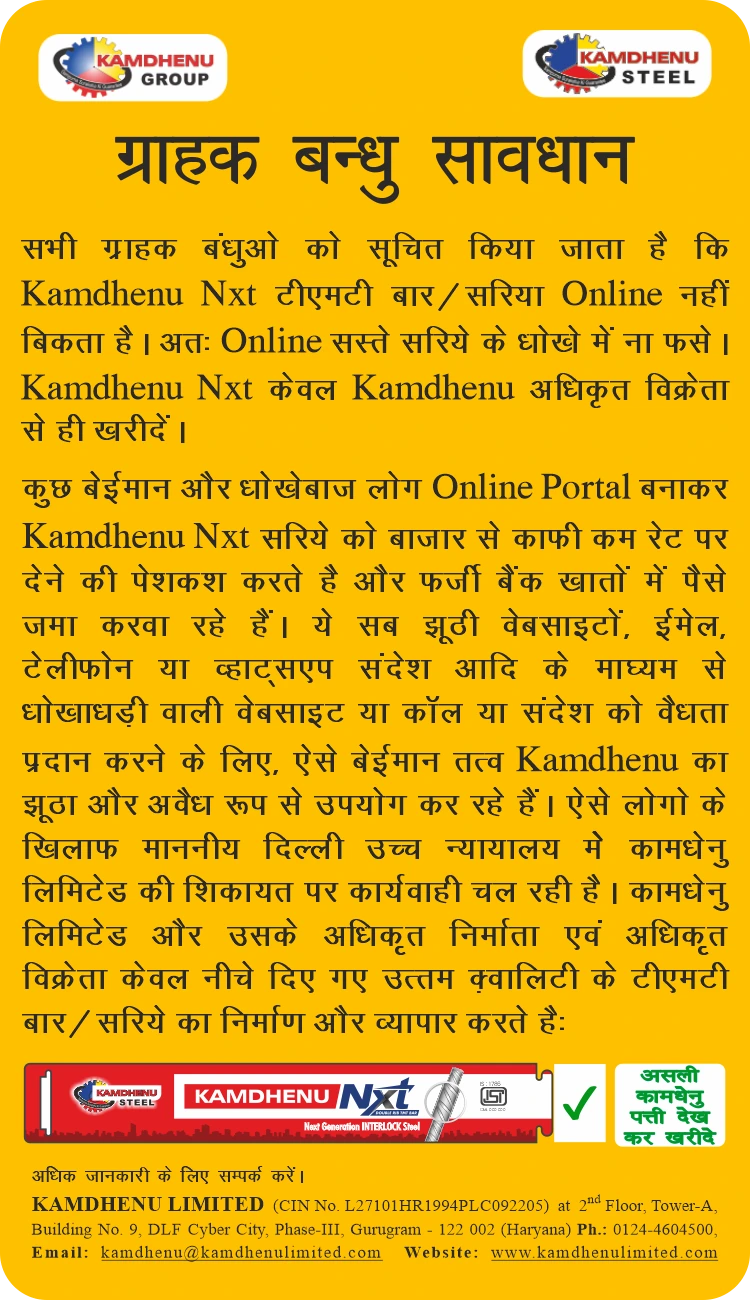
Kamdhenu advises checking the Kamdhenu Nxt stamp on every metre and the red Kamdhenu strip on every bundle. These checks help buyers avoid doubtful material.
Why This Matters Today
India is building faster and bigger.
The Ministry of Steel reported finished steel consumption of 164 million tonnes in FY 2025-26. Construction and infrastructure continue to support this demand.
As projects become more demanding, steel selection must also improve. Builders need reinforcement that supports strength, ductility, bond and traceability.
This is why next generation interlock steel has a clear role.
Final Takeaway
Kamdhenu Nxt TMT bars are designed for modern RCC needs.
The double-rib TMT bar design improves interlocking with concrete. The TMT process supports strength and ductility. The grade range gives engineers and buyers practical choices.
For homes, apartments and infrastructure, better reinforcement is not a luxury. It is a basic requirement.
Kamdhenu Nxt gives buyers a dependable option where bonding, strength and earthquake resistant steel performance matter.
What Site Teams Should Notice
A good reinforcement bar should be easy to identify and verify.
Site teams should look at rib formation, surface quality, diameter and bundle tags before accepting delivery. The double-rib pattern should be visible and consistent. Bars should also match the diameter and grade mentioned in the purchase order.
During bar bending, workers should avoid rough handling. Bending should follow the bar bending schedule. Bars should not be heated at site for bending. Such shortcuts can affect steel behaviour.
Good product selection and good site practice must work together.
Quick FAQs
Does double-rib design replace good concrete?
No. It improves the bond mechanism, but concrete quality still matters. Mix design, compaction and curing must be correct.
Is Kamdhenu Nxt only for large buildings?
No. It can be used in homes, apartments and larger projects when the correct grade and diameter are selected.
Procurement Note
Procurement should match the bar bending schedule. Order the correct diameter and grade in advance. Last-minute substitutions can create waste and confusion during reinforcement placement.