 February 20 2026
CHS, SHS, RHS: How to Choose the Right Hollow Pipe for Frames, Railings, and Industrial Support Work
“Hollow Pipe” is a broad market term. On-site, people also refer to it as MS hollow pipe. This usually means mild steel pipes and hollow sections used for fabrication and structural support.
However, selection is often done casually, which leads to project delays and alignment issues. This guide simplifies the process by focusing on shape selection, application fit, and practical quality checks.
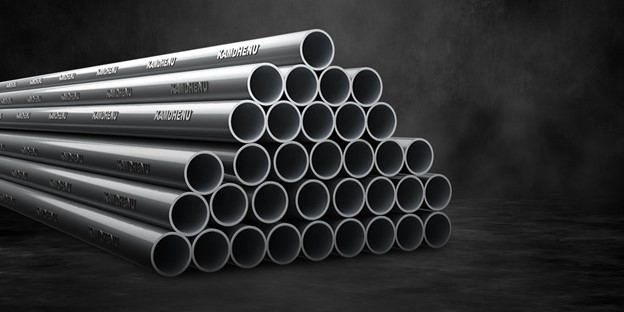
Kamdhenu Pipes are positioned as high-quality Mild Steel (MS) pipes and tubes available in multiple shapes, including Circular, Square, and Rectangular Hollow Sections.
What “Hollow Pipe” Means in Structural Terms
A hollow section is a closed steel shape available in three main forms:
- Circular Hollow Section (CHS)
- Square Hollow Section (SHS)
- Rectangular Hollow Section (RHS)
Closed sections behave differently from open sections like channels. Open sections are more flexible in torsion, whereas hollow sections offer higher torsional rigidity.
This difference becomes visible in real-world applications such as twisting frames, loose railings, or long cantilever brackets. Shape selection directly impacts performance.
Why MS Hollow Pipe is Widely Used
Fabrication work requires straightness, consistent dimensions, and ease of joining. Kamdhenu Pipes highlight dimensional accuracy, ease of fabrication, and reliable performance as key advantages.
These pipes are widely used in structural frameworks, infrastructure, and industrial applications.
CHS vs SHS vs RHS: Choose Based on Application
Circular Hollow Section (CHS)
CHS is strong and efficient, making it suitable for stiffness-critical applications like columns, beams, and struts.
- Size range: 15 mm to 100 mm
- Thickness classes: Light (L), Medium (M), Heavy (H)
Square Hollow Section (SHS)
SHS is widely used in fabrication due to its clean appearance and easy alignment. It is suitable for railings, fencing, and architectural structures.
It also provides good resistance to twisting and deflection, making it ideal for gates and frames.
Rectangular Hollow Section (RHS)
RHS is preferred where stiffness is required in one direction, such as in purlins, long rails, and equipment frames.
It offers enhanced stiffness and torsional resistance, making it suitable for construction and manufacturing applications.
Quick Selection Guide
- Use CHS for columns, struts, and compression members
- Use SHS for railings, gates, grills, and fencing
- Use RHS for frames, long rails, racks, and beams
- Use closed sections where torsional resistance is important
This guide helps avoid common selection mistakes, though it is not a substitute for engineering design.
What to Specify When Buying Hollow Pipe
Vague orders often lead to disputes. Always define specifications clearly.
RFQ Checklist
- Shape: CHS / SHS / RHS
- Size: Outer diameter or side dimensions with wall thickness
- Length: Standard or custom cut
- Classification: Light / Medium / Heavy
- Finish: Coating or surface requirement
- Application: Railing, frame, shed, platform, etc.
- Documentation: Dispatch details and traceability
Standards and Marking
IS 4923 is a key Indian standard for structural hollow sections. It defines designation, testing, and marking requirements.
Proper marking, such as the manufacturer’s logo or trademark embossed on each section, ensures traceability and prevents mixed supply.
Kamdhenu Pipes highlight ISO 9001 and BIS certification and provide stamped identification for authenticity verification.
Supplier Quality Control
Reliable suppliers follow a structured process, including:
- Cutting to specified lengths
- Branding and technical marking
- Batch testing for strength and dimensions
- Secure bundling for safe transport
- Detailed dispatch documentation
This discipline reduces errors and ensures consistency at the site.
Site Inspection Checklist
Always inspect materials before fabrication begins.
- Check straightness visually
- Verify wall thickness randomly
- Inspect weld seam for defects
- Check markings for traceability
- Match sizes with drawings
- Keep batches separated
- Store above ground and avoid water exposure
Corrosion Considerations
Most hollow pipe applications are exposed to outdoor conditions, making corrosion a significant concern.
India loses an estimated 2–3% of GDP annually due to corrosion, highlighting its impact on projects.
Specify coatings and protective finishes early to avoid long-term issues.
FAQs
Is Hollow Pipe the same as MS Hollow Pipe?
Yes, in common usage. It generally refers to mild steel hollow sections used in fabrication.
Which is better: SHS or RHS?
It depends on the requirement. RHS provides higher stiffness in one direction, while SHS is more uniform and suitable for symmetrical structures.
Where is CHS used?
CHS is ideal for stiffness-based applications like columns, beams, and struts.
How to verify authenticity?
Check for manufacturer stamps and traceability markings on each pipe.
Conclusion
A hollow pipe is not just a pipe. It is a structural component where shape determines performance.
Choose CHS, SHS, or RHS based on application. Clearly specify size, thickness, length, and finish. Conduct proper inspection upon delivery to avoid issues.
Refer to product specifications and supplier documentation to ensure quality and consistency.