 March 10 2026
The Material Risk Map Warehouse Manufacturers Use to Build Low-Maintenance Warehouses
India’s warehousing story is still expanding. Demand is not flat. It is moving with manufacturing, 3PL, and modern retail. In 2024, warehousing transaction volumes in eight primary markets reached 56.4 million sq. ft, up 12% year on year. Grade A space formed 62% of transactions. Vacancy was around 11.5%. Manufacturing drove 39% of demand.
Those numbers matter for one reason. Buyers are getting stricter. They want predictable delivery. They want safer yards. They want fewer breakdown calls. That pressure lands on the construction team. It also lands on Warehouse Manufacturers.
This is where material decisions become commercial decisions.
Why warehouses punish small mistakes
A warehouse looks simply. It is not simple. It is a system under stress.
It sees:
- Repeated forklift impact in the same zones.
- Wind uplift at roof edges.
- Water ponding near gutters.
- Dust and chemicals in some industrial belts.
- Thermal expansion across long roof runs.
- Tight timelines and night shifts.
So, the real question is not “What steel is cheapest today?”
The real question is “What fails first, and how do we prevent it?”
The five failure zones to plan for
Good Warehouse Manufacturers design around these zones from day one.
1) Column bases
Anchor bolts, grout, and base plates take abuse. Water sits here. Rust starts here.
2) Roof sheet laps and fasteners
Most leaks start at laps. Or around screws. Not in the middle of the sheet.
3) Mezzanine connections
Mezzanines move. They also get modified later. Connections need clarity.
4) Floor slabs and joints
Racks and MHE create point loads. Joints crack if detailing is weak.
5) External cladding edges
Edges get cut on site. Coatings get damaged. Corrosion begins at cuts.
Now map materials to these risks.
Step 1: Treat the frame as a precision product
A warehouse frame is not “just steel.”
It is alignment. It is tolerances. It is a joint fit-up.
Structural steel in India is commonly specified to IS 2062. BIS notes that IS 2062 covers plates and sections like beams, channels, and angles. It also highlights what buyers expect, like mechanical consistency, dimensional precision, and weldability.
Kamdhenu’s structural steel range lists angles, channels, beams, and flats. It also calls out IS 2062 conformity and dimensional accuracy as a feature.
For Warehouse Manufacturers, the practical outcome is simple.
Better dimensional control means faster erection.
It also means less site drilling and less rework.
Step 2: Use hollow sections where they reduce clutter
Warehouses have many secondary members.
Bracing. Canopies. Stair towers. Mezzanine posts. Handrails.
Hollow sections can reduce connection clutter.
They can also improve torsional behaviour in some members.
Kamdhenu Pipes lists MS pipes and tubes in CHS, SHS, and RHS forms. It also states these are made for dimensional accuracy and are intended for structural applications.
For Warehouse Manufacturers, this is useful in two places.
One is mezzanine framing.
Second is bracing and secondary steel where space is tight.
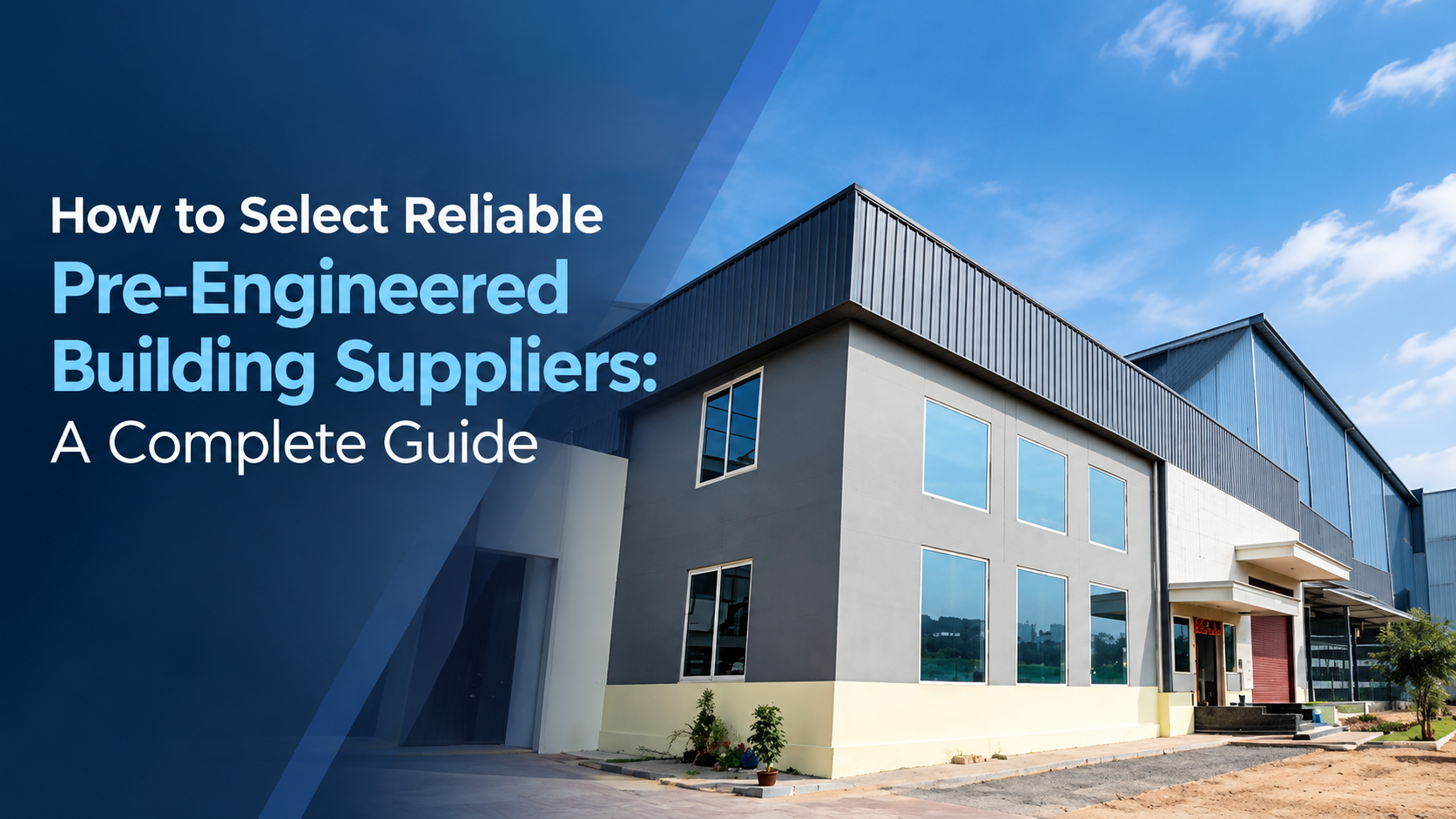
Step 3: Decide early if the building is PEB-led
Many warehouses now use PEB systems for speed.
They also use them for clean spans.
Colliers reported 25.6 million sq ft of industrial and warehousing gross leasing in 2024 across the top five cities. Delhi NCR led with 26% share. Chennai followed with 23% share.
That demand pushes faster build cycles.
PEB helps compress the schedule.
Kamdhenu’s PEB page describes pre-engineered building solutions for industrial sheds and other buildings. It also positions them as a route to faster project completion.
There is one rule here.
Freeze layout early.
Bay spacing and clear height should not keep changing.
Step 4: Choose roofing as a life-cycle decision
Roofing is where warehouses lose money silently.
Through leaks. Through heat. Through corrosion.
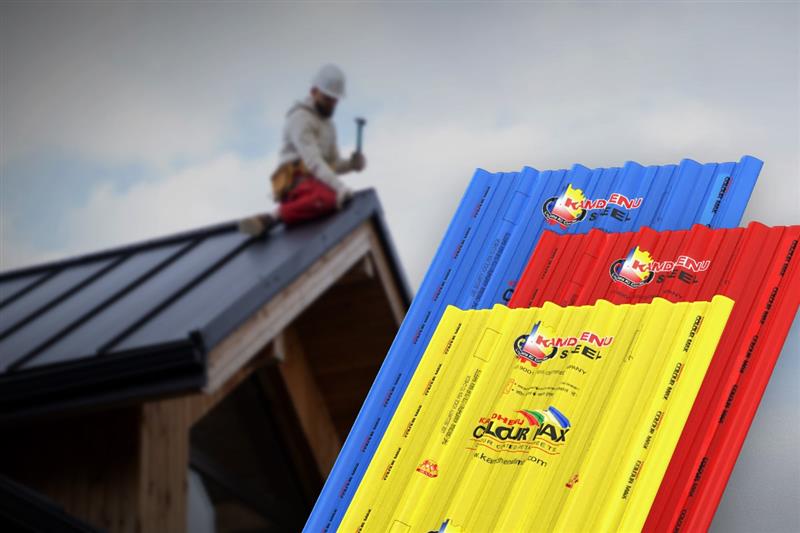
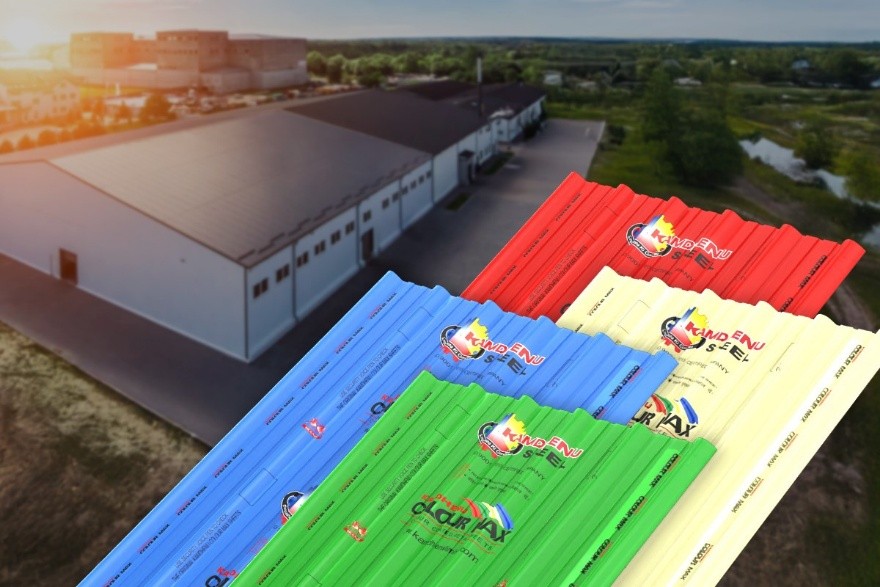
Kamdhenu Colour Max sheets are positioned for roofing and wall cladding. The page lists base materials as pre-painted GI and Alu-Zinc sheets. It also lists coating thickness and yield stress ranges.
If you want durability, tie your sheet choice to a standard.
For pre-painted Alu-Zinc coated steel sheets, BIS has a product manual aligned to IS 15965:2012.
Now add execution discipline.
A simple roofing checklist for Warehouse Manufacturers:
- Confirm slope and drainage paths.
- Lock purlin spacing to the chosen profile.
- Use compatible fasteners and washers.
- Protect cut edges with touch-up as per the coating system.
- Avoid rough handling. Scratches become rust points later.
Step 5: Get reinforcement right in the floors and foundations
Warehouses carry loads differently.
Racks concentrate loads.
Dock areas see repeated impact.
TMT bars used in concrete reinforcement are covered under IS 1786 in the BIS certification practice documents.
Kamdhenu Nxt is positioned as an interlock steel bar with a double rib design for improved bonding. It also claims earthquake resistance and strength benefits on the product page.
The key is not only grade.
It is also genuine supply and traceability.
Kamdhenu’s own guidance on identifying genuine TMT bars stresses checks like markings and systematic verification on site.
Step 6: Do not ignore binding wire quality
The binding wire is small.
But it controls cage stability.
Kamdhenu WIREBOND states ISO 9001:2015 adherence and highlights uniform diameter and surface finish.
For Warehouse Manufacturers, fewer snapped ties mean fewer cage shifts.
That improves cover control.
It reduces patchwork later.
A commercial RFQ checklist for Warehouse Manufacturers
Use this before you finalize the supply.
Ask for:
- IS standard conformity and test documentation.
- Batch traceability and marking format.
- Dimensional tolerances and inspection plan.
- Coating system details for sheets and the repair method for cuts.
- Packaging and transit protection method.
- Replacement and NCR closure process.
- Capacity and realistic lead times.
Why buyers trust systems, not slogans
Large warehouse clients are professional now.
They audit quality.
They track downtime.
So, your advantage is process control.
Not just price.
Kamdhenu’s structural steel brochure highlights ISO 9001:2015, a wide distribution footprint, and scale across categories like structural steel, MS pipes, wire, roofing sheets, and PEB.
That matters in commercial work.
Because continuity of supply protects your schedule.
And schedule protection protects the margin.
Closing thought
Warehouses are built fast.
But they are judged slowly.
Over monsoons. Overheat cycles. Over daily operations.
Warehouse Manufacturers who win repeat business do one thing well.
They choose materials that reduce rework and maintenance.
Then they execute with discipline.