 October 11 2025
Understanding Different Types of MS Pipes for Industrial Use
Choosing the right MS Pipes for a project can feel confusing at first glance. Names look similar, but performance and cost change with type and thickness. This guide keeps it simple.
It explains common types intended for general engineering, decorative, and structural use, what to check at delivery, and how to compare MS Pipes Manufacturers for reliable supply in India.
What are MS Pipes?
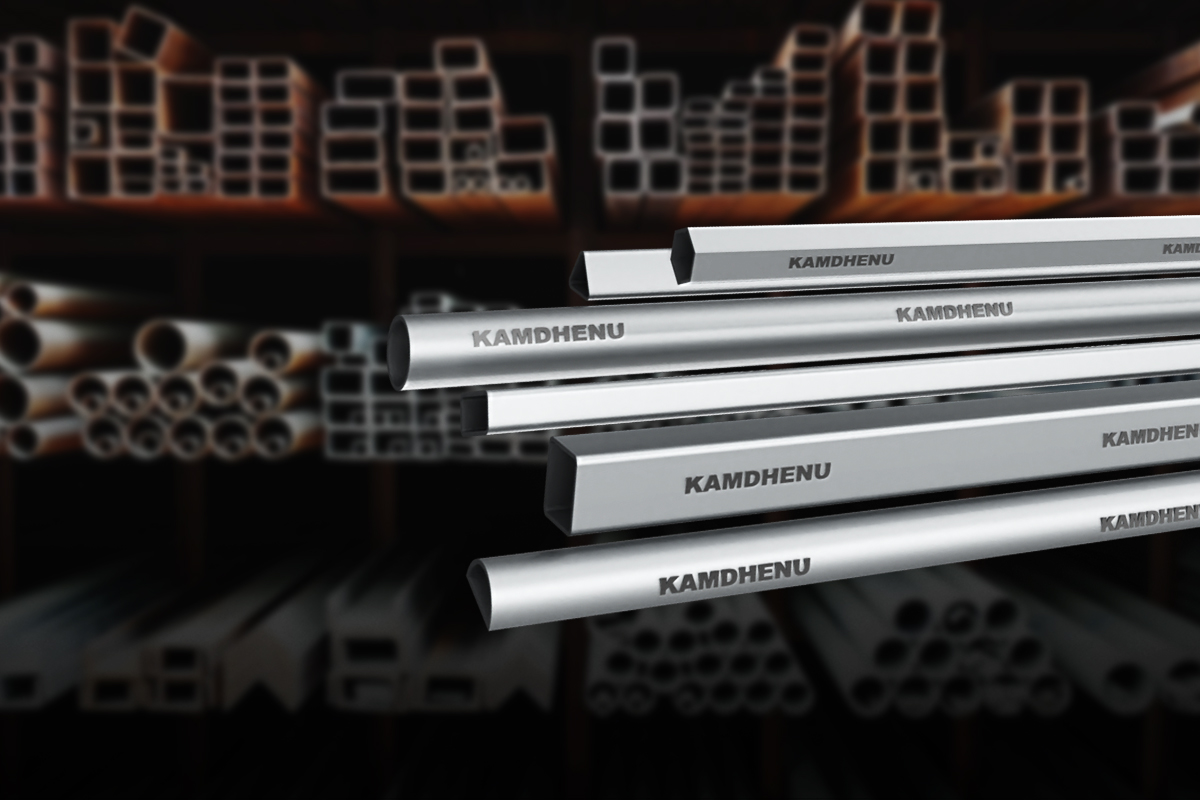
MS means mild steel. It is low-carbon steel that bends and welds easily. That makes it practical for fabrication, frames, racks, handrails, portals, light enclosures, and general engineering. With the right thickness and coating, MS Pipes handle day-to-day wear, weather, and site handling well in these applications.
Types of MS Pipes by the making process
-
ERW pipes: Sheets are rolled and seam-welded. These include suit handrails, frames, trusses, gates, sign masts, furniture, and general fabrication for non-pressure service.
-
Spiral or SAW pipes: Helical seam or submerged arc weld for larger diameters used in structural piles, culverts, and sleeves where form and stiffness matter.
-
Galvanised MS pipes: Zinc-coated for corrosion protection. Useful outdoors for railings, pergolas, fences, canopies, and decorative features.
Shapes and sections for practical use
-
Round: For handrails, bollards, pergola posts, decorative arches, and structural braces.
-
Square: For frames, conveyors, racking, sheds, façades, and gates where flat faces help fabrication and cladding.
-
Rectangular: For trusses, platforms, frames, furniture, and signboards, where bending and flat contact surfaces are helpful.
Understanding class and thickness
Wall thickness drives strength and stiffness. In common trade, class A is lighter, class B is medium, and class C is heavy. Heavier walls handle rough use better but cost more and weigh more. For frames and non-pressure structures, pick a balanced wall that meets load needs without adding unnecessary weight.
Where does each pipe type fit best?
-
Structural frames and sheds: ERW square or rectangular with standard thickness for strength and clean welding.
-
Handrails and guards: ERW round with smooth joints for safe grip and neat finish.
-
Decorative and architectural: Galvanised or painted sections for pergolas, screens, façades, and sign masts.
-
Outdoor installations: Galvanised MS Pipes with a suitable topcoat for longer life in sun and rain.
How to compare MS Pipes Manufacturers?
A dependable maker shares mill tests certificates, heat numbers, and dimensional tolerances. They offer stable chemistry, uniform thickness, straightness, and clean ends. Look for consistent lengths, smooth weld beads on ERW, and clean bores. Reliable delivery, matching fittings, and after-sales support matter on time-bound jobs. Strong makers also guide on coating choices and storage to avoid rust and dents.
Money matters and total cost
Pipe rate is only one part. Add transport, cutting and mitre work, welding consumables, fittings, supports, coatings, and installation time. ERW is typically the most economical for general engineering, decorative, and structural use. The right coating reduces repainting and touch-ups, which lowers lifetime costs.
What to check at delivery?
-
Mill Test Certificate: Confirm grade, size, and test values against the order.
-
Dimensions: Check outer diameter, wall thickness, and length on random pieces.
-
Straightness and weld: Look for straight pipes and uniform ERW seams without burns or undercut.
-
Surface: No heavy rust pits, oil puddles, or dents. Light transit marks are acceptable with touch-up.
-
Marking: Heat number or batch marking should be visible for traceability.
Basic installation tips
-
Cutting: Use proper cold cutting where possible. Clean burrs after each cut for neat joints.
-
Welding: Follow correct parameters. Keep root gaps uniform and avoid overheating to maintain finish quality.
-
Finishing: Grind welds where appearance matters. Apply primer soon after fabrication.
-
Supports: Follow spacing so members do not sag during install.
-
Coating: Touch up after cutting and welding. Keep edges sealed to stop rust creep.
Safety first
-
Handling: Lift with slings and spreaders to avoid bending and edge damage. Do not drop bundles.
-
Storage: Keep sleepers off the ground. Cover from rain but allow airflow to reduce sweating.
-
Work area: Collect offcuts and grinding dust to protect surfaces and workers.
Quick comparison table
|
Selection factor |
ERW MS Pipes |
Galvanised MS Pipes |
|
Primary benefit |
Easy fabrication and clean welding |
Better outdoor corrosion resistance |
|
Cost |
Lower upfront for fabrication jobs |
Slightly higher due to zinc coating |
|
Finish |
Paint-ready after surface prep |
Can be used bare or top-coated |
|
Typical use |
Frames, trusses, handrails, furniture |
Pergolas, fences, façades, outdoor frames |
|
Maintenance |
Needs paint system for outdoors |
Longer life outdoors with minimal upkeep |
Common mistakes to avoid
-
Choosing too light a wall for structural frames: Can cause flex or denting during use.
-
Skipping coating in outdoor jobs: Rust grows fast, and repairs cost more later.
-
Poor alignment during welding: Leads to visible distortion and weak joints.
-
Ignoring support spacing: Sagging creates visible misalignment in frames.
-
Mixing fittings and specs: A Mismatch of thickness or section sizes causes weak points and poor looks.
Step-by-step buying guide
-
Note use: General engineering, decorative, or structural frame.
-
Pick type: ERW for most fabrication. Use galvanised where outdoor exposure is high.
-
Fix size and wall: Use standard tables or fabricator advice for stiffness and span.
-
Choose coating: Primer, paint, galvanising, or aluminium‑zinc paint by environment.
-
Confirm tests: Ask for MTCs and any special finishing instructions.
-
Plan fittings: Flanges, bends, tees, and plates from matching spec.
-
Schedule delivery: Avoid long open storage. Receive close to the fabrication date.
-
Inspect and store: Check quickly, then stack on sleepers and cover.
FAQs
-
Are MS Pipes good for decorative façades?
-
Yes. With the right thickness and finish, they give clean lines and strong frames.
-
Do I need galvanised for every outdoor job?
-
Not always. For moderate exposure, a good primer and topcoat work. For coastal or damp zones, galvanised lasts longer.
-
How to pick MS Pipes Manufacturers?
-
Choose steady quality, clear test reports, dependable supply, and support on coatings and fittings.
Conclusion
For general engineering, decorative, and structural applications, MS Pipes offer a strong, easy-to-fabricate solution. ERW sections suit most frames and architectural work. Galvanised options help outdoors with longer life. Compare MS Pipes Manufacturers on certificates, delivery, and finish guidance, not just on rate.
A little care at selection, finishing, and storage delivers cleaner lines, stronger frames, and lower upkeep for years.