 April 13 2026
Structural steel pipes and Structural Steel flat bars: A Fit-Up First Buying Guide for Industrial Projects
If you are specifying structural steel pipes and Structural Steel flat bars for warehouses, mezzanines, platforms, and plant fabrication, fit-up quality matters more than most teams admit. Small tolerance issues become grinding, reaming, extra welding, and delayed handover. The goal is simple. Buy sections that install cleanly, document cleanly, and repeat cleanly across phases.

Why buyers are getting stricter in 2025
Steel demand is strong, and projects are time-bound. India’s finished steel consumption for 2023–24 is reported at 136.29 MnT in a PIB release (JPC data).
At the same time, industrial and warehousing projects are expanding. India’s warehousing transaction volumes across eight primary markets reached 56.4 million sq ft in 2024, up 12% YoY, as reported from a Knight Frank India study.
This combination creates a familiar site problem. More vendors. More deliveries. More chances of mix-ups. That is why procurement teams now demand standards alignment, traceability, and receiving checks as a routine.
Where structural steel pipes and flat bars are used together
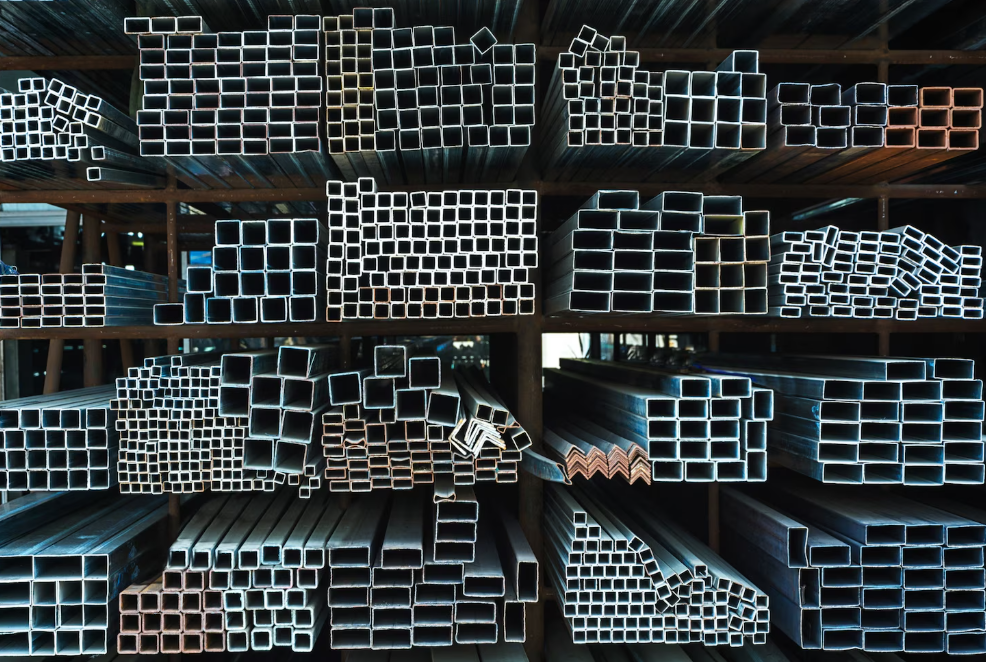
These two products often sit in the same bill of quantities because they solve different parts of the same fabrication problem. Pipes carry load efficiently in compression and bracing, while flats are used for base plates, stiffeners, clamps, straps, brackets, and connection detailing.
Common use cases you see on industrial sites:
-
Mezzanine columns, handrails, bracing members, and secondary frames
-
Platforms, walkways, ladder cages, and equipment skids
-
Pipe racks and utility frames with many small welded connections
-
Shed upgrades and retrofits where new frames tie into old RCC
The practical lesson is simple. If the pipes are round but oval, clamps and joints fight you. If the flat bars are not flat, base plates rock and shims multiply. Fit-up speed becomes your hidden cost.
Standards first: the simplest way to reduce argument later
For structural steel pipes, IS 1161 is the common reference for “steel tubes for structural purposes.”
For flats and other structural steel sections, IS 2062 is the common baseline, and BIS also provides a product manual for IS 2062 that outlines licensing scope and grouping logic for products including flats.
This does not mean every site needs to become a lab. It means your RFQ should clearly state which standard you are buying against, so both sides know what “acceptable” means.
How to specify structural steel pipes for fast fabrication
When buyers say “pipes,” they often mean different things. First lock the application. Then lock the pipe type, size method, and tolerance expectations.
For structural frames, clarify these points in your RFQ:
-
Section type: CHS, SHS, RHS depending on the design intent
-
Size and thickness: OD and wall thickness, not only nominal size
-
Tolerance needs: roundness/ovality, straightness, and length tolerance
-
Welding expectation: ERW/HFIW seam quality suitable for your fabrication load path
-
Corrosion plan: black, painted, or coated as per exposure and maintenance strategy
BIS notes that IS 1161 covers requirements for hot finished seamless and welded tubes for structural purposes, which is the language most consultants expect in structural tube packages.
If your project has many site welds, insist on clean seam consistency and predictable wall thickness, because weld prep and heat input depend on it.
How to buy Structural Steel flat bars without distortion surprises
Flat bars look simple, but they can waste time when edges are uneven or flatness is poor. Most issues show up at base plates, clamps, stiffeners, and bracket assemblies.
In your RFQ for Structural Steel flat bars, state these items clearly:
-
Standard and grade reference under IS 2062 for structural steel flats
-
Width and thickness tolerance expectation for your fabrication method
-
Flatness and straightness expectation for plates used in base or bracket work
-
Length supply mode: stock length vs cut-to-length supply
-
Surface condition: scale level acceptable, and whether shot blasting/primer is required
If you treat flat bars as “misc steel,” you usually pay later in shims, rework, and welding distortion correction. If you specify them properly, connection work speeds up.

A site receiving checklist that prevents most fit-up delays
Use this as a 15-minute gate process. It works for both pipes and flats. Keep it consistent across deliveries and contractors.
Receiving checklist (copy-paste for your site SOP):
-
Match invoice to PO line items, section sizes, and lengths
-
Photograph bundle tags and mark stack location on a simple yard map
-
Random measurement: OD and thickness for pipes, width and thickness for flats
-
Visual checks: dents, deep pitting rust, severe edge damage, heavy scale at weld zones
-
Straightness check by sighting along length and placing on a flat surface
-
Segregate by lot and size in the yard, do not mix leftovers without re-tagging
RFQ and inspection matrix (template)
Confirm project-specific tolerances with your consultant and Kamdhenu Limited technical team before freezing the PO.
|
Item |
RFQ must state |
Receiving must verify |
|
structural steel pipes |
IS 1161 reference, CHS/SHS/RHS, OD & thickness, length |
OD, thickness, ovality, seam appearance, straightness |
|
Structural Steel flat bars |
IS 2062 reference, width & thickness, length mode |
flatness, edge quality, width/thickness, straightness |
|
Traceability |
batch/lot mapping and tag format |
tags intact, photos logged, yard segregation |
|
Surface condition |
rust acceptance limit, coating plan |
pitting check, scale in weld areas, transit damage |
|
Replacement rules |
NCR process and replacement timeline |
recorded deviations and escalation contact |
Where Kamdhenu Limited fits for these two categories
Kamdhenu Limited lists Kamdhenu Pipes as MS pipes and tubes supplied in CHS/SHS/RHS for frames, supports, and fabrication work, with a focus on dimensional consistency for dependable performance.
Kamdhenu Limited also lists Kamdhenu Structural Steel as conforming to IS 2062 standards and including products such as angles, channels, beams, and flats, which covers the “flat bar” use case buyers need in fabrication-heavy packages.

A practical buying note for phased projects
Many industrial jobs buy in phases. Foundations first. Mezzanine next. Then cladding and utilities. That is where repeatability matters. Keep your pipe sizes and flat bar thicknesses stable across phases where possible. Use the same standard references in every PO revision. Keep your yard segregation strict. This reduces mismatch issues when later lots meet earlier fabrication.
Conclusion
If your project needs structural steel pipes and Structural Steel flat bars with cleaner fit-up and clearer documentation, start by reviewing Kamdhenu Limited’s product specs for Kamdhenu Pipes and Kamdhenu Structural Steel, then raise an enquiry with your section schedule and phase-wise requirement.
For quotations, availability, and dispatch planning, contact Kamdhenu Limited through the official Contact Us route.
FAQ (suitable for FAQ schema)
Q1. Which standard is commonly used for structural steel pipes in India?
IS 1161 is widely referenced for steel tubes for structural purposes.
Q2. Which standard is commonly used for structural steel flats and sections?
IS 2062 is commonly referenced for hot rolled structural steel, including flats, and BIS provides a product manual for certification practice.
Q3. What is the fastest site check that prevents fit-up delays?
A gate receiving process that measures random samples and logs photos and lot segregation before unloading.
Q4. Why do flat bars create delays even when pipes are fine?
Flatness and edge quality directly affect base plates, brackets, and stiffeners, so distortion creates shims and welding correction work.