May 25 2026
PEB vs Conventional Construction: Cost, Time and Durability Compared
Every construction decision affects money, time and long-term performance.
For factories, warehouses, sheds and large commercial spaces, this decision becomes even more important. Delays can affect operations. Higher maintenance can affect returns. Poor material planning can increase project cost. This is why the discussion around PEB vs conventional construction matters.
A Pre-Engineered Building, or PEB, is a steel building system. Its main parts are designed and fabricated in a factory. They are then transported to the site and assembled using bolted connections. Conventional construction depends more on site-based work, masonry, concrete and fabrication.
Both methods have their place. But for large-span and time-bound projects, PEB often gives a stronger business case.
What Is a PEB?
A PEB is not a temporary shed. It is an engineered building.
Kamdhenu defines a PEB as a factory-fabricated steel structure made of primary frames, secondary members, and roof and wall sheeting. These parts are designed, manufactured and rapidly assembled on site using bolted connections. Kamdhenu also states that PEBs are custom-engineered offsite for faster assembly, tighter quality control and optimized steel usage compared to fully site-fabricated steel or brick-and-mortar buildings.
A typical PEB includes:
- Primary steel frames
- C and Z purlins
- Roof and wall cladding
- Fasteners and accessories
- Ridge ventilators, skylights and louvres
- Mezzanine floors, if required
- Crane systems, if required
- Insulation, doors and windows
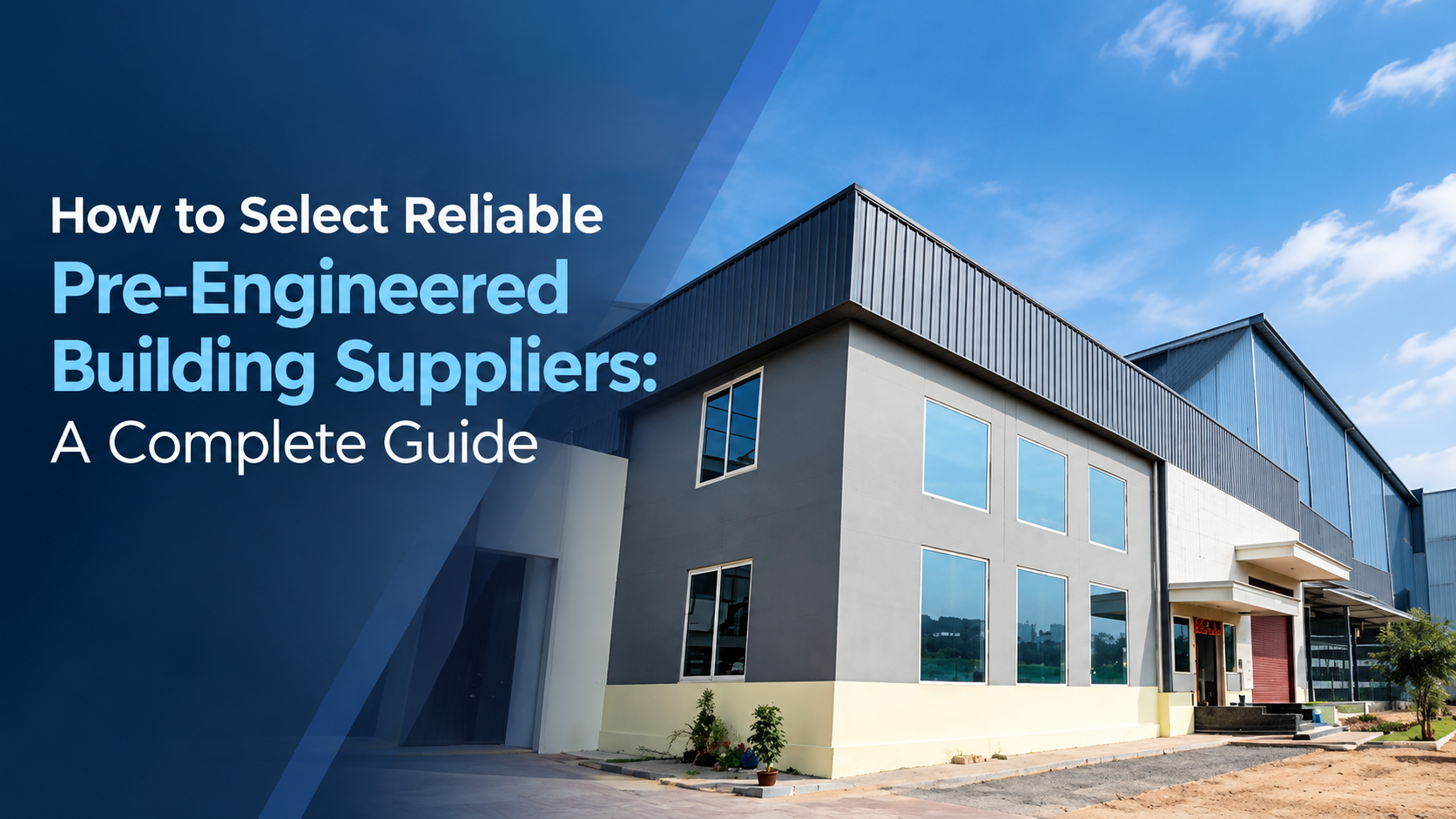
This makes PEB suitable for industrial sheds, factories, warehouses, logistics parks, showrooms and cold storage units.
Why This Comparison Matters in India
India’s industrial and logistics sector is expanding.
CBRE reported that India’s industrial and logistics market saw a record 27.1 million sq. ft. of leasing during H1 2025. The demand came from e-commerce, quick-commerce, third-party logistics, engineering and manufacturing companies.
Colliers also reported strong demand in Q1 2025. Industrial and warehousing leasing across the top eight Indian cities stood at 9 million sq. ft., up 15% year-on-year. New supply was 9.4 million sq. ft., up 16% year-on-year. These figures show one thing clearly. Warehouse construction in India needs faster and more dependable building methods. The Indian prefabricated buildings market is also expected to grow. Mordor Intelligence estimates it at USD 15 billion in 2025 and projects it to reach USD 23 billion by 2030, at 8.80% CAGR.
This growth supports the case for modern steel building solutions.
Cost: Initial Price vs Total Value
Cost is usually the first question. But it should not be the only question. Conventional construction may seem familiar. Local labour is available. Materials are known. Many contractors understand the process. But the final cost can change due to delays, wastage, labour dependency, rework and weather interruptions.
PEB has a different cost structure. Design, fabrication and material planning happen earlier. This improves quantity control. Factory-made parts also reduce wastage at the site. Kamdhenu states that its PEB solutions reduce construction time and material wastage. It also highlights lower labour and material expenses as a benefit.
Key factors that affect pre engineered building cost
- Building span and height
- Bay spacing
- Steel grade and design load
- Wind load and seismic zone
- Roof and wall cladding type
- Insulation requirement
- Crane load, if any
- Mezzanine floor requirement
- Accessories and ventilation
- Site location and logistics
A fair cost comparison must include all these points. It should not compare only basic material rates. Kamdhenu notes that PEBs typically lower total cost through optimized design and material efficiency. It also mentions 20% to 30% savings versus conventional steel builds in many use cases.
Time: Where PEB Gains a Clear Edge
Time is one of the strongest advantages of PEB. In conventional construction, many tasks happen one after another. Civil work, masonry, curing, fabrication, roofing and finishing can stretch the schedule.
PEB allows parallel work. While foundations are being prepared at the site, steel members can be fabricated in the factory. Once the foundation is ready, the erection can move faster. Kamdhenu highlights faster project completion as a key benefit of its PEB solutions. It also states that optimized construction processes save time.
This is important for businesses. A warehouse that opens earlier can start operations earlier. A factory shed completed faster can support production faster. A logistics unit delivered on time can protect customer commitments. For time-sensitive projects, this advantage is not small. It can directly affect revenue.
Durability: Factory Control Makes a Difference
Durability depends on design, steel quality, coating and installation. Conventional construction is often affected by site conditions. Material handling may vary. Welding quality may vary. The weather can affect execution. Supervision becomes critical. PEB reduces many of these risks.
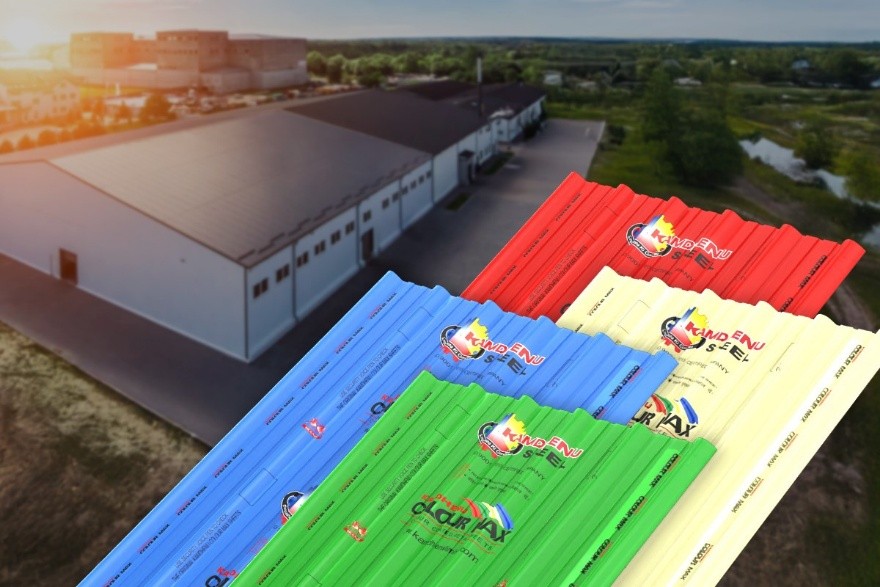
Components are fabricated under controlled conditions. Holes, cuts, welds and markings are made as per design. This improves fit-up at the site. Kamdhenu PEB uses hot-rolled and built sections fabricated from high-grade steel conforming to IS and ASTM standards. Its C and Z purlins are cold-formed members for stability. Its roof and wall cladding is available in Galvalume and colour-coated sheets.
Kamdhenu also lists high-strength steel, corrosion-resistant materials and long-term reliability among PEB benefits. It states that structures are built to last decades with minimal maintenance.
For owners, this means fewer structural worries over time.
PEB vs Conventional Construction: Quick Comparison
| Factor | Conventional Construction | PEB Construction |
|---|---|---|
| Cost control | Can vary with site conditions | Better due to planned fabrication |
| Construction speed | Slower in many cases | Faster due to factory-made components |
| Labour need | Higher site dependency | Lower site labour dependency |
| Material wastage | Harder to control | Lower due to design optimisation |
| Quality control | Depends heavily on site supervision | Better factory control |
| Durability | Depends on execution quality | High with proper steel and coating |
| Expansion | Often difficult | Easier if planned early |
| Best use | Small buildings and masonry-heavy work | Warehouses, factories, sheds, large spans |
This table is a guide. Final selection should follow project drawings, soil conditions, load data and business need.
When Conventional Construction Still Works
Conventional construction is not outdated. It works well for many residential buildings. It is also useful where masonry walls, compact layouts or heavy architectural detailing are required.
It may be suitable when:
- The building is small.
- Span requirements are limited.
- Timeline is flexible.
- Local materials are easier to manage.
- The structure needs heavy masonry work.
- Skilled local contractors are already available.
So, the question is not whether PEB is always better. The correct question is whether PEB is better for your project type. For industrial and warehousing projects, the answer is often yes.
Where PEB Works Best
PEB is most useful when speed, large space and durability are important.
Common applications include:
- Industrial sheds
- Warehouses
- Logistics parks
- Factories
- Cold storage units
- Commercial showrooms
- Airport hangars
- Toll plazas
- Stadium structures
- Metro station buildings
Kamdhenu lists industrial sheds, warehouses, corporate offices, stadiums, metro stations, airport hangars and toll plazas as suitable applications for its PEB solutions.
Why Choose Kamdhenu PEB?
Kamdhenu PEB is designed around advanced engineering, cost efficiency and durability. The company uses 3D design software for precision engineering. It also offers custom-designed primary framing systems, roof and wall cladding, mezzanine deck sheets and accessories such as ridge ventilators, skylights, louvres, insulation and roll-up doors.
This matters because a PEB is not only a frame. It is a full system. The frame must match the cladding. The purlins must match the load. The accessories must match the use case. The design must support future operations. Kamdhenu also states that its PEBs are engineered to accepted codes, made through factory-controlled fabrication and supported by drawings and documentation as applicable.
For procurement teams, this creates better clarity.
Final Takeaway
The comparison of PEB vs conventional construction comes down to three points: Cost. Time. Durability.
Conventional construction is familiar and useful for many building types. But PEB offers clear advantages for industrial sheds, factories, warehouses and logistics spaces.
It supports faster construction. It reduces site dependency. It improves material planning. It allows better quality control. It also supports future expansion. For modern warehouse construction in India, PEB is not just an alternative. It is becoming a practical business choice.
Kamdhenu PEB gives builders, contractors and project owners a dependable route to efficient steel construction. For large-span and time-bound projects, it is a smart solution worth serious consideration.