 February 26 2026
How to Specify MS angle steel Like a Commercial Buyer
How to Specify MS Angle Steel Like a Commercial Buyer
MS angle steel is everywhere. But performance varies a lot. And the cost of “almost right” is high. Angles sit in trusses. They sit in towers. They sit on platforms. They sit in racks. They also sit in bracing systems that control sway.
That is why buyers search for a Structural Steel angle supplier who can deliver repeatable geometry. And clean documentation.
India’s steel consumption is also projected to stay strong. One widely-cited outlook expects around 9% growth in India’s steel demand in 2025 and 2026. This means more projects. More orders. And more pressure on supply chains. So your spec must be tighter. Not looser.
This guide is practical. It is commercial. And it is written for fabricators, contractors, and procurement teams.
What Kamdhenu offers in angles
Kamdhenu Structural Steel is positioned as high-strength and high-ductility steel.
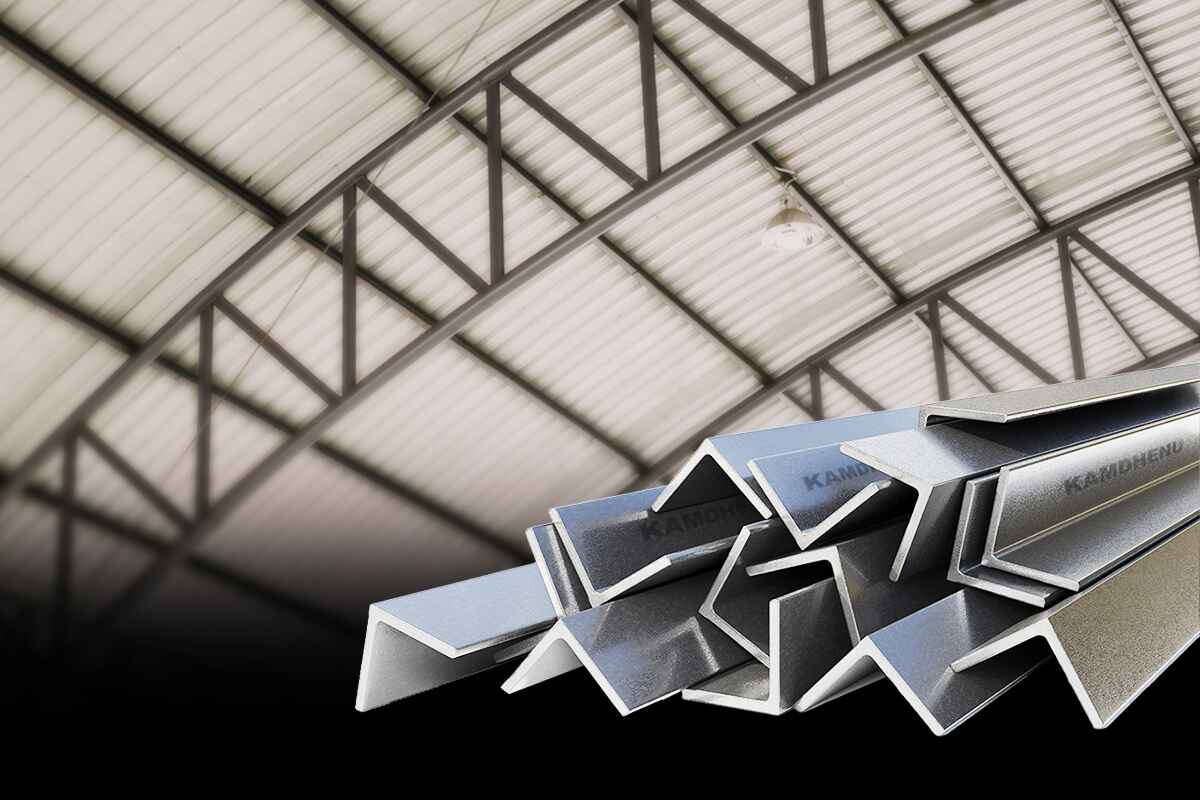
It is also stated to conform to IS 2062. Under the “Angles” category, Kamdhenu describes equal and unequal L-sections used for trusses, towers, platforms, and everyday fabrication. It also highlights consistent geometry and clean edges, with standard lengths and cut-to-size options where available.
That matters commercially. Because fit-up time is money. And rework is a margin loss.
First principles: angle steel is a geometry product
Many people treat angle buying like buying plates. That is a mistake.
Angles are geometry driven. They must align. They must sit square. They must bolt clean. They must weld without surprises. So, your first filter is not “brand.” Your first filter is “section standard.”
In India, section dimensions for angles are standardized under IS 808. IS 808 covers nominal dimensions, mass, and sectional properties of hot rolled angle sections.
Buyer takeaway: If your drawings are based on IS dimensions, your supply must match those dimensions.
Second filter: grade and standard compliance
For most structural angle work, you will see IS 2062 grades referenced. IS 2062 covers hot-rolled medium and high tensile structural steel. Kamdhenu states its Structural Steel is primarily manufactured in E250, E275, and E300 grades.
On the Kamdhenu page, published benchmarks include:
- Yield stress: minimum 250 N/mm²
- Tensile strength: minimum 420 N/mm²
- Elongation: minimum 24%
It also lists chemical limits like:
- Carbon max 0.22%
- Manganese max 1.00%
- Sulphur max 0.045%
- Phosphorus max 0.045%
These are procurement-friendly numbers. They help QA teams. They also help in vendor comparisons.
Where MS angle steel is actually doing the hard work
This is the “application lens.” It makes your buying decision easier.
1) Roof trusses and shed bracing
Angles are common in truss webs and bracing lines. Here, straightness and consistency matter. Because misalignment causes site cutting and forced fit-up.
2) Towers, gantries, and platforms
Angles work well in latticed frames. They keep frameworks rigid. They also simplify joints in many fabrication styles.
3) Mezzanine frames and stair supports
Angles are used for secondary framing, edge members, and stiffeners. Weldability and machinability matter here.
4) Equipment skids and industrial supports
These are vibration-prone in real life. So ductility and joint quality matter. Not just thickness. Kamdhenu positions its structural steel for industrial structures and high-stress applications.
Equal vs unequal angles: a practical selection note
Equal angles are simple. They are symmetrical. They are convenient for many standard joints. Unequal angles help when the load path or connection geometry is not symmetric. They also help when you need one leg to act like a wider flange.
Do not guess. Use drawings. And consult your structural engineer for final selection. Kamdhenu itself recommends an engineer consultation for section selection.
What to specify in your RFQ?
Use these line items. They reduce disputes.
- Section type: MS angle steel (equal or unequal).
- Standard: supply as per IS 808 dimensions.
- Grade: specify IS 2062 grade (E250 / E275 / E300 as per design).
- Lengths: standard lengths or cut-to-size if required and available.
- Test documentation: ask for MTCs aligned to IS requirements.
- Surface condition: define finishing needs (painting or galvanizing readiness).
- Delivery plan: lot-wise dispatch that matches your erection sequence.
Red flags procurement should catch early
These are common. And expensive.
- “Non-standard” angle sizes without proper section property clarity.
- Mixed lots from multiple rolling sources for one frame.
- No clarity on IS grade or documentation.
- Visible twist, bow, or inconsistent leg dimensions.
- Non-repeatable hole alignment during trial fit-up.
Corrosion and outdoor projects: why finishing discipline matters
Angles often live outdoors: sheds, walkways, pipe racks, staircases, solar frames.
Corrosion is not a small problem in India. A CSIR-NML statement reported India loses 2–3% of GDP every year due to corrosion.
That is a big number. It tells you one thing. Protection matters.
Kamdhenu’s process section mentions coating and finishing as a step to enhance corrosion resistance and longevity. So, in procurement, ask about the finishing route. And align it with your environment.
Also, remember exposure geography. India’s coastline length has been re-assessed to 11,098.81 km, as per a PIB release. Coastal and industrial atmospheres accelerate corrosion. Your coating plan should reflect that.
Why this matters for Structural Steel Suppliers' evaluation
When you shortlist Structural Steel Suppliers, you are buying three things: Material, Geometry and process control.
Kamdhenu’s product page highlights:
- Dimensional accuracy.
- Testing for tensile strength, elongation, and dimensional compliance.
- Application breadth across buildings, industrial structures, and high-stress use.
That is the kind of supplier story commercial buyers respect. It is not hype. It is process language.
Short FAQ
Q1. Is MS angle steel the same as Structural Steel angle?
In market language, yes. Both refer to angle sections used in structures and fabrication. The important part is the IS grade and IS 808 dimensions.
Q2. Which grade should I use for angles?
Use the grade specified in your structural design. Kamdhenu states E250, E275, and E300 are used in its structural steel range.
Q3. What should I check before placing a large angle order?
Confirm section standard, grade, documentation, and lot discipline. Then align delivery with the erection sequence.
Conclusion
If you are planning an industrial shed, mezzanine, tower, or platform, treat angles like a precision input. Specify the section standard. Specify the grade. Ask for documentation.
For product details, use the Kamdhenu Structural Steel product page and download the brochure for internal approvals. For quotations and supply planning, route your requirement through Kamdhenu’s official contact channel on the website.