 March 23 2026
Colour Coated Sheets Manufacturers for Industrial Roofs
Industrial roofs fail quietly.
First, a minor leak.
Then, corrosion at a cut edge.
Then, repeated patchwork.
This is why “rate per sheet” is not the full story.
A roof is a life-cycle asset.
It is also a downtime risk.
India is building more industrial space.
Warehousing transaction volumes across eight primary markets reached 56.4 million sq ft in 2024, up 12% year on year, as reported from a Knight Frank India study.
More warehouses and factories mean more roofing packages.
And more pressure on procurement teams to buy right the first time.
So when buyers search for a Colour Coated Sheet Manufacturer In India, they are usually trying to avoid three issues.
Early rust.
Leaks at overlaps.
And messy warranty disputes.
This guide is a practical way to shortlist.
It is written for commercial projects.
It is also written for people who sign off on deliveries.
1) Start with the standard and the coating “stack”
Colour-coated sheets are not just paint.
They are a layered system.
A typical stack includes:
- Steel substrate
- Metallic coating (zinc or aluminum-zinc alloy)
- Pre-treatment
- Primer
- Top coat
- Back coat
BIS standard IS 15965:2012 covers pre-painted aluminum-zinc alloy metallic coated steel strip and sheet for exposed building products.
It also notes typical base metal thickness used for this application is 0.25 mm to 1.5 mm.
This range is useful in RFQs.
It helps you align expectations early.
If a supplier cannot explain their coating stack, stop there.
A reliable supplier can.
A serious supplier can also show test routines.
2) What serious Colour Coated Sheets Manufacturers should be able to prove
A good factory does not say “trust us.”
It shows controls.
BIS also publishes a product manual for IS 15965.
It outlines sampling logic and a scheme of inspection and testing.
It also lists typical checks and equipment used for items like coating thickness, adhesion, hardness, impact, corrosion resistance, humidity resistance, scratch resistance, and cure testing.
Use that mindset in your vendor comparison.
Ask for proof on these points:
- Substrate standard and grade
- Metallic coating class (for Alu-Zn systems, AZ classes are used)
- Paint durability class and what tests back it.
- Coating thickness measurement method
- Batch traceability and dispatch documentation
This is what separates mature Colour Coated Sheets Manufacturers from trading-led supply.
3) Spec numbers that reduce roof risk in the real world
Roof performance is decided by numbers.
Not slogans.
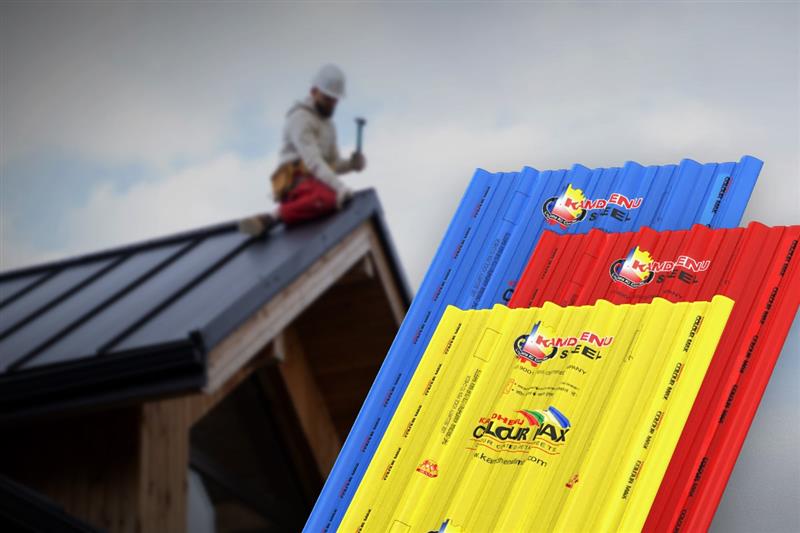
Kamdhenu’s Colour Max page lists base materials as pre-painted galvanized steel (GI base) and Alu-Zinc steel sheets (Galvalume).
It also lists coating thickness as 5 to 20 microns on both sides and yield stress 240 to 550 MPa.
Now add brochure-level details when you are drafting the RFQ.
In the Colour Max profile brochure, the Trapezoidal Profile sheet specification shows:
- Zinc coating: Z 120 GSM for GI-base
- Primer service coat: 5 microns epoxy or PU on both sides
- Top paint thickness: 20 microns
- Bottom paint thickness: 5 to 7 microns
It also notes yield strength: 240 to 550 MPa for that profile.
For the same Trapezoidal profile, the brochure lists a Total Coating Thickness (TCT) range of 0.35 mm to 0.80 mm.
For Tile Profile roofing, the brochure lists:
- AZ 150, AZ 70, or Z 120 GSM options (as shown in the material specification block)
- A TCT range of 0.40 mm to 0.55 mm
- Yield strength: 240 to 350 MPa
These are the kinds of numbers procurement should compare.
They connect directly to dent resistance, spanning behaviour, and long-term durability.
4) The hidden failure points: cut edges, laps, and fasteners
Most roof issues start at junctions.
Not at mid-span.
Three high-risk zones:
- Cut edges
- Side laps and end laps
- Fastener points
Cut edges expose fresh metal.
If you cut with heat, you can burn the coating.
That damage becomes a corrosion starter.
A simple site protocol helps:
- Prefer cold cutting tools where possible.
- Keep cut edges clean.
- Touch up exposed edges as per the project plan.
- Do not leave cut sheets in the rain overnight.
Fasteners matter more than most people admit.
Poor fasteners can damage coatings and trigger corrosion rings around screws.
The Colour Max brochure also highlights fasteners designed for colour coated roofing, including self-drilling screws with washer concepts.
Even if you buy great sheets, bad fasteners can ruin the roof.
So treat fasteners as part of the roofing system.
5) Commercial RFQ checklist for a Colour Coated Sheet Manufacturer in India
Use this list in your next RFQ.
Keep it short.
Keep it strict.
Product and standard
- Base metal type and thickness range
- Metallic coating mass and coating class
- Paint system and coating thickness
- Relevant conformity claim and test evidence
Performance and testing
- Adhesion, impact, hardness, and cure test references
- Corrosion and humidity resistance test plan, if the project exposure is harsh
Profiles and geometry
- Effective cover width and profile depth
- TCT range for the profile you are buying
Logistics
- Packing method to avoid transit scratches
- Bundle tagging and batch identification
- Replacement policy for transit damage
This checklist helps you compare Colour Coated Sheets Manufacturers fairly.
It also reduces arguments later.
6) A quick receiving inspection that prevents most disputes
Do this before the unloading sign-off.
Every truck.
- Check profile type matches the PO
- Confirm thickness and TCT range (random sampling)
- Inspect for scratches, edge damage, and oil contamination.
- Confirm bundle tags and batch references.
- Store bundles on sleepers with a slope for drainage
This is not slow work.
It is preventive work.
It saves days later.
7) Where Kamdhenu Colour Max fits in commercial roofing packages
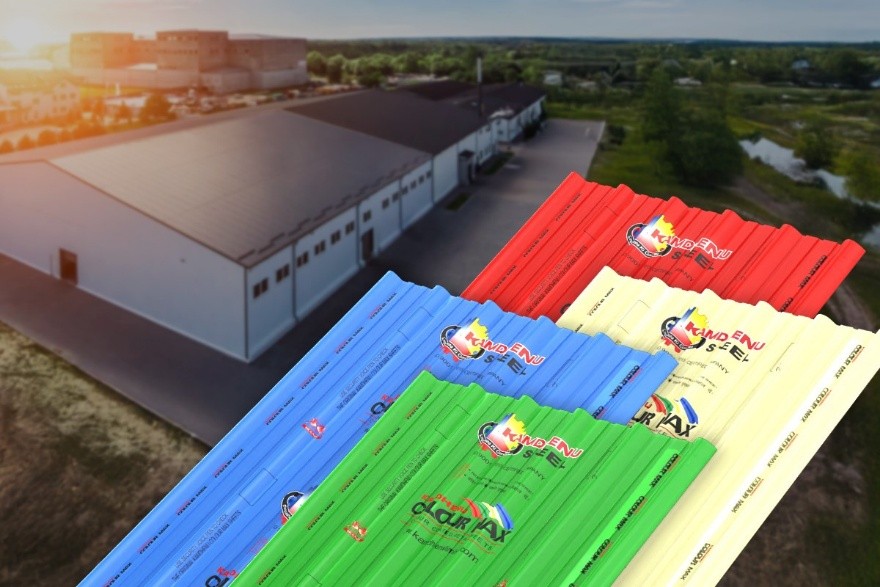
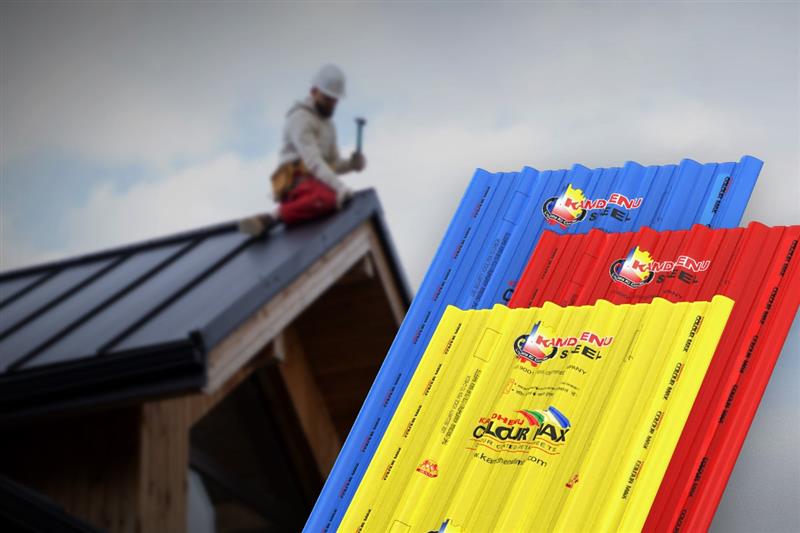
For roofing and wall cladding, Kamdhenu Colour Max positions multiple profiles, including Trapezoidal and Tile profile sheets, with GI-base and Alu-Zinc base options.
The brochure also shows related accessories and rainwater system elements, which matters when you want a complete roofing scope.
If you are comparing suppliers, use:
- The Colour Max product page for the feature overview and key ranges
- The Colour Max profile brochure for detailed specification blocks
- For commercial enquiries, the Kamdhenu site provides a contact route with location selection and official details
Closing note
A roof is not a one-day purchase.
It is a multi-year performance promise.
Shortlist Colour Coated Sheets Manufacturers who can prove:
- A defined coating stack
- Test discipline aligned to standards.
- Profile geometry and thickness clarity
- Strong handling and fastener guidance
If you do that, the roof stays boring.
That is what commercial teams want.