 July 11 2026
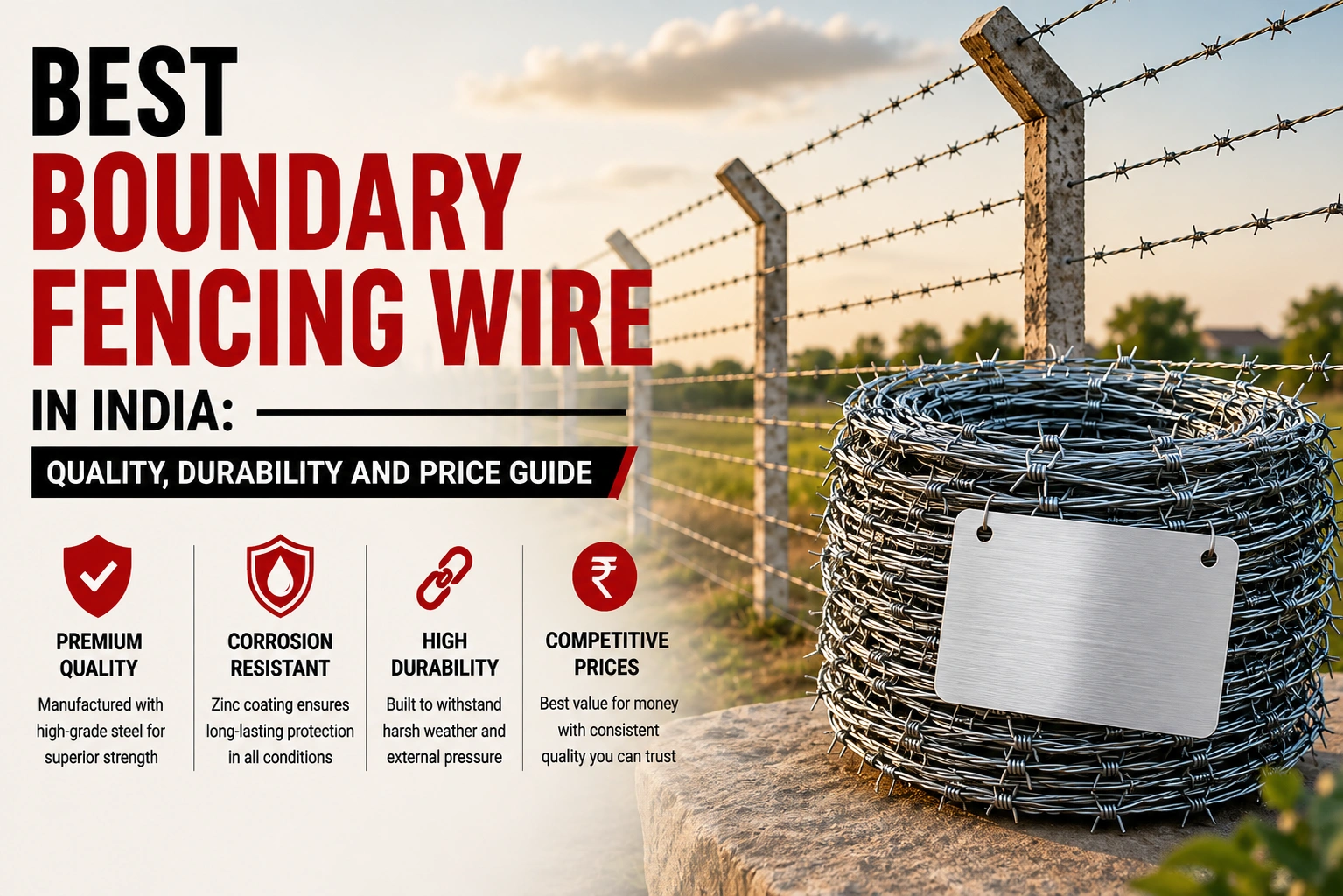
Best Boundary Fencing Wire in India: Quality, Durability and Price Guide
Boundary Fencing Wire – Selection, Installation & Value Guide
A fence is often the first physical line of protection around a property. It marks ownership, controls access and discourages casual trespass. The wrong wire may sag, rust or break within a few seasons. The right boundary fencing wire, supported by strong posts, correct tension and regular inspection, can remain serviceable for years.
Indian projects face very different site conditions. A coastal warehouse needs stronger corrosion protection. A dry agricultural plot may prioritise long runs and economical installation. An industrial yard may need a taller fence with barbed strands at the top. Selection should therefore begin with risk, climate, application and expected service life, not the lowest quotation.
What Is Boundary Fencing Wire?
Boundary fencing wire is used to mark and secure residential, agricultural, commercial and industrial properties. It may be supplied as barbed strands, chain-link mesh, welded mesh, high-tensile plain wire or PVC-coated wire.
Compared with a traditional boundary wall, wire fencing is generally quicker to install, easier to inspect and more economical for large areas. However, the wire is only one part of the system. Posts, stays, fasteners, gates, foundations and workmanship also determine the strength of the finished fence. A dependable perimeter security wire system must therefore be planned as a complete structure.
Types of Boundary Fencing Wire Available in India
Barbed Wire
Barbed wire is economical and creates a clear deterrent for farms, vacant plots and construction boundaries. The barbs should be sharp, secure and reasonably uniform. Loose barbs reduce deterrence, while irregular spacing affects the appearance and consistency of the installed fence.
Chain-Link Mesh
Chain-link mesh provides visibility and a continuous barrier. It suits schools, housing sites, sports areas, warehouses and industrial yards. Industrial sites may combine chain-link mesh with barbed strands at the top for greater perimeter protection.
Welded Mesh
Welded mesh has rigid openings and retains its shape well. It offers a neat appearance and is useful for residential, institutional and commercial properties where uniformity matters.
Factors to Consider Before Buying Boundary Fencing Wire
Base Wire Strength
Wire should withstand installation tension, wind pressure, animal contact and minor impact. Excessively brittle wire creates wastage, while very soft wire may stretch and lose tension. The specification should match the fence design.
Wire Gauge and Diameter
A small change in diameter can make a noticeable difference to weight, strength and cost. Quotations should be compared using the same nominal diameter, roll length and roll weight. A cheaper roll may simply contain thinner wire or less material.
Zinc Coating and Corrosion Resistance
Galvanising places a zinc layer over steel and delays rust. Properly coated galvanized boundary wire is a practical choice for exposed Indian conditions. Coastal, high-rainfall and chemically aggressive locations may require heavier protection and more frequent inspection.
Rust commonly begins where the coating has been damaged during transport, unloading, storage or installation. Rolls should be stored above the ground and away from standing water, fertilisers and corrosive substances.
Barb Formation and Spacing
For barbed fencing, barb sharpness, attachment and spacing should be checked before installation. IS 278:2009 covers galvanised steel barbed wire and specifies requirements for construction, galvanising and freedom from defects.
Roll Weight and Length
Confirm the net weight, approximate length and permissible tolerance of every roll. A 25 kg roll should not be compared with a 30 kg roll only by price per roll. Price per kilogram is useful, but installed cost per running metre gives a clearer picture.
Climate and Installation Conditions
The most suitable boundary fencing wire for a dry farm may not be right for a coastal warehouse. Rainfall, humidity, salt exposure, vegetation and nearby chemicals all affect coating life. Post strength, terrain and installation quality must also be considered before ordering.
Benefits of High-Quality Boundary Fencing Wire
Good-quality boundary fencing wire provides a clear physical deterrent, supports access control and reduces the need for frequent repairs. When correctly specified and installed, it offers longer service life, lower maintenance and better value over the complete life of the fence.
Fence life also depends on the support system. Weak posts allow movement, causing the wire to rub, lose coating and sag. Corner posts and gate posts need stronger foundations because they carry higher tension. A reliable perimeter security wire system is therefore a combination of wire, posts, stays, fasteners and workmanship.
Boundary Fencing Wire Price in India
The boundary fencing wire price changes with steel rates, zinc cost, diameter, coating, roll size, freight and order quantity. Online figures should be treated only as broad indications. Buyers should request a written quotation based on the exact specification and delivery location.
| Cost item | What changes the price |
|---|---|
| Base wire | Diameter, tensile level and steel rate |
| Galvanising | Zinc coating class and process control |
| Roll | Net weight, approximate length and packing |
| Posts | RCC, steel angle, pipe or fabricated post |
| Installation | Spacing, terrain, number of strands and labour |
| Transport | Distance, quantity and unloading access |
For a fair comparison, calculate the complete cost per running metre. Include posts, foundations, straining wire, ties, gates, transport and labour. The cheapest material quotation may not produce the lowest completed cost.
Best Boundary Fencing Wire for Different Applications
Agricultural Land
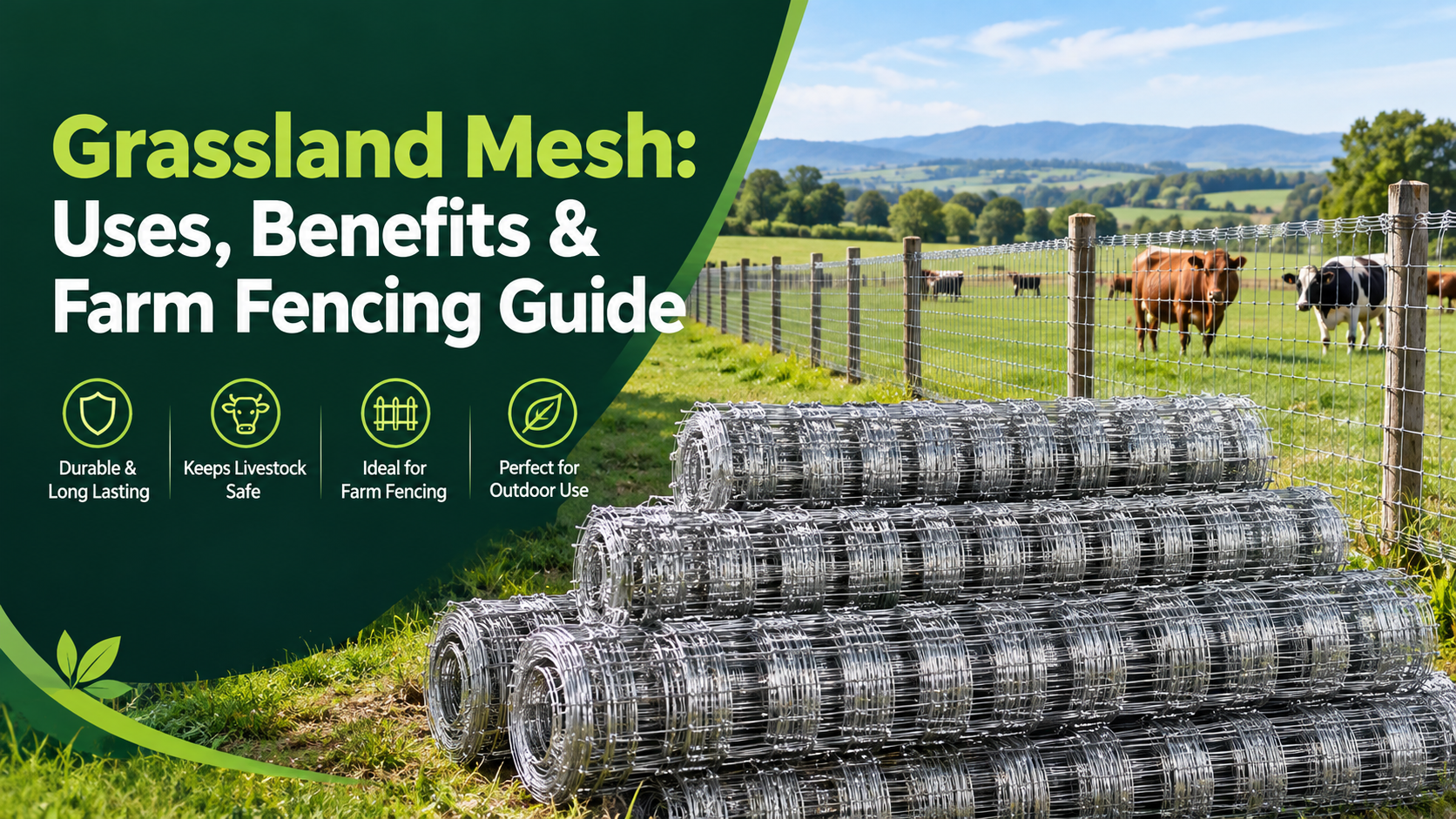
Barbed wire is economical for large farm boundaries. High-tensile plain wire may suit livestock applications, while smaller animals may require mesh near ground level. The final choice depends on animal behaviour, terrain and maintenance capacity.
Residential, School and Institutional Properties
Chain-link mesh & welded mesh are useful where visibility and appearance matter. These systems create a continuous boundary without completely blocking the view.
Industrial Facilities and Warehouses
Industrial sites may combine chain-link mesh with barbed strands. Coastal warehouses need stronger corrosion protection, while high-security sites require a design prepared by experienced security and structural professionals.
Vacant Land and Construction Sites
Barbed boundary fencing wire offers an economical and visible deterrent for open plots and temporary boundaries. Strong posts and correct tension are still essential for reliable performance.
Installation Tips for Long-Lasting Boundary Fencing
Set out the boundary before digging post holes. Confirm corners, changes in direction and gate positions. Use substantial straining posts at corners and other high-load points. Keep line posts vertical and uniformly spaced.
Tension one strand at a time and avoid over-tensioning, which can pull posts out of alignment. Use suitable fasteners, gloves and tensioning equipment. Handle rolls carefully so that the coating is not damaged.
Common Mistakes to Avoid
- Buying only on price
- Ignoring wire diameter
- Comparing rolls of different weights
- Selecting the wrong fencing type
- Using weak posts
- Poor storage
- Unsuitable tools
- Over-tensioning
- Skipped maintenance
These errors can shorten the life of otherwise good boundary fencing wire.
Why Choose a Reliable Boundary Fencing Wire Manufacturer?
A strong supplier provides clear product information rather than only a price. Buyers comparing fencing wire manufacturers India should ask:
- Is the wire galvanised before or after fabrication?
- What is the nominal wire diameter?
- What are the roll weight and approximate length?
- Which standard or internal specification is followed?
- Is each roll labelled for traceability?
- Can the supplier provide samples and test information?
- Is replacement support available for damaged or short-weight material?
Reputed fencing wire manufacturers India should provide consistent roll weight, traceable product details and support in selecting the correct specification.
Kamdhenu's allied wire portfolio includes Kamdhenu Wirebond and barbed wire information. The company brochure states that Kamdhenu barbed wire is produced using modern technology, follows ISO 9001:2015 quality systems, uses standard gauge and size, and is identified as Iowa-type barbed wire. Buyers should confirm the current specification and availability with an authorised dealer before purchase.
Maintenance Tips
Inspect the fence after monsoon and major storms. Remove vegetation that holds moisture against the wire. Tighten loose strands before sagging becomes severe, replace broken ties and check gate connections.
Where the coating is damaged, use a suitable zinc-rich repair system. Posts and foundations should also be inspected because movement in the support structure can damage the wire.
Frequently Asked Questions
Which fencing wire is best for a farm?
Barbed wire is economical for large boundaries. High-tensile wire may suit livestock fencing, while field mesh is better where smaller animals must be contained. The final choice depends on the animals, terrain and maintenance capacity.
How should fencing wire prices be compared?
Compare the same diameter, coating, roll weight, approximate length and delivery location. Then calculate the full installed cost per running metre, including posts, foundations, ties, gates, freight and labour.
Can galvanized fencing wire withstand heavy rainfall?
Properly coated galvanized boundary wire can perform well in exposed conditions because zinc delays rust. High-rainfall and coastal sites may still require heavier coating, careful handling and more frequent inspection.
What is the difference between chain-link and welded mesh?
Chain-link mesh is flexible and provides a continuous visible barrier. Welded mesh has rigid intersections and retains its shape more effectively. The right option depends on the required rigidity, appearance, security level and budget.
How long does boundary fencing wire last?
Service life depends on wire quality, coating, climate, handling, post stability, installation and maintenance. A properly specified and installed system generally lasts longer than one selected only on the lowest price.
Conclusion
The best boundary fencing wire is not simply the heaviest or most expensive option. It is the wire that matches the site's security level, climate, post design and maintenance plan.
Before purchasing, check the diameter, coating, barb quality, roll weight, approximate length and traceability. Compare the complete installed cost rather than only the price per roll. Buy from a supplier that explains the specification clearly, and install the fence with strong posts and correct tension. These steps create a safer boundary and better long-term value.